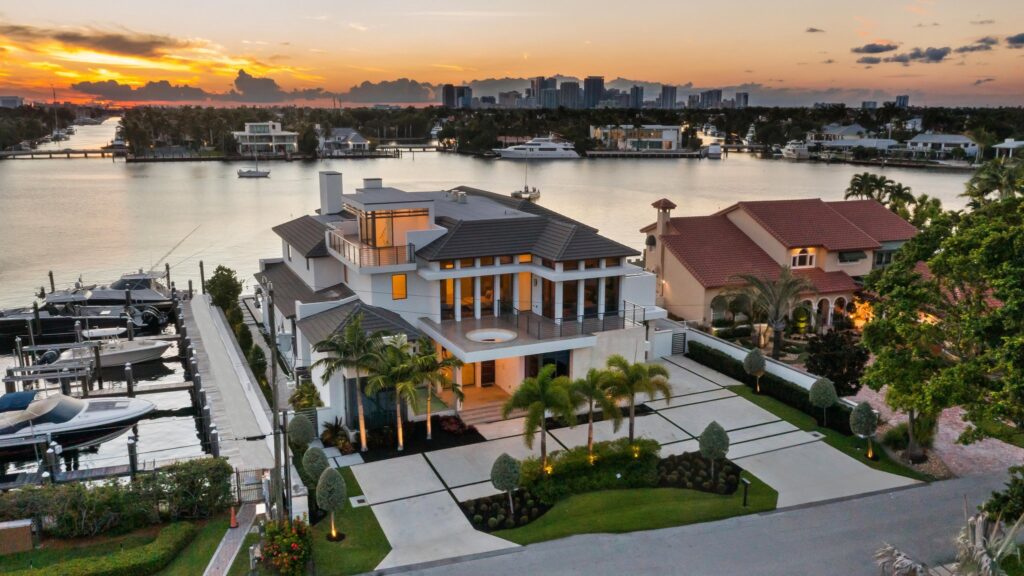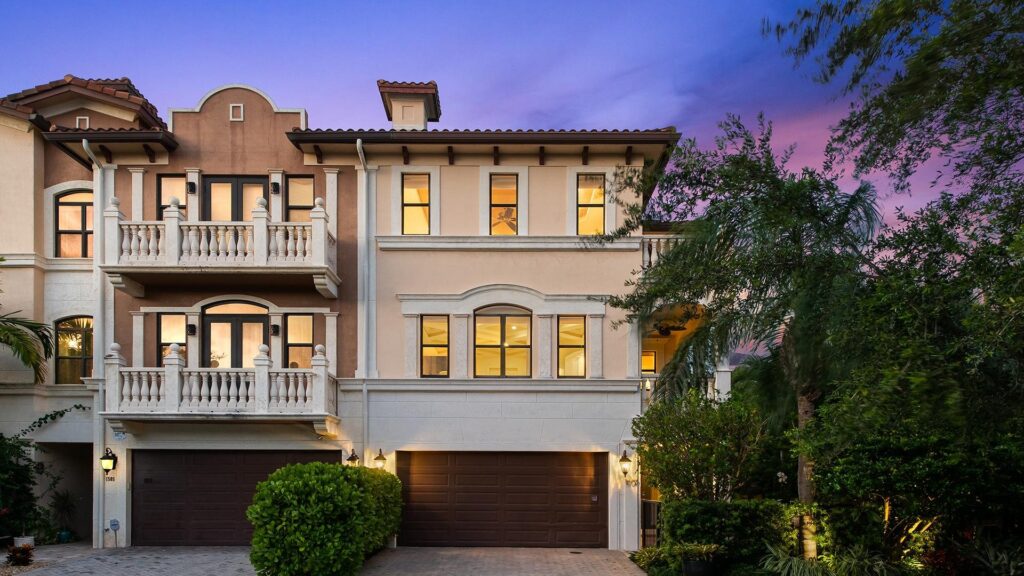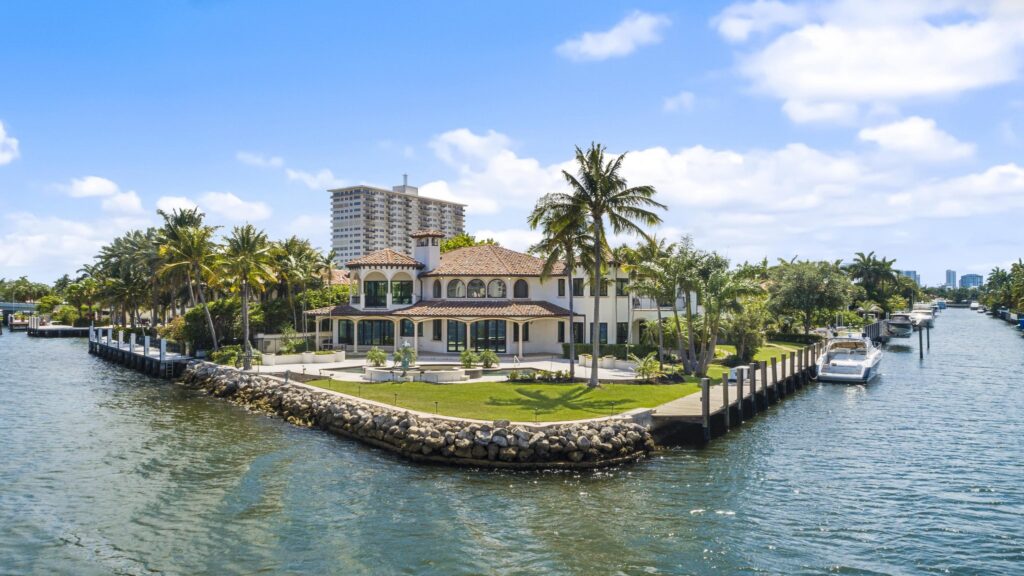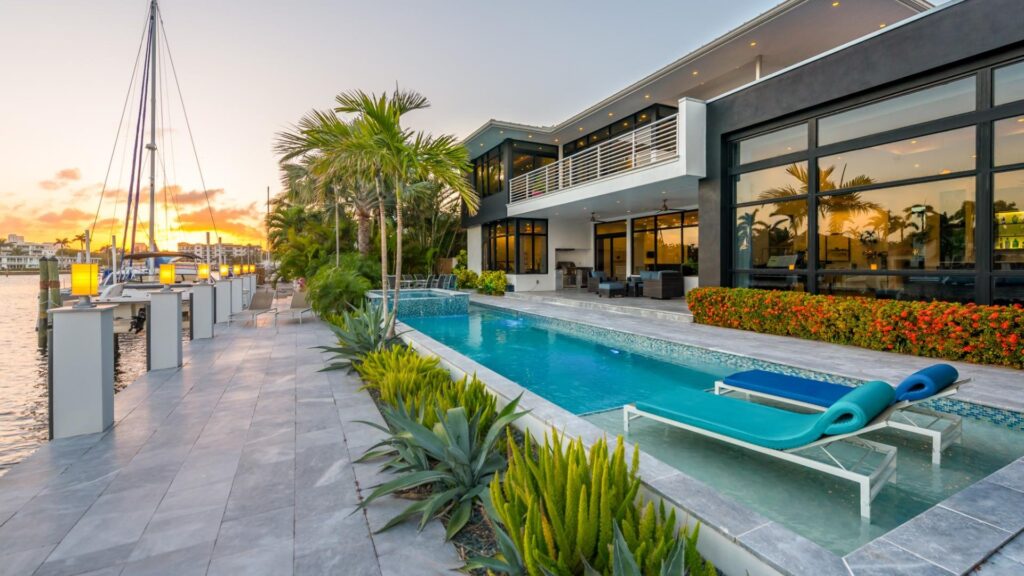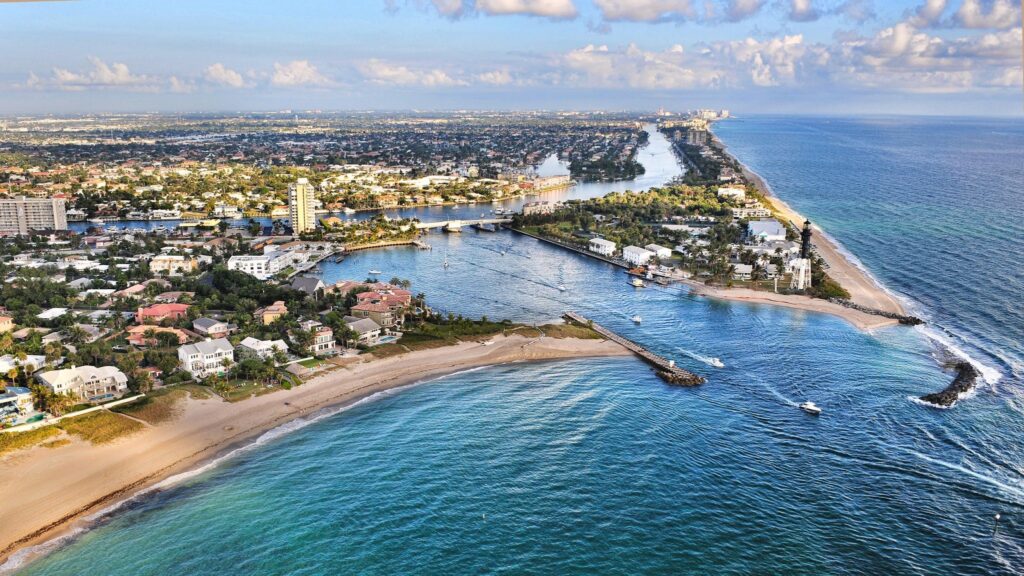
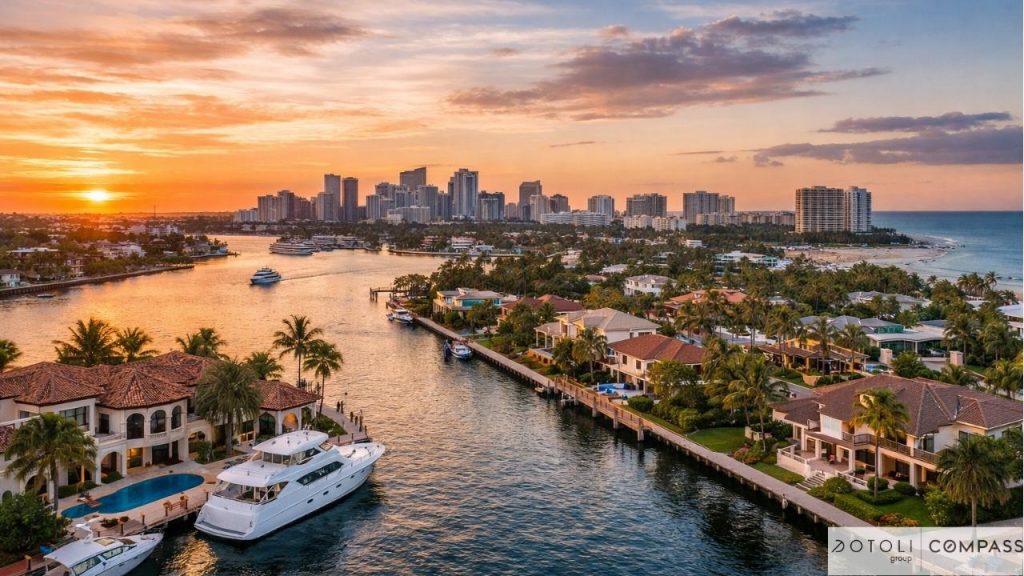

In Fort Lauderdale, the difference between a waterfront home and a close-to-water home is not just visual. It changes the economics of ownership. Buyers are not simply comparing two settings; they are comparing two different asset types with different pricing structures, resale dynamics, and long-term value drivers.
What Buyers Are Actually Comparing
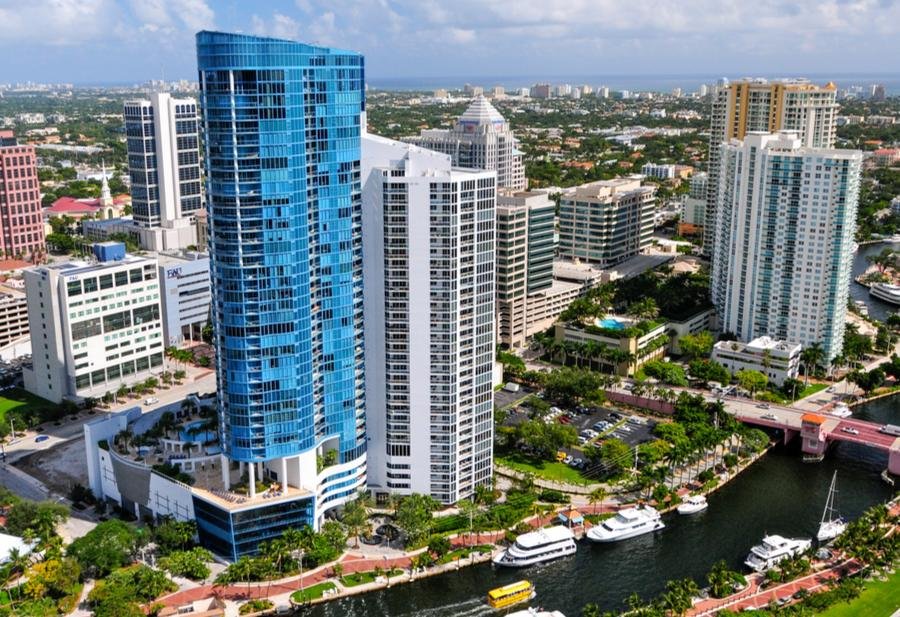
For this comparison to mean anything, “close-to-water” has to be defined narrowly. It should refer to homes in the same prestige orbit areas shaped by access to marinas, beaches, dining, and the broader waterfront lifestyle but without direct frontage, private dockage, or full boating utility.
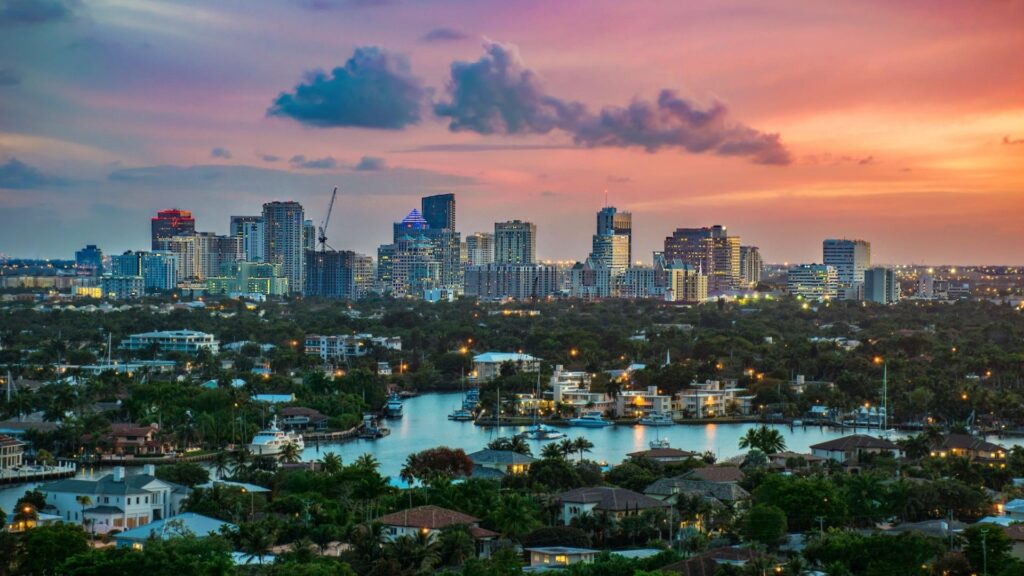
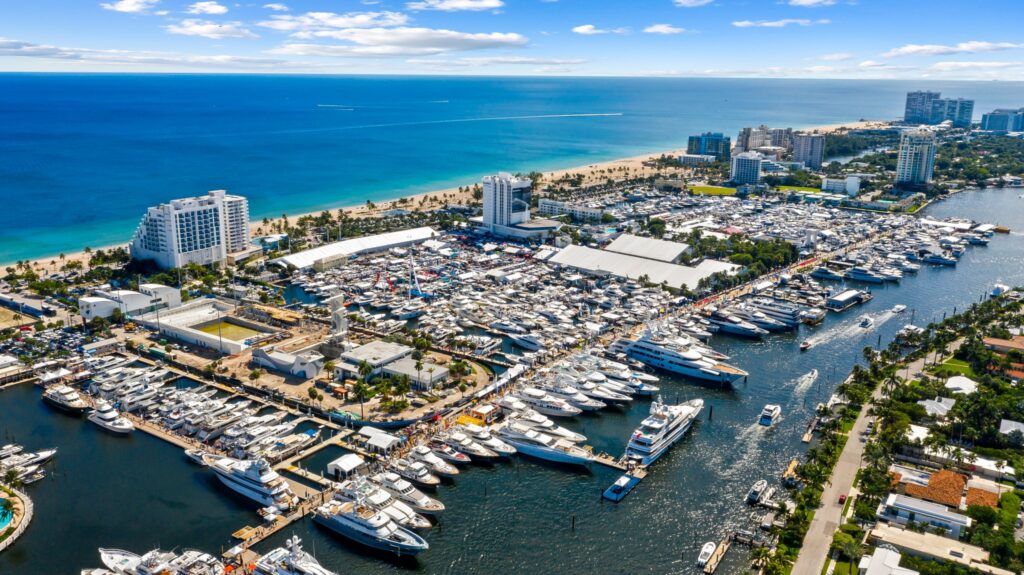
That is a very different product from a home that sits directly on a canal, river, Intracoastal stretch, or oceanfront lot.
Current Fort Lauderdale data shows how strongly the market separates those categories. In Douglas Elliman’s Q3 2025 report, waterfront single-family homes averaged about $3.05 million and $993 per square foot.
Across the broader citywide single-family market, the average sale price was about $1.22 million, and the average price per square foot was $623.
Median sale price showed the same gap: roughly $1.91 million for waterfront homes versus $650,000 citywide. These figures do not prove that every waterfront home is a superior investment, but they do show that direct frontage is priced as a distinct premium category.
The Waterfront Premium Is About More Than Prestige
The case for Waterfront is strongest when the water is usable, not merely visible. In Fort Lauderdale, true Waterfront often means private dockage, direct access, and, in some cases, no fixed bridges. That combination gives the asset a utility that nearby homes cannot fully replicate. The premium is not just about a view; it is about control over the waterfront experience itself.
The latest local figures support that point. In Q3 2025, the Fort Lauderdale waterfront single-family median sale price was up 17.3% year over year, and the average price per square foot was up 22.9% year over year.
Those are strong numbers, but they should be read for what they are: evidence of current market conditions, not proof of a full multi-year cycle. They show that the premium remained intact in the latest reporting period; they do not, on their own, establish an all-weather long-term rule.
Close-to-Water Has a Different Kind of Strength
That does not make close-to-water a weaker asset in every respect. Its advantage is usually efficiency rather than rarity. The buyer gains access to the same broader lifestyle ecosystem, restaurants, marinas, walkability, beach access, and neighborhood cachet without paying the full frontage premium or taking on the same marine-related ownership burdens.
There is also a liquidity argument in its favor. In the same Q3 2025 Elliman report, Fort Lauderdale recorded 417 closed single-family sales citywide, compared with 82 waterfront single-family sales.
Waterfront homes may command a stronger premium, but close-to-water and non-waterfront homes trade in a deeper market and a broader buyer pool. For some investors, that resale depth matters as much as exclusivity.
Which Type of Value Matters More
That is really the heart of the question. If “holding value” means preserving the strongest premium on rarity, then prime Waterfront usually has the stronger case. It is harder to duplicate, the buyer pool is more targeted, and the pricing reflects that scarcity.
If “holding value” means balancing prestige with easier ownership, wider resale appeal, and lower entry cost, then close-to-water can be highly competitive. It does not usually command the same top-end premium, but it can offer a more flexible kind of resilience because demand is not as specialized.
The More Honest Conclusion
The most defensible conclusion is not that Waterfront always wins. Indeed, the Waterfront usually sustains a stronger premium when the frontage is genuinely useful, and the property quality supports the price.
Close-to-water remains compelling for a different reason: it allows buyers to participate in the same luxury geography without paying for every element of direct frontage.
In Fort Lauderdale, that distinction matters. One property type gives you proximity to the waterfront lifestyle. The other gives you ownership of it.
For buyers evaluating that tradeoff in Fort Lauderdale’s luxury market, DOTOLI Group can help assess when the waterfront premium is justified and when a close-to-water alternative may represent the smarter long-term hold.