
Bridge clearance determines whether your boat can leave the dock. In Fort Lauderdale, a buyer who closes on a canal-front home and then discovers their vessel cannot reach the Intracoastal without a bridge strike has no recourse after closing. The contract is done. The bridge does not move.
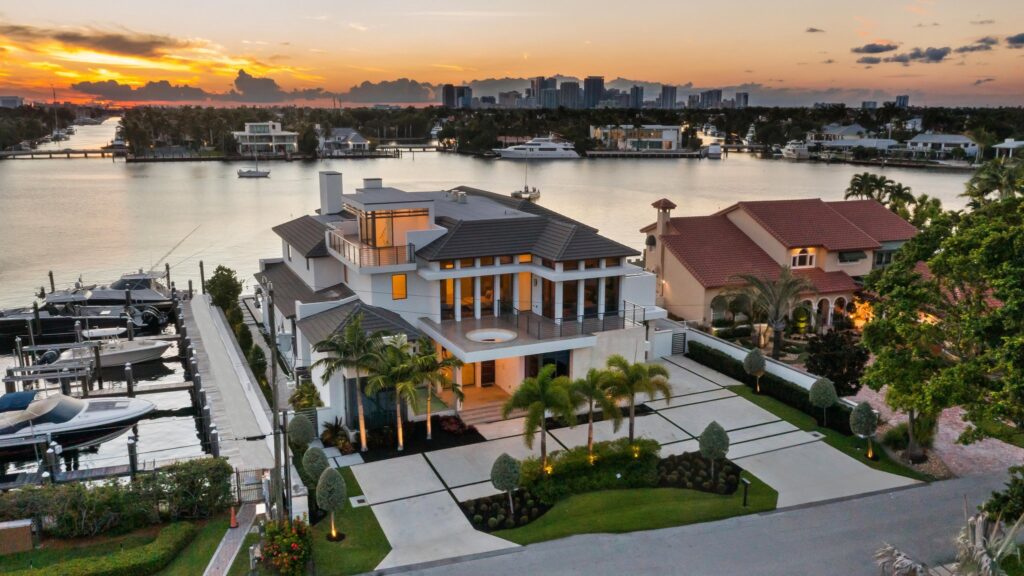
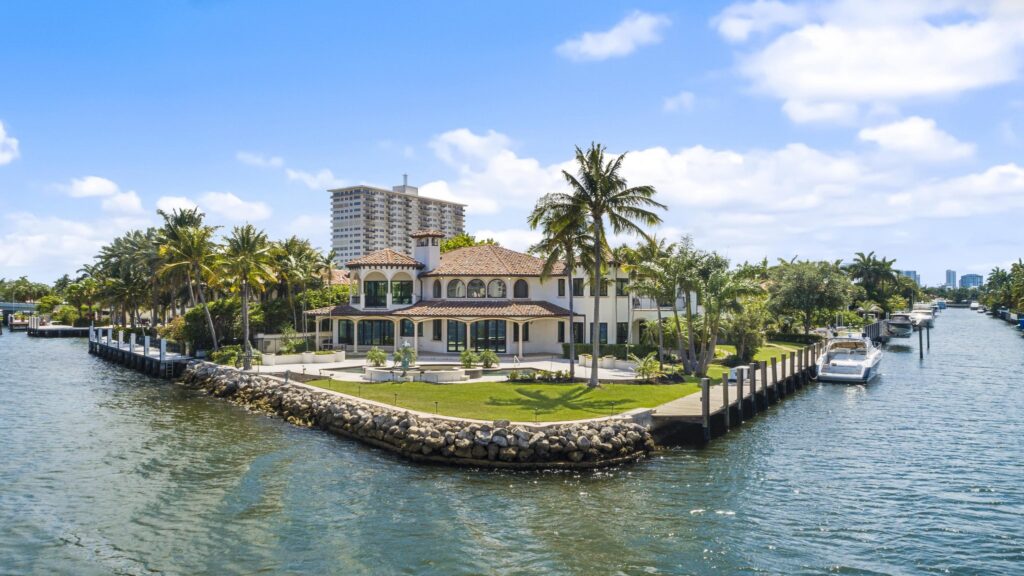
Fort Lauderdale has over 165 miles of navigable waterways, but not all of them are equal for every boat. The difference between a home in Las Olas Isles and a home with direct Intracoastal access is measured in feet of bridge clearance and tens of thousands of dollars in property value.
This article gives buyers the framework, the measurement method, and the neighborhood-by-neighborhood analysis to make the right decision before making an offer.
What Is Bridge Clearance and How Is It Measured?
Bridge clearance is the vertical distance between the water’s surface and the lowest fixed point of the bridge structure. It is measured at mean high water (MHW), the average of the highest tide levels over a 19-year tidal cycle. MHW represents the most restrictive navigation condition and is the standard reference for all published clearance figures.
At Fort Lauderdale’s Port Everglades station (NOAA Station 8722956), the mean tidal range (MN) is 2.50 feet, the difference between mean high water and mean low water (NOAA Tides and Currents, Station 8722956).
A bridge with 14 feet of clearance at MHW has approximately 16.5 feet of clearance at mean low water. Always plan to the MHW figure. Navigating based on low-tide clearance causes bridge strikes.
For published clearance figures on specific Fort Lauderdale bridges, the authoritative lookup is the Waterway Guide; each bridge has a dedicated page with type, vertical clearance at MHW, and opening schedule.
What Is Air Draft and Why Does It Determine Your Property Options?
Air draft is the height from the waterline to the highest fixed point on your vessel. It determines whether your boat fits under a bridge at mean high water. If your air draft exceeds the bridge clearance at MHW, you cannot pass without the bridge opening, and not every bridge opens.
Most buyers underestimate air draft by 1 to 2 feet because they measure to the hardtop and miss what is above it. The highest fixed point includes:
- Radar dome or radar arch
- Fixed VHF antenna (a folding whip does not count i; it can be lowered)
- Fixed outriggers in the raised position
- T-top or hardtop frame
- Navigation light at the top of the mast on sailboats
Measure from the waterline at full load fuel, water, gear, passengers to the highest point that cannot be lowered or removed for passage.
Add a 1-foot safety margin before comparing against any bridge’s MHW clearance. That is your working air draft for selecting a property.
What Are the Bridge Clearance Profiles of Fort Lauderdale’s Waterfront Neighborhoods?
Each neighborhood has a different relationship to fixed bridges depending on the canal route between the dock and the Intracoastal or ocean inlet. Below is the practical breakdown for buyers.
Las Olas Isles
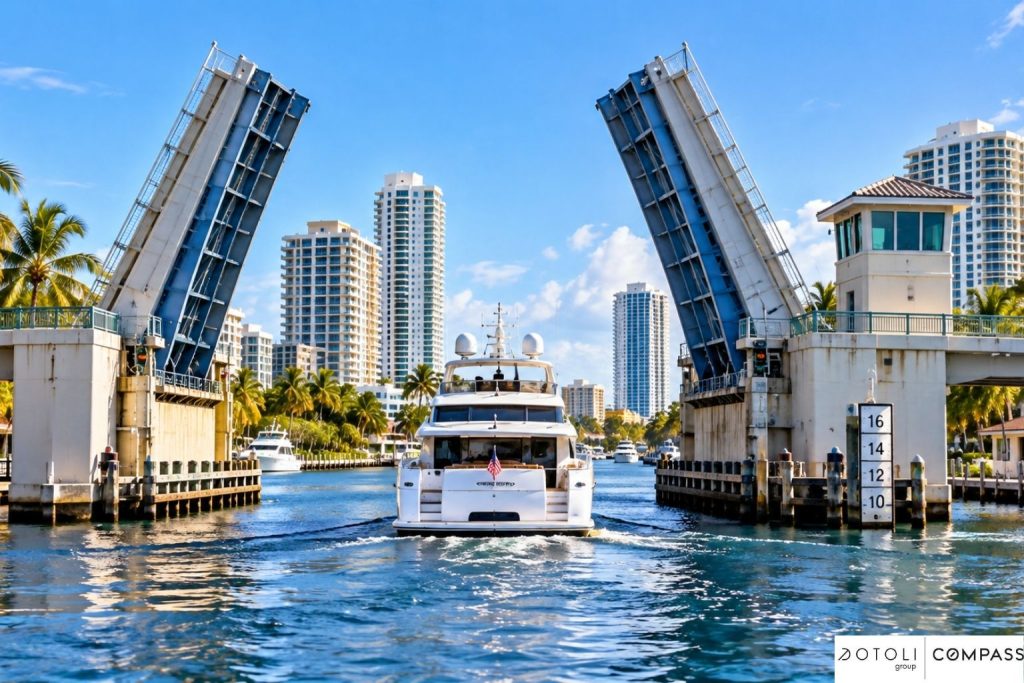
Las Olas Isles is a fixed-bridge neighborhood. Boats leaving most Las Olas Isles canals toward the Intracoastal pass under the Las Olas Boulevard bascule bridge. When the bridge is closed, passage is restricted to vessels below its closed vertical clearance.
The bridge opens on a schedule; verify the current schedule at Waterway Guide: East Las Olas Boulevard Bridge before purchasing any property where your vessel requires an opening.
For buyers with center consoles, bay boats, and smaller sportfish with air drafts well under the closed clearance, Las Olas Isles works without restriction.
For buyers with large sportfish with towers, motor yachts above 50 feet, or sailboats with fixed rigs, the bridge opening schedule becomes part of your daily boating life. Confirm that schedule aligns with how you use your boat before you close.
Seven Isles
Seven Isles sits between Las Olas Isles and the Intracoastal. Canal position within Seven Isles determines bridge clearance entirely.
Some lots have direct or near-direct Intracoastal access with no fixed bridge restriction between the dock and open water. Others share the Las Olas Boulevard bridge constraint depending on which specific canal the property sits on.
Do not assume bridge-free access for any Seven Isles property without mapping the complete water route from that specific lot to the ICW. Two properties two streets apart can have materially different access profiles.
Rio Vista and the New River
Rio Vista properties access the water via the New River, which passes through downtown Fort Lauderdale before reaching the ICW.
The New River has multiple bridges, some bascule, some with fixed sections, with varying clearances depending on location along the route. Bridge opening schedules on the New River are subject to time restrictions during peak vehicle traffic periods.
For current clearance and schedule data on each New River bridge, use Waterway Guide and filter by the New River waterway.
Physically run the route in your vessel from any Rio Vista property to the inlet before removing inspection-period contingencies; this is the only way to confirm the route works for your specific boat.
Coral Ridge and the Intracoastal
Properties in Coral Ridge with direct Intracoastal frontage or unobstructed canal access to the ICW have no fixed bridge between the dock and open water.
The Intracoastal Waterway through Fort Lauderdale’s urban segment has no fixed vertical-clearance restriction bridges; bridges over the ICW are bascule or swing bridges that open for tall vessels.
For buyers with large vessels who need unrestricted ocean access on their own schedule, Intracoastal-front properties in Coral Ridge eliminate the bridge calculation.
Harbor Beach
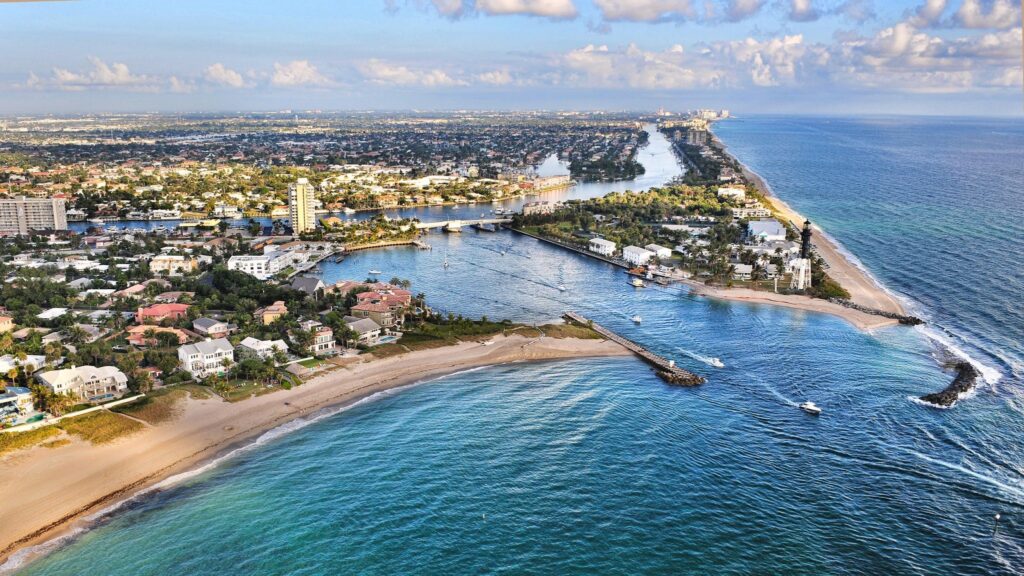
Harbor Beach sits adjacent to Port Everglades Inlet, the closest ocean inlet to Fort Lauderdale’s canal neighborhoods. Many Harbor Beach lots offer direct deepwater access with no fixed-bridge restrictions.
For owners of large sportfish, motor yachts, and vessels with significant air drafts, Harbor Beach and its proximity to Port Everglades Inlet represent the least restricted ocean access in the city.
For the full waterfront property checklist beyond bridge clearance, see Buying a Waterfront Home in Fort Lauderdale.
What Is the Difference Between Fixed Bridge and No Fixed Bridge Access?
A fixed bridge has a permanent, unchanging vertical clearance. A bascule or swing bridge (drawbridge) opens on request or on a schedule, allowing any vessel to pass regardless of air draft.
Fixed bridge access:
- Lower purchase price than equivalent no-fixed-bridge lots in the same neighborhood
- Works without restriction for most powerboat owners—center consoles, bay boats, and smaller sportfish make up the largest segment of Fort Lauderdale boat ownership.
- Limits the buyer pool at resale to vessels that fit the closed clearance
- Bridge opening schedules vary by bridge and can be restricted during rush hours; this affects daily boating plans for owners who require an opening
No fixed bridge / direct Intracoastal access:
- Commands a measurable price premium over comparable fixed-bridge lots in the same neighborhood
- Attracts a broader buyer pool at resale, including large sportfish, motoryacht, and sailboat owners
- No schedule dependency for unrestricted access to open water
- Preferred by owners who use their boat frequently and do not want to time arrivals and departures around a bridge schedule
The practical question for buyers: what is your current boat’s air draft, and what size vessel do you expect to own when you sell?
A buyer with a 24-foot center console today who plans to move up to a 50-foot sportfish in five years should plan for the future air draft. The bridge does not move. The boat changes.
What Mistakes Do Buyers Make When Evaluating Bridge Clearance?
Planning for low tide does not mean planning for high water. Fort Lauderdale’s mean tidal range is 2.50 feet (NOAA Station 8722956). A vessel that clears a bridge by 1 foot at low tide may strike at mean high water. Always calculate clearance at MHW.
Measure air draft to the hardtop, not the highest point. Radar dome, fixed antenna, and outrigger tips routinely add 2 to 4 feet above the hardtop. Measure to the highest point that cannot be lowered before comparing against any bridge’s MHW clearance.
Trusting the listing agent’s clearance estimate. Listing agents are not licensed marine surveyors. Pull the clearance figure directly from Waterway Guide or NOAA Chart 11470. Then run the route in your vessel at high tide before the inspection period expires.
Checking only the first bridge, not the full route. Map every bridge between the dock and the ocean inlet. A buyer who confirms the neighborhood entry bridge but misses a secondary fixed bridge further along the route still ends up blocked.
A seawall in poor condition is the other due diligence item waterfront buyers most commonly miss. A licensed marine contractor must inspect it separately, as covered in detail in Seawall Inspection in Fort Lauderdale.
How Does Bridge Clearance Affect Property Value in Fort Lauderdale?
No-fixed-bridge and Intracoastal-access properties command a consistent premium over fixed-bridge lots in the same neighborhood.
The premium exists because unrestricted ocean access expands the buyer pool to include owners of large vessels, a significant and high-net-worth segment of Fort Lauderdale’s buyer market.
At resale, a fixed-bridge property is invisible to buyers whose boat does not fit the closed clearance, and waterfront buyers often own or plan to own vessels above 40 feet, eliminating a material portion of demand.
Buyers purchasing fixed-bridge properties with a defined hold period should model their exit to a buyer pool whose vessel fits the bridge.
For the broader waterfront market context by neighborhood and price point, see the Fort Lauderdale waterfront homes market.
The Right Waterfront Home Starts With the Right Water Route.
Fort Lauderdale has properties that work for every vessel from 22-foot center consoles to 70-foot motor yachts. The variable is knowing which neighborhoods and which specific lots match your boat before you start touring.
The Dotoli Group has closed over $1 billion in Fort Lauderdale waterfront sales since 2013 and is ranked #1 Fort Lauderdale Large Team by RealTrends Verified 2026.
The team has represented buyers and sellers across Las Olas Isles, Seven Isles, Rio Vista, Coral Ridge, and Harbor Beach neighborhoods with materially different bridge clearance profiles at every price point.
Contact the Dotoli Group to get a neighborhood-by-neighborhood bridge access analysis matched to your specific vessel.