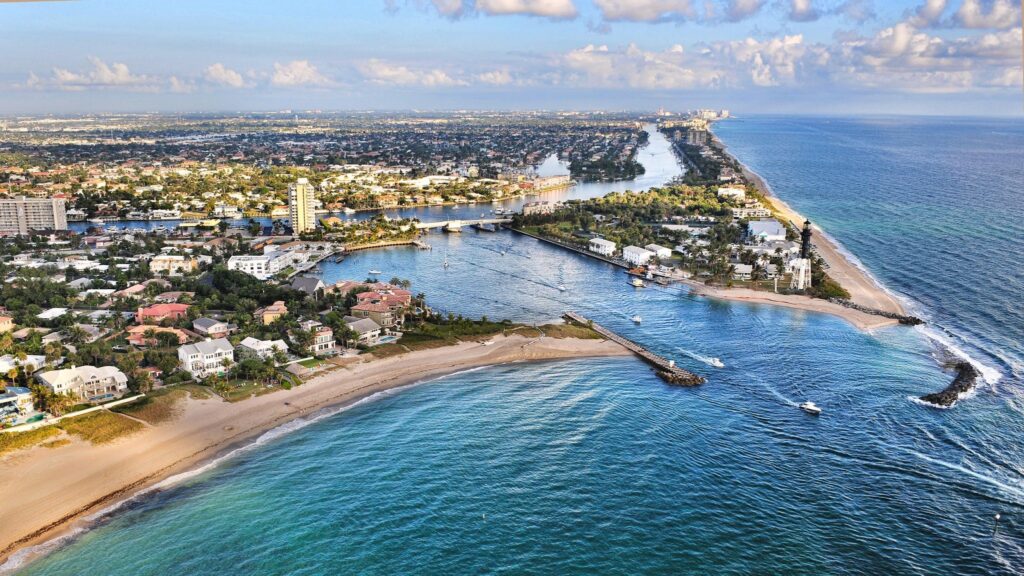
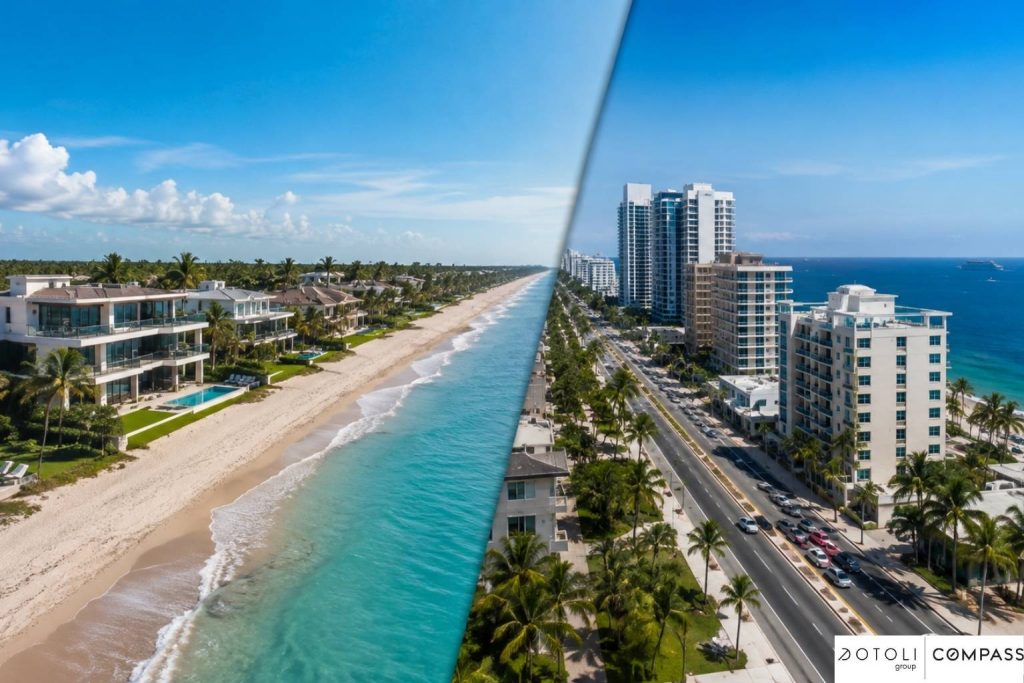

What do beachfront, oceanfront, and ocean view mean in a listing?
These are marketing terms. Here’s how they’re usually used in South Florida listings, and what to confirm for each.
| Listing term | What it usually means | What to confirm |
|---|---|---|
| Beachfront | The lot runs east to the sand with nothing in between | The survey shows the lot line at the beach, and where the state’s line sits |
| Oceanfront | The property faces the Atlantic. It may run to the sand, or sit across a road from it | Whether a public road, walkway or another parcel separates the lot from the beach |
| Ocean view | You can see the ocean from the home, often from upper floors | Which rooms have the view, and whether anything can be built that blocks it |
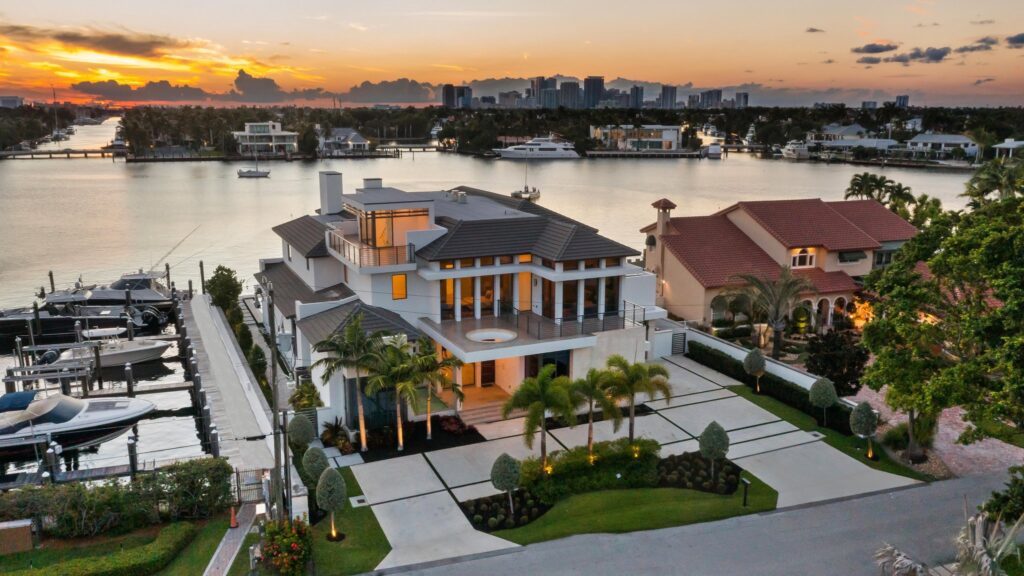
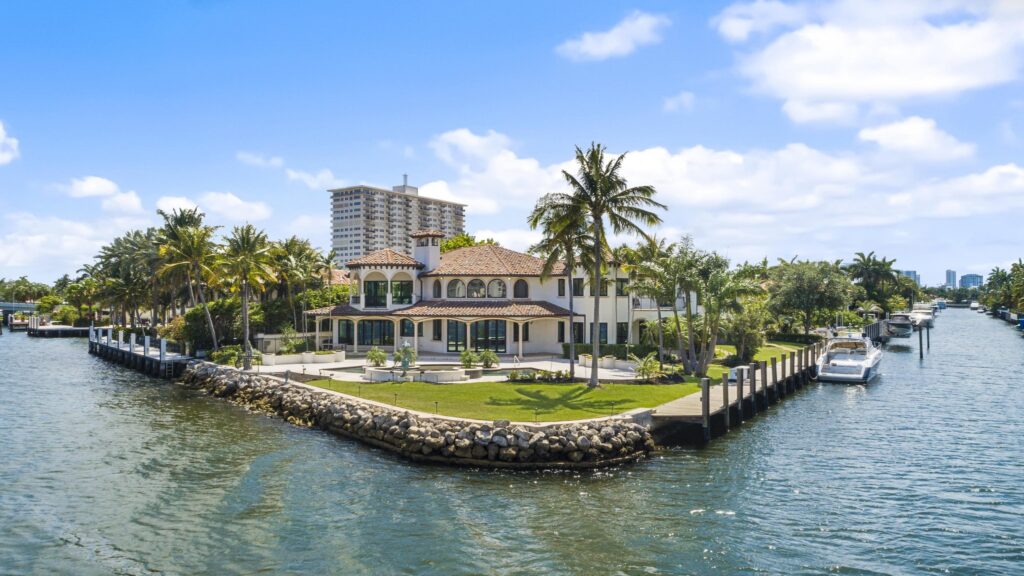
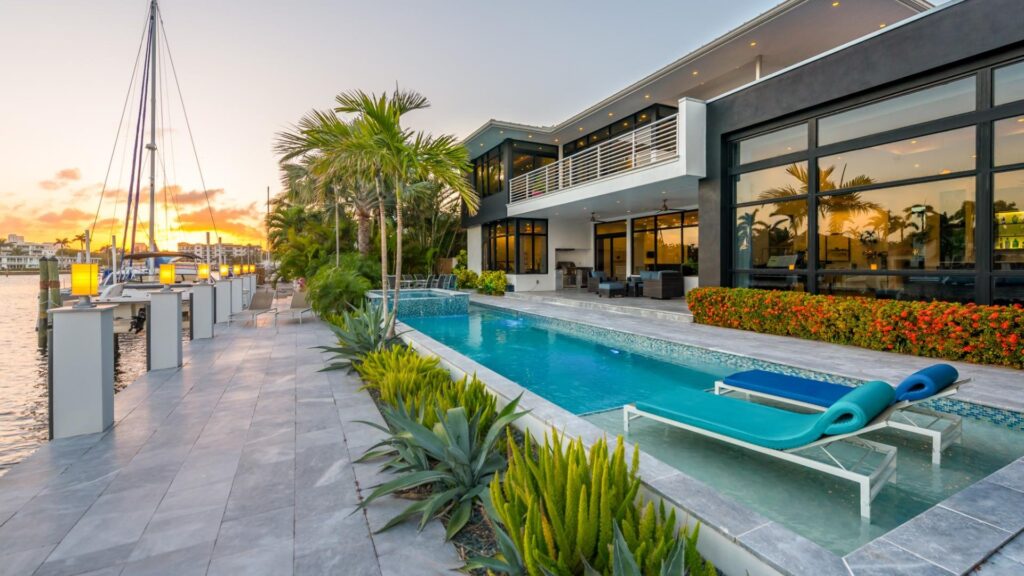
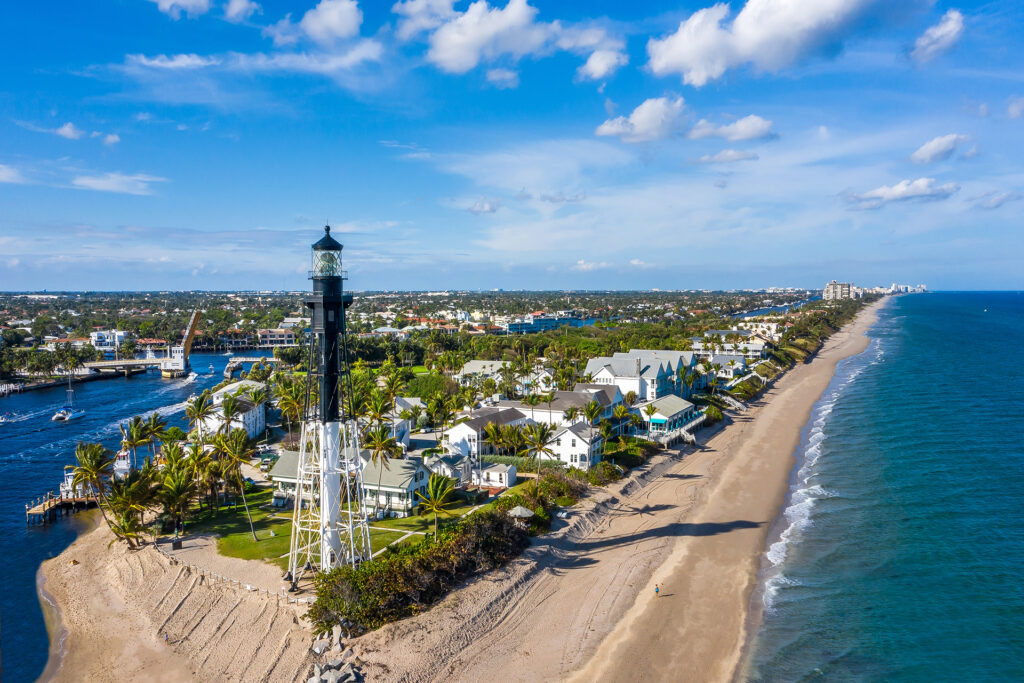
| Intracoastal or canal front | The lot sits on protected water, usually with a dock | Dock permits, water depth and the route to an inlet |
For a boat owner, the last row is often the real choice. You can’t keep a boat at a beachfront home. At most, you can have Intracoastal and canal homes. Our guide to the best neighborhoods in Fort Lauderdale compares the waterfront areas by water access.
Who owns the beach in front of a beachfront home in Florida?
You own to the line. The State owns the rest. Under Article X, Section 11 of the Florida Constitution, the State holds title to lands under tidal waters seaward of the mean high-water line. So a beachfront owner’s property usually stops where the wet sand begins, and the beach below that line is public.
On a beach restored with new sand, the line is fixed rather than moving with the tide. Section 161.191 of the Florida Statutes sets the boundary at a surveyed erosion control line, and sand placed seaward of that line belongs to the State.
Broward County’s beaches are part of an ongoing restoration program; the Florida Department of Environmental Protection authorization for the county’s Segment II project was issued on January 31, 2014, and runs to January 31, 2029. Ask your title company and surveyor whether one applies to the lot, and where it sits.
What permits apply to building on the beach in Broward County?
Along the whole Broward County coast, the State has set a Coastal Construction Control Line, defined in Florida Administrative Code rule 62B-26.013. Building, adding to or rebuilding a structure seaward of that line needs a permit from the Florida Department of Environmental Protection under Section 161.053 of the Florida Statutes, in addition to the city’s building permit.
The state rules can shape the house itself. Under rule 62B-34.070, a general permit can cover new single-family construction with a footprint of up to 6,300 square feet, and under rule 62B-34.060, a general permit is valid for two years with no extension.
Homes proposed seaward of the state’s 30-year erosion projection face extra review. Buying to renovate or rebuild on the beach? Find out where the line crosses the lot before you sign.
Are beachfront homes in a higher flood risk zone?
Often, yes. FEMA maps the most exposed coastal land as V zones, areas subject to high-velocity wave action. Under the National Flood Insurance Program rules in 44 CFR 60.3(e), new and substantially improved buildings in a V zone must be elevated on piles or columns, and fill can’t be used for structural support. Homes set back from the beach or on the Intracoastal can fall in AE zones instead, which carry different rules.
Broward County’s current FEMA flood maps took effect on July 31, 2024, so check the zone for the exact address under those maps, and ask for the elevation certificate. Our Fort Lauderdale flood zones guide explains each zone and what it means for insurance.
What rules come with living on the beach in Fort Lauderdale?
The biggest one is lighting. Fort Lauderdale’s sea turtle lighting rules, in Chapter 6, Article III of the City’s Code of Ordinances, apply to beachfront properties during nesting season, which runs from March 1 to October 31. The rules limit lighting visible from the beach, and the City’s code enforcement staff enforce them. Ask whether the home’s exterior lighting complies before you close, because changing fixtures after closing is your cost.
Beachfront owners should also expect public use of the beach in front of the home, because the sand seaward of the State’s line is public, and salt and sand exposure on windows, doors, railings and equipment.
Which Fort Lauderdale neighborhoods have homes on the water?
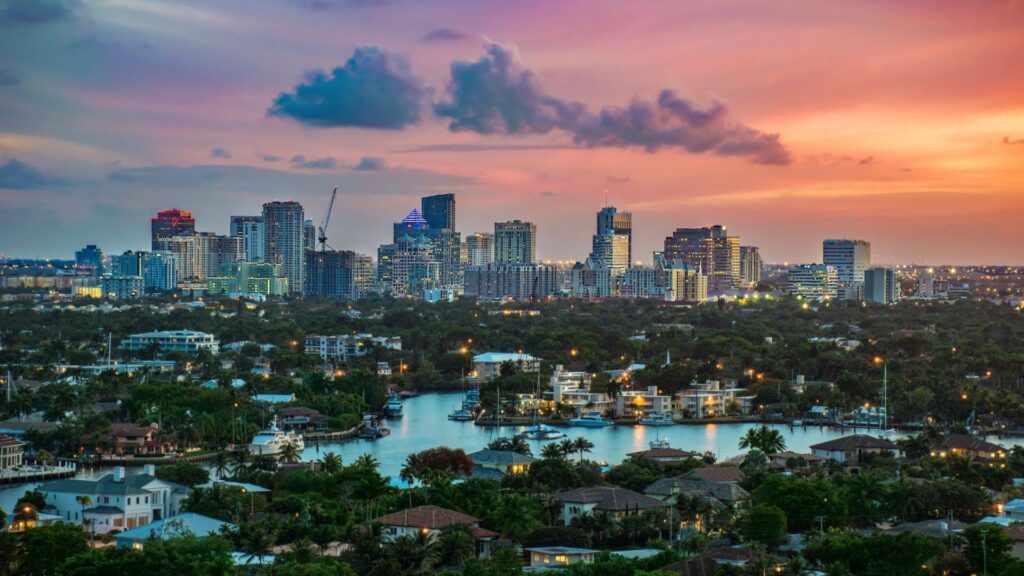
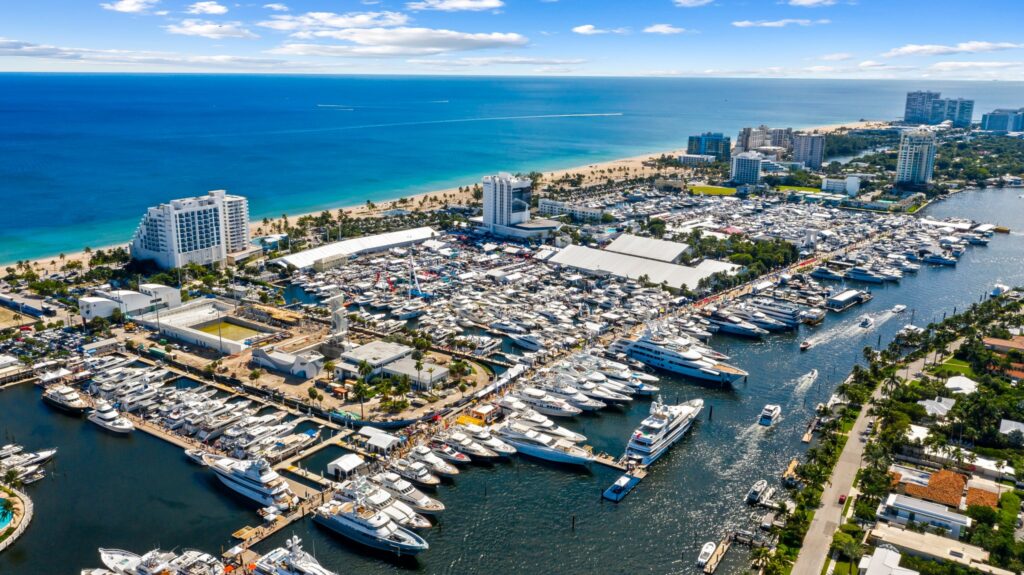
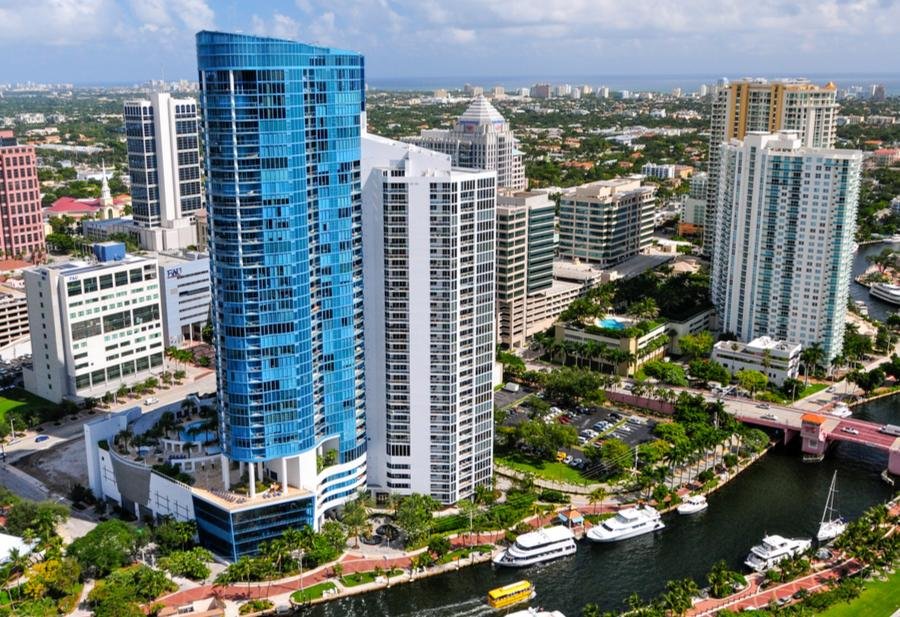
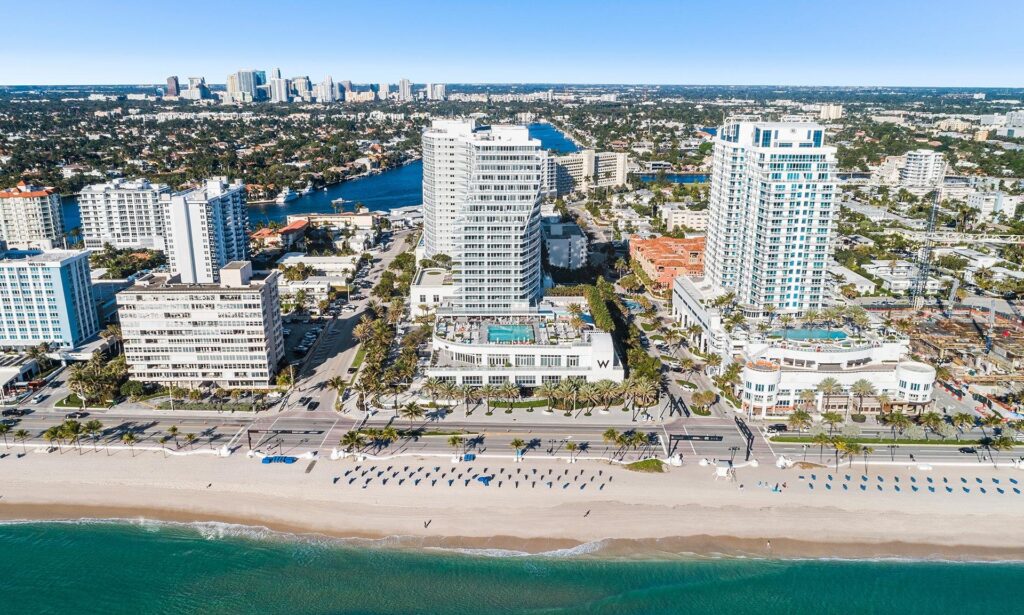
Most of Fort Lauderdale’s beach is lined with hotels and condominium buildings, especially in Central Beach, where State Road A1A runs between many properties and the sand. Single-family homes on the water are far more common on the Intracoastal and its canals, in neighborhoods such as Harbor Beach and Las Olas Isles.
What should you check before buying a beachfront or oceanfront home?
- The survey and legal description. Confirm where the lot line ends and whether a road, walkway, or another parcel sits between the lot and the sand.
- The State’s line. Ask whether the mean high-water line or an erosion control line sets the seaward boundary.
- The Coastal Construction Control Line. Find where it crosses the lot if you plan to renovate, add a pool, or rebuild.
- The flood zone and elevation certificate. Check the zone under the July 31, 2024 maps and get an insurance quote during your inspection period.
- Exterior lighting. Confirm the home meets the City’s sea turtle lighting rules.
For the full process, read our guide to buying a waterfront home in Fort Lauderdale.
Frequently asked questions
Is beachfront the same as oceanfront?
Not always. Neither term has a legal definition in Florida. Beachfront usually means the lot runs to the sand, while oceanfront means the property faces the Atlantic and may sit across a road from the beach. The survey shows which one a home really is.
Do you own the beach in front of a beachfront home in Florida?
Usually only to the line. Under the Florida Constitution, the State owns land seaward of the mean high-water line, and on a restored beach, the boundary is a surveyed erosion-control line. The sand seaward of that line is public.
Can you build a pool or add to a house on the beach in Fort Lauderdale?
Sometimes, with a state permit. Construction seaward of Broward County’s Coastal Construction Control Line needs a Florida Department of Environmental Protection permit in addition to the city’s building permit, and the rules limit size and siting.
Are beachfront homes in a flood zone?
Many are, and often in a coastal V zone, where FEMA rules require new and substantially improved homes to be elevated on piles or columns. Check the exact address on Broward County’s flood maps, effective July 31, 2024, and ask for the elevation certificate.
What does ocean view mean in a listing?
It means you can see the ocean from the home, not that the home is on the water. Confirm which rooms have the view and whether new construction nearby could block it.
Talk to us about homes on the water
DOTOLIGroup is a Compass real estate team based at 1200 E. Las Olas Blvd. in Fort Lauderdale. Josh Dotoli lives in a waterfront home in Las Olas Isles, builds waterfront homes as Principal of DOTOLI Development and sits on the Broward County Marine Advisory Committee. Read Josh’s bio, or contact us to talk about buying or selling on the water.