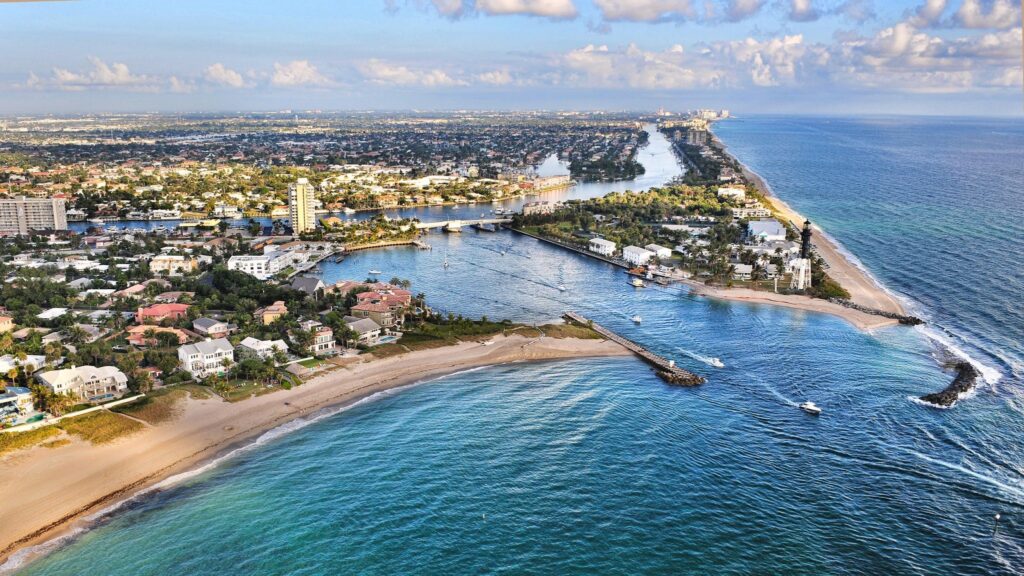
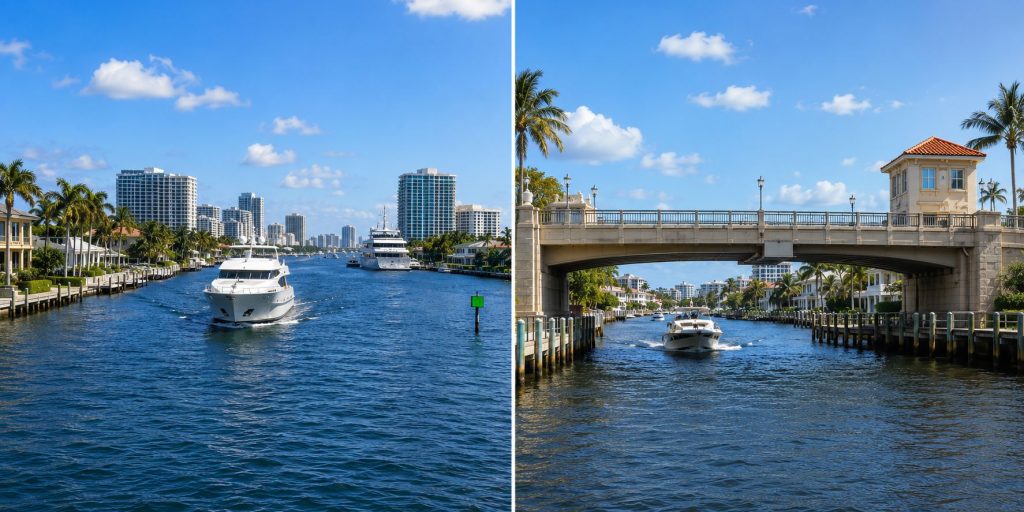

If you are shopping for waterfront property in Fort Lauderdale, understanding deep water vs. fixed bridge canal properties is the single most important distinction you will make before you ever look at a listing. The two canal types determine what size boat you can own, how you reach the ocean, and how much the property is worth.
Choosing the wrong canal type for your vessel can mean buying a beautiful home only to discover you cannot dock the boat you already own.
This guide breaks down the difference, the data behind it, and how to choose correctly the first time. If you are still new to waterfront terminology, start with our complete guide to canal homes in Fort Lauderdale before continuing.
Deep Water vs. Fixed Bridge Canal (Quick Answer)
A deep-water canal has at least 6 feet of depth at low tide and no overhead obstructions, allowing yachts and large vessels to reach the ocean freely.
A fixed bridge canal has a stationary overhead bridge, typically with 14 to 17 feet of clearance in Fort Lauderdale, which blocks taller vessels from passing.
Deep-water canals cost more but offer full ocean access and higher property value. Fixed-bridge canal homes Fort Lauderdale buyers choose are more affordable, but they permanently limit boat height.
Deep Water vs. Fixed Bridge Canal: What Is the Core Difference in Fort Lauderdale?
A deep water canal has at least six feet of depth at mean low water and an unobstructed route to the Intracoastal, allowing large yachts to come and go freely.
A fixed bridge canal has a stationary, non-opening bridge overhead that permanently limits the height of any vessel that can pass beneath it. The difference is not about the size of your home. It is entirely about your boat.
How Much Vertical Clearance Do Fixed Bridges in Fort Lauderdale Actually Have?
Most fixed bridges in Fort Lauderdale have a vertical clearance of approximately 14 to 17 feet at mean high water. Compare that to the Atlantic Intracoastal Waterway’s main channel bridges, which are federally mandated to have 65 feet of clearance throughout Florida, except at the Julia Tuttle Causeway in Miami, where the clearance is 56 feet.
The dramatic drop from 65 feet on the main Intracoastal to 14-17 feet on residential fixed-bridge canals is why this distinction matters so much for boat access for Fort Lauderdale buyers.
Source: Florida Atlantic Intracoastal Waterway Movable Bridge Guide
A vessel with even a modest hardtop, antenna array, or flybridge can exceed 17 feet of total height. Unlike a drawbridge, a fixed bridge does not open. If your vessel does not clear it, that route to open water is permanently closed to you from that property.
What Is a Deep Water Canal in Fort Lauderdale?
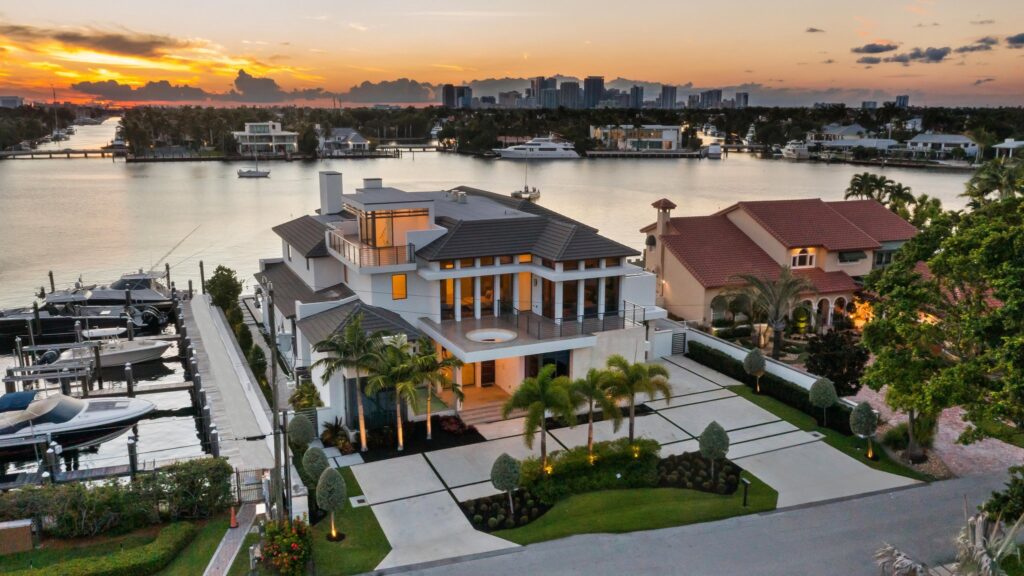
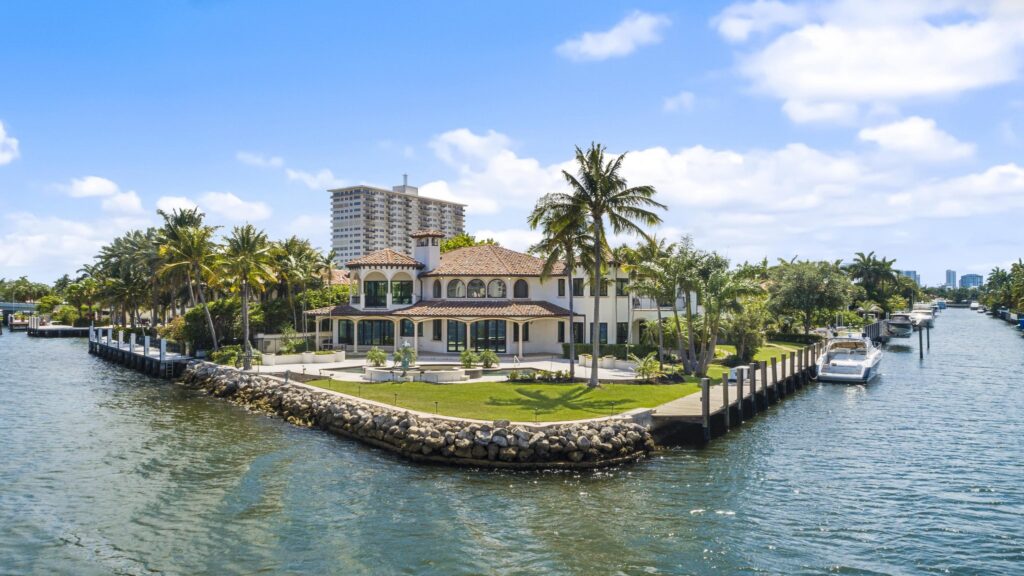
A deep-water canal in Fort Lauderdale is a residential waterway with at least 6 feet of depth at low tide and no fixed bridges between the property and the Intracoastal. These canals support vessels 40 feet and larger, including sport fishers and motor yachts.
- Minimum 6 feet of depth at mean low water
- No overhead obstructions to the Intracoastal or ocean
- Found primarily in Las Olas Isles, Harbor Beach, and parts of Rio Vista
- Commands the highest price premiums of any canal type in Fort Lauderdale
What Is a Fixed Bridge Canal Home in Fort Lauderdale?
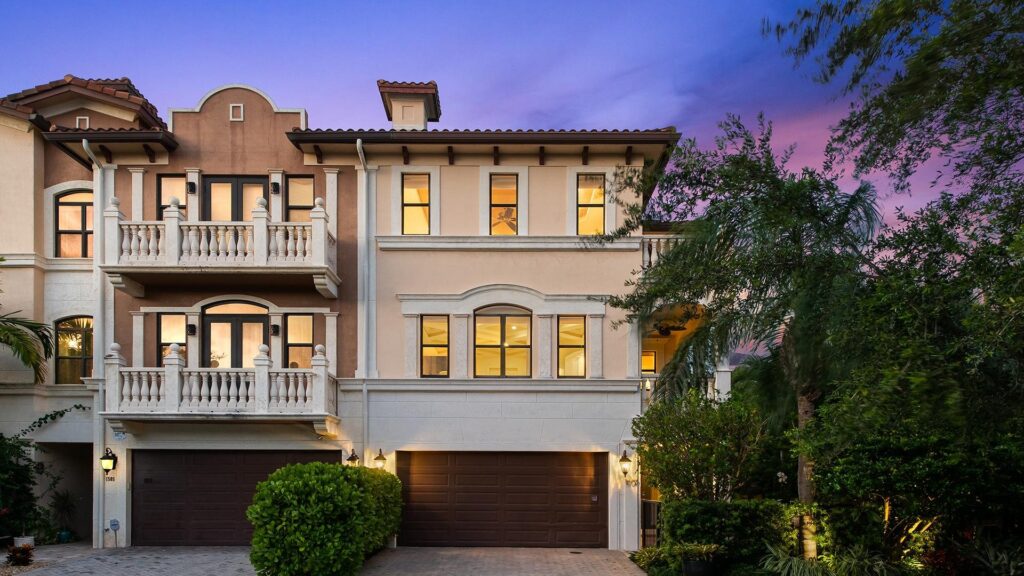
A fixed bridge canal home in Fort Lauderdale sits on a waterway where at least one stationary bridge, typically with 14 to 17 feet of clearance, stands between the property and open water. Fixed-bridge canal homes that Fort Lauderdale buyers purchase are generally priced lower than deep-water equivalents because they cannot accommodate tall vessels.
- Vertical clearance is typically 14 to 17 feet at mean high water
- No restriction on vessel length or draft, only height
- Common throughout Coral Ridge and mid-city canal neighborhoods
- Suitable for center console boats, sailboats with lowered masts, pontoons, and smaller cruisers
Why Does Fort Lauderdale Have So Many Fixed Bridges?
Fort Lauderdale is known as the “Venice of America” with roughly 165 miles of residential canals within city limits, part of a broader 300-mile network across Greater Fort Lauderdale. As the city grew, fixed bridges were built to connect neighborhoods and carry vehicle traffic across these canals.
Unlike drawbridges on the main Intracoastal, which open on a schedule for boat traffic, most residential fixed bridges never open. They were built at a height sufficient for everyday recreational boats at the time, which is why 14 to 17 feet became the standard.
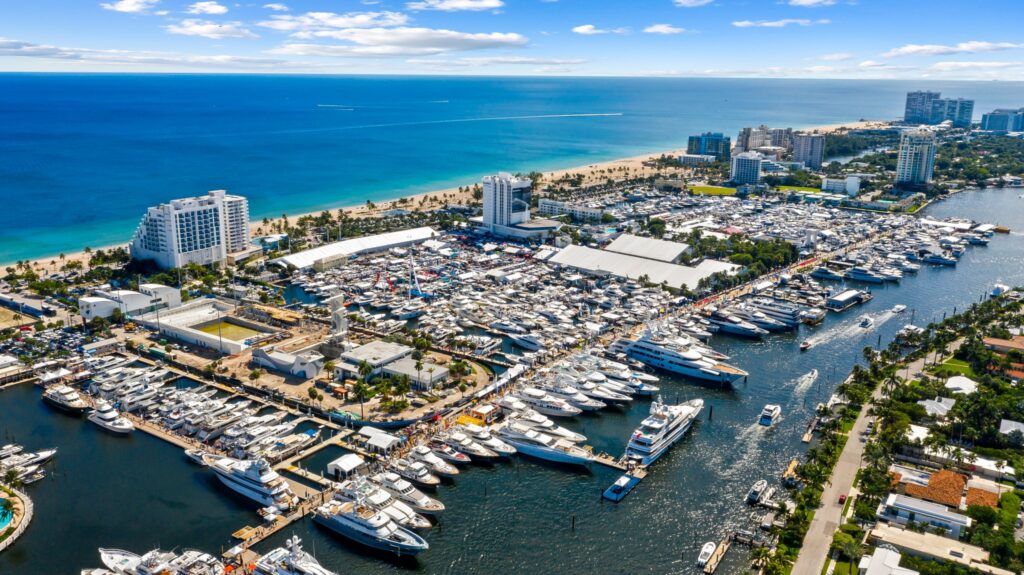
According to the Marine Industries Association of South Florida, the region’s marine and yachting industry represents one of the largest economic drivers in Broward County, with the Greater Fort Lauderdale area widely recognized as the “Yachting Capital of the World.” This concentration of yacht ownership is part of why ocean-access canal property in neighborhoods like Las Olas Isles commands such a steep premium over fixed-bridge alternatives just a few blocks away.
How Do You Know Which Canal Type Is Right for You?
Choosing between deep water and fixed bridge canal property comes down to one question: what do you own or plan to own, and what is its total height with everything raised?
“I’ve had clients fall in love with a house and find out during their walkthrough that their boat won’t clear the bridge to get home. That conversation is much easier before an offer than after.”
Josh Dotoli, Founder, Dotoli Group
Choose a Deep Water, No-Bridge Canal If:
- You own or plan to own a yacht, sport fisher, or sailboat with a fixed mast over 17 feet
- You want unrestricted access to the Atlantic Ocean at any time of day
- Budget is less of a constraint than lifestyle and resale value
- You are considering Las Olas Isles, Harbor Beach, or ocean-access sections of Rio Vista
Choose a Fixed Bridge Canal Home If:
- Your vessel is under 14 feet in total height with everything folded or lowered
- You want a lower entry price while still having private dockage
- You primarily use smaller boats, pontoons, or kayaks
- You are open to trailering a larger boat to a marina for ocean trips
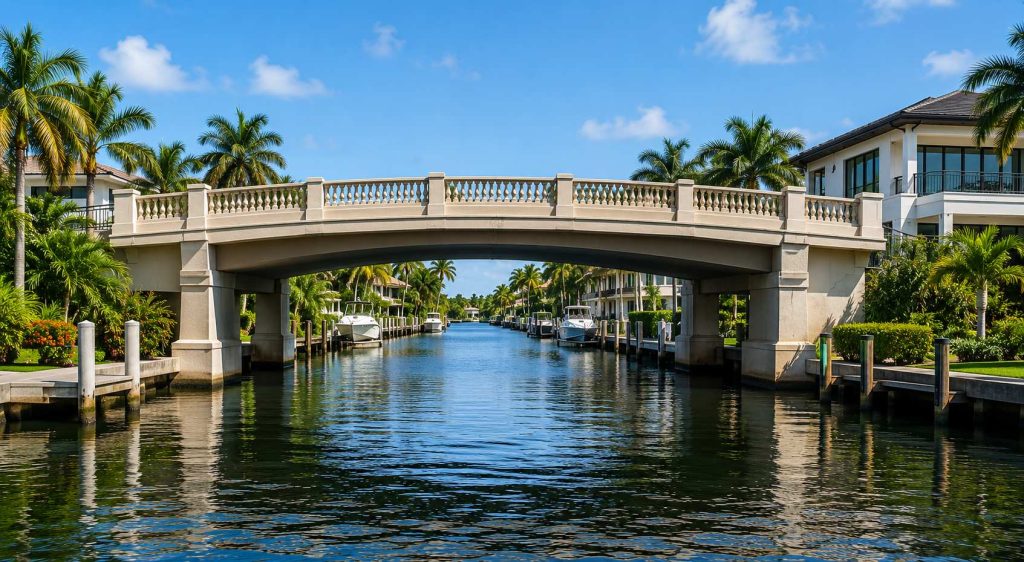
How Do You Measure Your Boat’s Total Height for Bridge Clearance?
- Measure from the waterline to the highest fixed point on your vessel, including antennas, outriggers, and hardtops that do not fold down
- Subtract nothing for “usually.” Bridge clearance is measured at mean high water, so high tide reduces your effective clearance further
- Compare that number against the specific bridge’s posted clearance, not a neighborhood average
- Build in at least 1 to 2 feet of safety margin, since the tide and wake can reduce clearance unexpectedly
- If your vessel exceeds 12 to 13 feet in total height, a fixed bridge canal is likely not workable for regular ocean access
FAQ’s
What is the difference between a deep water canal and a fixed bridge canal in Fort Lauderdale?
A deep-water canal has at least 6 feet of depth at low tide and no overhead obstructions, allowing large vessels to reach the ocean freely. A fixed bridge canal has a stationary bridge, typically 14 to 17 feet of clearance, that permanently limits the height of vessels that can pass underneath.
How tall are fixed bridges in Fort Lauderdale?
Most fixed bridges over residential canals in Fort Lauderdale have a vertical clearance of approximately 14 to 17 feet at mean high water, compared to 65 feet on the main Intracoastal Waterway channel.
Can I still own a boat if I buy a fixed bridge canal home?
Yes. Fixed bridge canal homes work well for center console boats, pontoons, sailboats with lowered masts, and smaller cruisers under approximately 13 feet in total height. Larger vessels with permanent flybridges or tall antennas will not clear most fixed bridges.
Are deep-water canal homes more expensive than fixed-bridge canal homes in Fort Lauderdale?
Yes. Deep-water, no-bridge canal homes command a significant price premium because they offer unrestricted ocean access for any-size vessel. Fixed-bridge canal homes are generally more affordable but have a permanent height restriction on boat access.
Which Fort Lauderdale neighborhoods have deep water, no-bridge canal access?
Las Olas Isles, Harbor Beach, and parts of Rio Vista offer deep-water canals with direct, unobstructed access to the Intracoastal Waterway and the Atlantic
Ocean. Coral Ridge and many mid-city neighborhoods have a mix of fixed bridges and deep water canals.
How do I find out whether a specific home has fixed-bridge or deep-water canal access?
Work with a local waterfront specialist to review the canal route, water depth, and clearance at every bridge between the property and open water before you make an
offer. This information is rarely listed clearly in the MLS.
Ready to Find the Right Canal Home for Your Boat?
Choosing between a deep-water and fixed-bridge canal home is not a detail to figure out after closing. It determines whether the property actually fits your life on the water.
Josh Dotoli and the Dotoli Group team have spent over a decade navigating Fort Lauderdale’s waterways and matching buyers with the right canal, bridge clearance, and neighborhood for their vessel.
Browse current waterfront listings and connect directly with Josh at joshdotoligroup.com
Have a specific boat in mind? Contact the Dotoli Group, and Josh will help you determine which canals are suitable for your vessel.