
Fort Lauderdale sits directly above the Florida Reef Tract, the third-largest coral barrier reef system in the world. That is not a tourist brochure claim. It is a geographic fact that shapes daily life for residents who bought here partly for the water.
Most snorkeling guides for Fort Lauderdale are written for visitors who will be here for four days. This one is written for people deciding whether to live here.
The questions are different. You want to know how accessible the reef is on a random Tuesday, which neighborhoods get you there fastest, and whether this kind of water access is actually part of daily life or a weekend-only proposition.
The answer depends on where you live. Here is the honest picture.
What Is Snorkeling Like as a Fort Lauderdale Resident?
Fort Lauderdale’s snorkeling is genuinely good, and the access is better than most coastal cities of its size.
The reef system off Lauderdale-by-the-Sea sits roughly 100 yards from shore. You can swim to it from the beach. No boat is required, no tour company to book, and no planning beyond grabbing your mask and fins. Residents who live in the beach corridor use it the way people in landlocked cities use a running trail.
Water temperature in Fort Lauderdale averages 72 degrees Fahrenheit in winter and 82 degrees in summer, according to NOAA coastal data.
That makes it swimmable and snorkel-ready year-round. Visibility runs best from November through April when the dry season keeps runoff low and water clarity high. Summer is still usable, but afternoon storms can cut visibility.
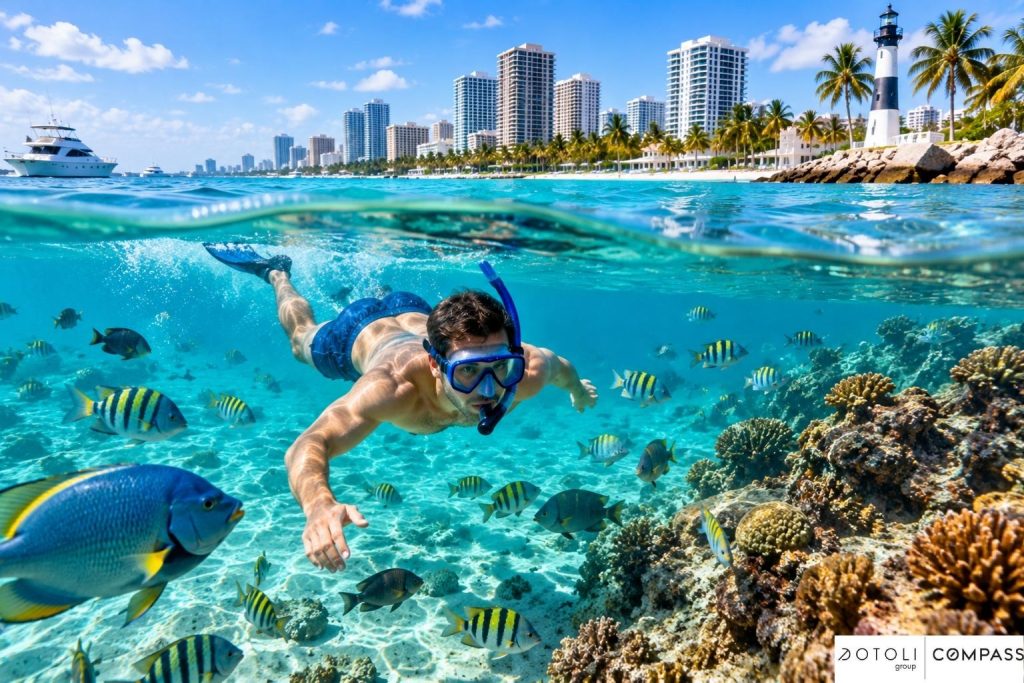
What you see depends on where you go and when you go. Tropical fish, elkhorn and staghorn coral, nurse sharks resting on the bottom, sea turtles, and the occasional spotted eagle ray are regular encounters in the Lauderdale-by-the-Sea area.
The reef is part of an actively monitored system. Broward County funds reef monitoring through its environmental programs, and the Florida DEP tracks coral health across the reef tract annually.
Where Do Fort Lauderdale Residents Actually Snorkel?
Five spots worth knowing. Each one serves a different profile.
Lauderdale-by-the-Sea Reef
This is the go-to for residents. The reef runs parallel to the beach, and the shallow section starts around 8 to 12 feet deep, making it accessible to anyone comfortable in open water. No boat, no tour, no fee. Park at the municipal lot on El Mar Drive, walk to the pier, and the reef is directly in front of you.
The coral coverage here is one of the healthiest in Broward County. Parrotfish, angelfish, snapper, barracuda, and nurse sharks are regular.
The town itself is built around beach and water access, and the community has maintained strong relationships with reef conservation groups over the years.
For residents of Lauderdale-by-the-Sea condos, the reef is genuinely a walking-distance amenity, not a day trip.
Vista Park Reef
Vista Park Reef sits along the Fort Lauderdale Beach corridor, accessed from the public beach near Sunrise Boulevard.
The depths here are shallower than Lauderdale-by-the-Sea in sections, which makes it better for newer snorkelers. The marine life is similar, but visibility can vary depending on weather and beach traffic.
This spot works well for residents in the Fort Lauderdale Beach corridor who want reef access without driving north to Lauderdale-by-the-Sea. It is less pristine than the LBTS reef, but it is close and free to access.
Dania Beach
Dania Beach sits at the northern edge of the Florida Reef System and offers a different character than the spots further north.
The Erojacks site here has artificial reef structure alongside natural reef, which attracts a different mix of marine life. Access is straightforward from John U. Lloyd State Park. The park charges a small day-use fee.
Residents from Dania Beach, Hollywood, and the southern Fort Lauderdale area use this as their local reef. It is calmer than the open beach spots, and the artificial structure makes for concentrated fish populations.
Pompano Beach and the Lighthouse Point Area
Pompano Beach’s drop-off site is one of the better family snorkeling spots in Broward County. The gradual depth increase and consistent visibility make it predictable, which matters for regular trips rather than one-time visits.
The Hugh Taylor Birch State Park area gives additional ocean access from within Fort Lauderdale proper, with a pedestrian tunnel under A1A connecting the park to the Atlantic side.
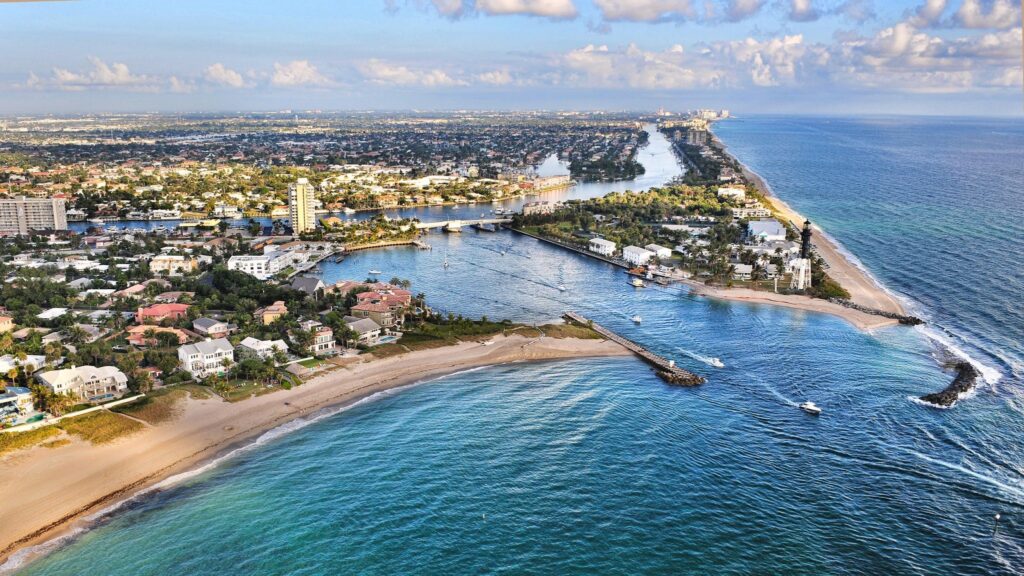
Residents in the Lighthouse Point area are well positioned for northern Broward reef access, which runs from Pompano through Deerfield Beach. The tips for waterfront property buyers cover how water and beach access factor into property evaluation in this area.
Which Fort Lauderdale Neighborhoods Put You Closest to the Reef?
Snorkeling access is genuinely neighborhood-specific. The difference between a 5-minute walk and a 25-minute drive matters when you are deciding whether this becomes a regular part of your life or just something you do a few times a year.
Lauderdale-by-the-Sea is the answer if reef access is the top priority. It is a separate municipality just north of Fort Lauderdale. Still, it sits within the Fort Lauderdale metro area and is routinely considered in searches for Fort Lauderdale waterfront real estate. Residents here can walk to the reef. That level of access does not exist anywhere else in Broward County.
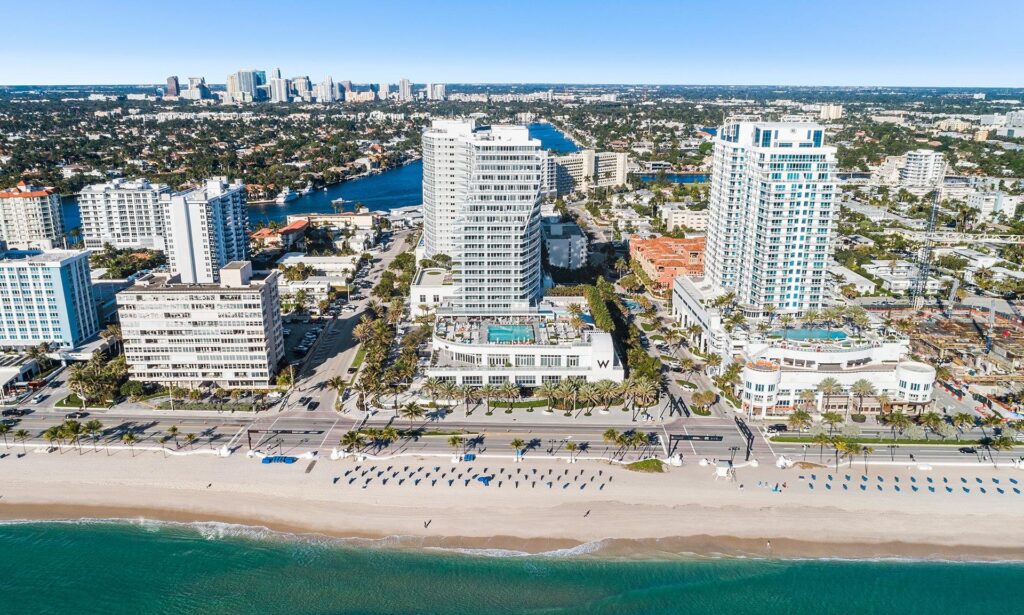
Fort Lauderdale Beach corridor puts residents within a mile of Vista Park Reef. Properties along A1A and within a few blocks of the beach are a short walk or bike ride to the water.
The beach corridor between Sunrise and Las Olas Boulevard is the closest Fort Lauderdale proper address to regular reef snorkeling.
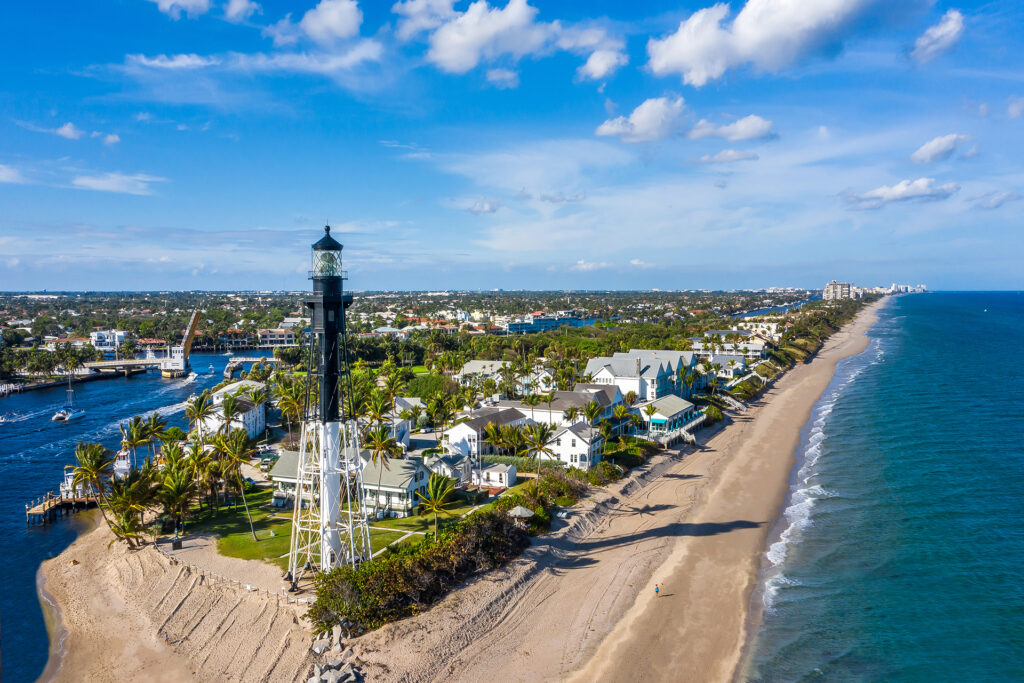
Lighthouse Point serves residents who want the northern Broward reef access near Pompano and Deerfield. Properties in Lighthouse Point sit on quiet canals with ocean access nearby.
Homes in Lighthouse Point attract buyers who want a low-key, boat-and-beach lifestyle with less density than Fort Lauderdale proper.
When Is the Best Time to Snorkel in Fort Lauderdale as a Resident?
Year-round, but the experience changes by season.
November through April is the window most residents prefer. Water clarity is at its best, temperatures are comfortable without the humidity, and the beaches are uncrowded on weekdays. This is when you go spontaneously. You finish work, drive to LBTS, snorkel for an hour, and are home before sunset.
May through October works fine in the mornings. Water temperature peaks in August and September, which is comfortable for snorkeling but means more jellyfish in some years.
Afternoon thunderstorms are daily in summer and cut visibility temporarily after rain. The practical rhythm for summer snorkeling is early mornings before 10 a.m.
The point is that this is not a seasonal activity in Fort Lauderdale the way it would be in a northern coastal market.
Residents get 10 to 11 months of genuinely usable snorkeling access in an average year. That lifestyle difference is what buyers from cold-weather states respond to immediately when they visit.
Does Living Near Fort Lauderdale Snorkeling Spots Affect Property Values?
Yes, though the mechanism is indirect.
Properties in Lauderdale-by-the-Sea and the Fort Lauderdale beach corridor command a consistent premium over comparable properties further inland. Part of that premium reflects beachfront scarcity.
Part reflects the walkable lifestyle that beach-adjacent addresses provide, and snorkeling access is one component of that lifestyle package.
Buyers relocating from the Northeast specifically name beach and water access as a primary driver of their Fort Lauderdale search. When a buyer says they want to be near the ocean, they typically mean they want the routine access that beach-corridor addresses provide.
Snorkeling, paddleboarding, and morning swims these are the daily activities that define why someone pays the coastal premium.
The Hollywood Beach Fort Lauderdale guide covers the southern Broward beach corridor for buyers whose search extends beyond Fort Lauderdale proper. It is relevant for buyers who want a beach lifestyle at a lower price point than the main Fort Lauderdale beach corridor.
Thinking About Buying Near Fort Lauderdale’s Water?
We sell in every neighborhood in this guide. We know exactly which Lauderdale-by-the-Sea properties are within walking distance of the pier, which Fort Lauderdale Beach corridor addresses give you reef access without tourist density, and which Lighthouse Point homes put you within minutes of the northern Broward reef system.
If you are buying partly for the water, that conversation belongs at the beginning of your search, not after you have already picked a neighborhood. Tell us what the lifestyle looks like for you, and we will show you the addresses that deliver it.