
Homes near parks in Fort Lauderdale sell for 8 to 20 percent more than comparable properties without park access, according to Trust for Public Land research. That is not a soft lifestyle claim. It shows up in comparable sales data, appraisals, and days-on-market figures for specific neighborhoods.
Fort Lauderdale has more than 60 parks covering over 2,000 acres within city limits, per the City of Fort Lauderdale Parks and Recreation Department. The premium those parks generate depends almost entirely on which park, how close it is, and whether residents can actually walk to it.
How Much Do Green Spaces Add to Property Values?
The numbers are more specific than most buyers expect.
Trust for Public Land research puts the park proximity premium at 8 to 20 percent for homes within a 10-minute walk of a park. The USDA Forest Service found mature street trees independently add approximately 10 percent to nearby residential values.
A University of Washington study found individual mature trees in front of a home add between $7,000 and $40,000 to assessed value depending on species and size.
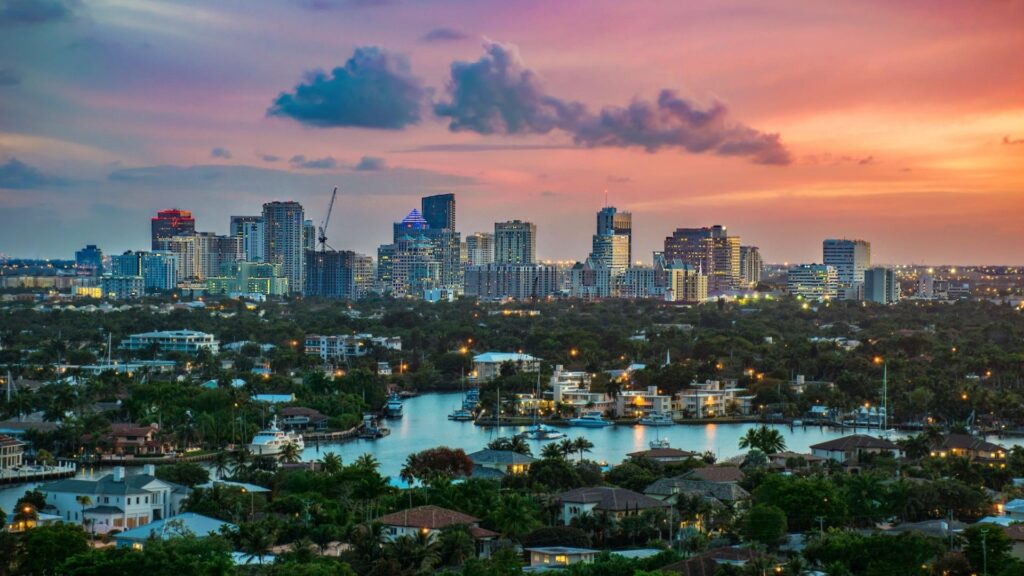
In Fort Lauderdale, that premium compounds on top of an already strong appreciation base. The city saw 63.45 percent appreciation over five years through Q4 2025, per NeighborhoodScout.
Neighborhoods like Victoria Park and Rio Vista, where mature canopy took 40 to 50 years to develop, have held a consistent premium over newer western Broward inventory where no equivalent canopy exists yet.
The mechanism is straightforward: buyers from walkable northern cities who relocate to Fort Lauderdale specifically target neighborhoods that replicate what they had.
Newer suburban construction doesn’t offer a shaded street, a usable park two blocks away, or a tree-lined corridor. They pay for it because they cannot build it.
Which Fort Lauderdale Neighborhoods Have the Best Park Access?
Victoria Park and Colee Hammock
Victoria Park is Fort Lauderdale’s most park-integrated residential neighborhood. Colee Hammock Park sits inside the neighborhood with old-growth oaks and banyans that define its character. Residents also have Holiday Park, the city’s largest at 90 acres, within a 5-minute walk to the north.
That combination of an embedded neighborhood park and a large multi-use facility within walking distance is rare in Fort Lauderdale. It is why Victoria Park homes consistently hold value through market cycles that hit other neighborhoods harder.
Fort Lauderdale Beach Corridor
Hugh Taylor Birch State Park runs 180 acres between the Intracoastal Waterway and A1A in the heart of the beach corridor. It has freshwater lagoons, kayak launch access, nature trails, and a pedestrian tunnel under A1A connecting directly to the Atlantic beach.
Adjacent properties benefit from something no amount of landscaping budget can replicate: 180 acres of permanently protected land that cannot be developed. That supply constraint is a real pricing factor for the streets between the park and the Intracoastal, and it has been for decades.
Rio Vista
Rio Vista borders Holiday Park and has mature street canopy throughout. Residents on most blocks can walk to the park in under 10 minutes. The neighborhood also connects to the Fort Lauderdale Riverwalk corridor, which adds a second green amenity to the same address.
The overlap of park access, canopy, and downtown proximity keeps buyer demand in Rio Vista above the city median for equivalent square footage year over year.
Why Buyers Pay a Premium for Park Access Here
Fort Lauderdale’s year-round climate makes park proximity worth more here than in most U.S. cities. A park that is genuinely usable 11 months per year is a different asset than a seasonal amenity. Victoria Park residents use Colee Hammock Park on Tuesday mornings in January. That daily usability is what northern relocators are paying for, and it is what drives consistent demand for those specific addresses.
The other factor is irreproducibility. Victoria Park’s canopy took 40-plus years to grow. Harbor Beach, Rio Vista, and Colee Hammock have the same irreplaceable maturity.
A new-construction neighborhood in Weston or Miramar may have a lower entry price and newer finishes. It will not have a 50-year oak canopy for another 50 years. That gap is permanent on any reasonable buyer timeline.
Well-maintained parks also signal neighborhood stability in ways that buyers read correctly. The city, not an HOA, maintains parks in these neighborhoods.
The condition of Holiday Park and Colee Hammock Park has been consistent for decades. Buyers treat that consistency as a confidence signal about the surrounding neighborhood, which it is.
How Green Spaces Affect Fort Lauderdale Rental Properties
The park proximity premium holds in the rental market. Tenants in park-adjacent Fort Lauderdale neighborhoods pay more per month than tenants in comparable units without that access, and they stay longer at lease renewal.
Retention matters more to investors than the rate premium. A tenant in Victoria Park who can walk to Colee Hammock Park every morning is harder to move than a tenant whose next option is a comparable unit in a neighborhood without that access. Lower turnover means lower vacancy cost, which compounds over a 5-year hold.
For investors evaluating Fort Lauderdale properties, park proximity is a legitimate underwriting factor, not just a lifestyle detail.
The top reasons to buy a home in Fort Lauderdale cover the full picture of what sustains both owner and renter demand in this market.
What to Check Before Buying Near a Fort Lauderdale Park
Park proximity on a listing means very little without these specifics.
Actual walk distance, not map distance. A property described as “near Holiday Park” could be a 5-minute walk or a 20-minute walk depending on the specific street. Pull the walking route, not the crow-flies distance, before you evaluate the premium.
Park condition and maintenance. Visit on a weekday. Colee Hammock Park and Holiday Park are well-maintained city facilities with consistent upkeep. Not every Fort Lauderdale park meets that standard. The condition of the park you are actually buying near matters more than its size.
Whether the green space is protected. A vacant lot functioning as informal open space is not park. Verify any green space adjacent to the property is formally designated parkland before you factor it into the premium you are paying.
Street-level canopy, not just neighborhood-level. Victoria Park has full canopy on most blocks, but not all. Two streets in the same neighborhood can have meaningfully different canopy coverage. Look at the specific block.
FAQ
How much do green spaces increase property values in Fort Lauderdale?
Homes within a 10-minute walk of a park sell for 8 to 20 percent more than comparable properties without that access, per Trust for Public Land research. Mature street trees add approximately 10 percent independently, per USDA Forest Service data.
In Fort Lauderdale, neighborhoods with both park access and decades-old canopy consistently hold values above the city median.
Which Fort Lauderdale neighborhoods have the best park access?
Victoria Park has the strongest combination: Colee Hammock Park inside the neighborhood plus Holiday Park within a 5-minute walk. Rio Vista borders Holiday Park directly.
The Fort Lauderdale Beach corridor has Hugh Taylor Birch State Park, a 180-acre permanent preserve. All three carry consistent premiums over comparable square footage elsewhere in the city.
Do homes near Fort Lauderdale parks sell faster?
Yes. Park-adjacent addresses in Victoria Park and Rio Vista consistently turn over faster than comparable properties without that access.
Buyers targeting the walkable park lifestyle move quickly when they find the right address because inventory in those specific neighborhoods is limited.
Does park proximity affect rental properties in Fort Lauderdale?
Yes. Park-adjacent rentals in Fort Lauderdale command higher monthly rates and have lower vacancy because tenants in those neighborhoods are harder to move at lease renewal. For investors, the retention benefit is as significant as the rate premium.
What Fort Lauderdale parks add the most property value?
Hugh Taylor Birch State Park adds the highest individual premium because of its size, permanent protected status, and beachfront connection.
Colee Hammock Park anchors the Victoria Park neighborhood premium. Holiday Park drives values in Rio Vista and the surrounding Central Beach area.
Is Fort Lauderdale a good city for park access compared to Miami?
Yes. Fort Lauderdale has more park acres per capita than Miami and a higher percentage of residents within walking distance of a park.
Miami’s park infrastructure is concentrated in specific areas. Fort Lauderdale’s is more evenly distributed across the eastern neighborhoods, which is why the park-proximity premium is more addressable here for buyers who prioritize it.
How Fort Lauderdale Compares on Green Space
Fort Lauderdale ranks above the national average for park access. More than 70 percent of residents live within a 10-minute walk of a park, per Trust for Public Land’s 2025 ParkScore index. That puts Fort Lauderdale in the top half of comparably sized coastal cities.
Miami has fewer park acres per capita. Boca Raton has more total green space but lower walkability to it for most residents.
Fort Lauderdale’s combination of urban park density, mature canopy in the eastern neighborhoods, and two state park assets (Hugh Taylor Birch, John U. Lloyd) within the metro gives it a green space profile that is genuinely competitive with northern cities that buyers compare it against.
Looking To Buy a Home in Green Space
Dotoli Group works exclusively in Fort Lauderdale. We know which specific blocks in Victoria Park have full canopy and which do not.
We know which Rio Vista streets reach Holiday Park in a 7-minute walk versus a 15-minute one. If park access is part of what you are buying, tell us that upfront. We will build your search around addresses that actually deliver it.