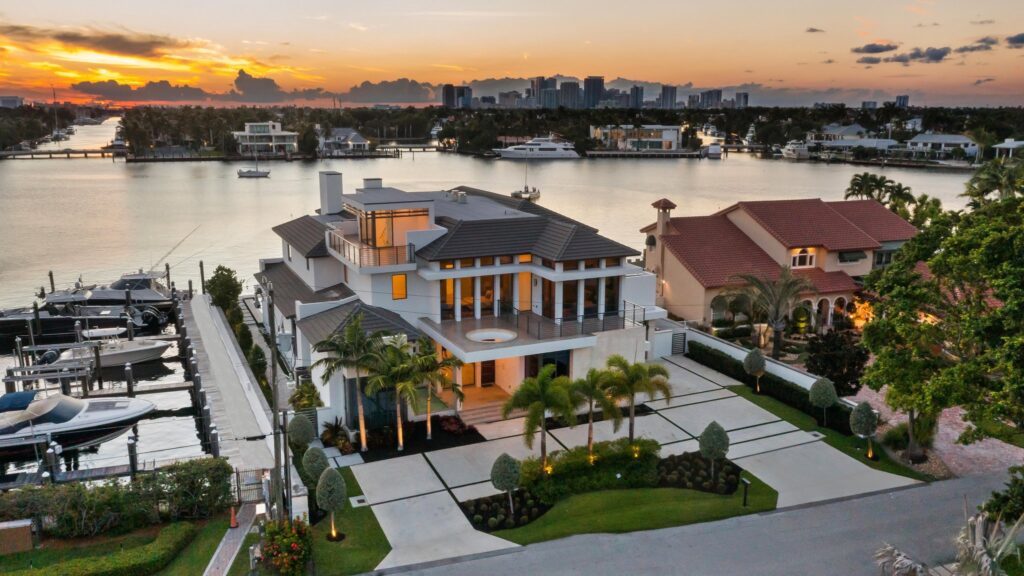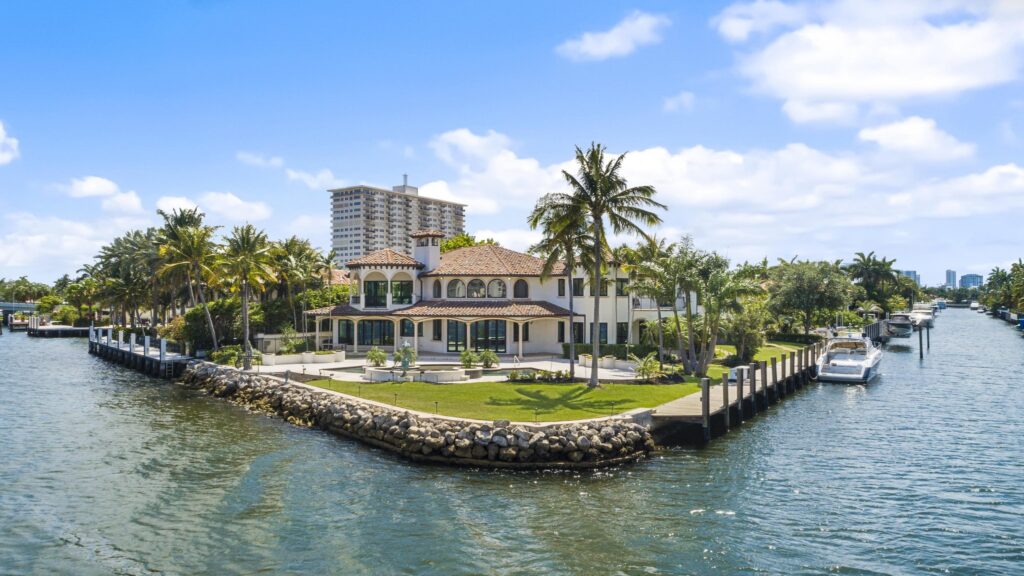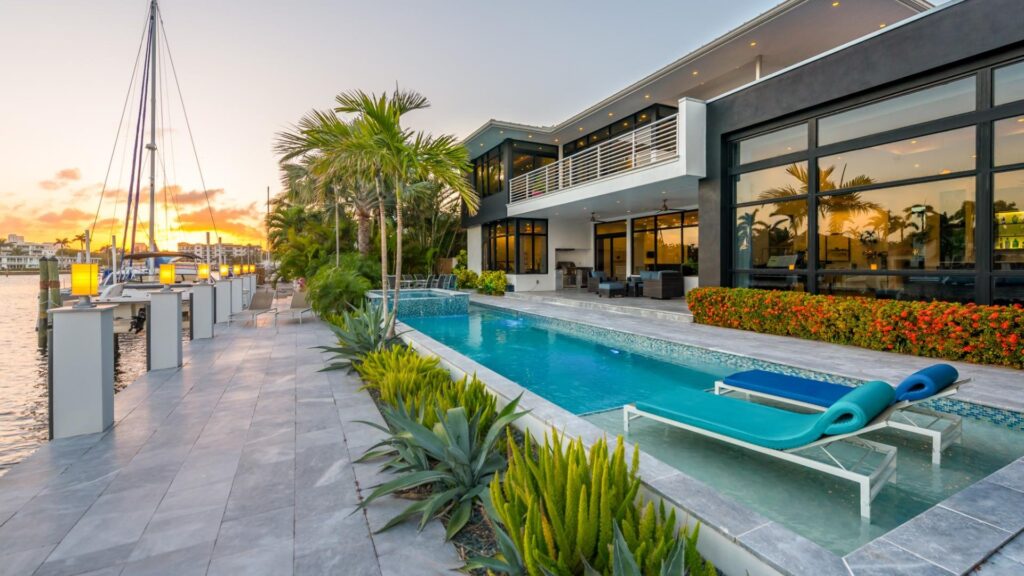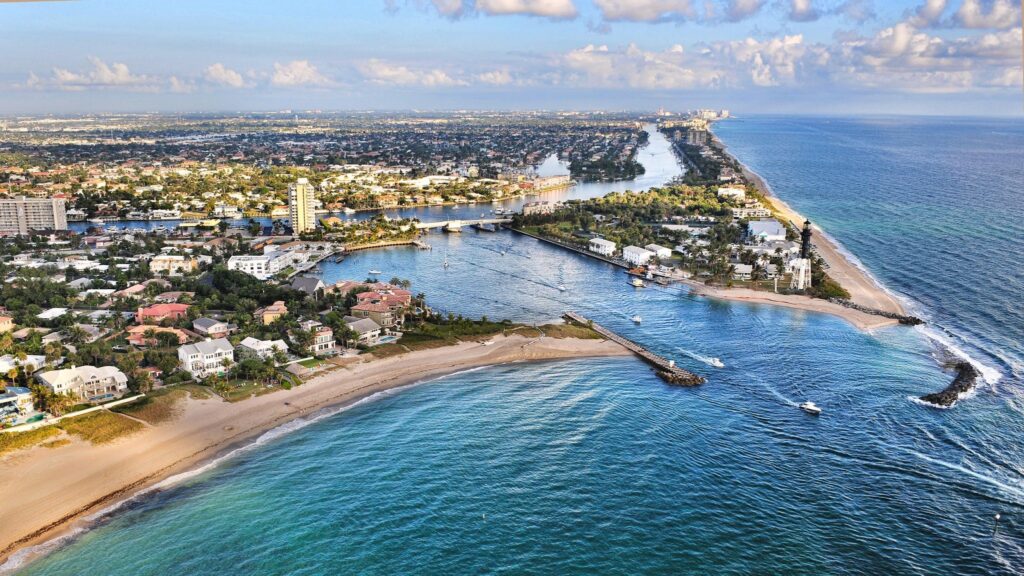
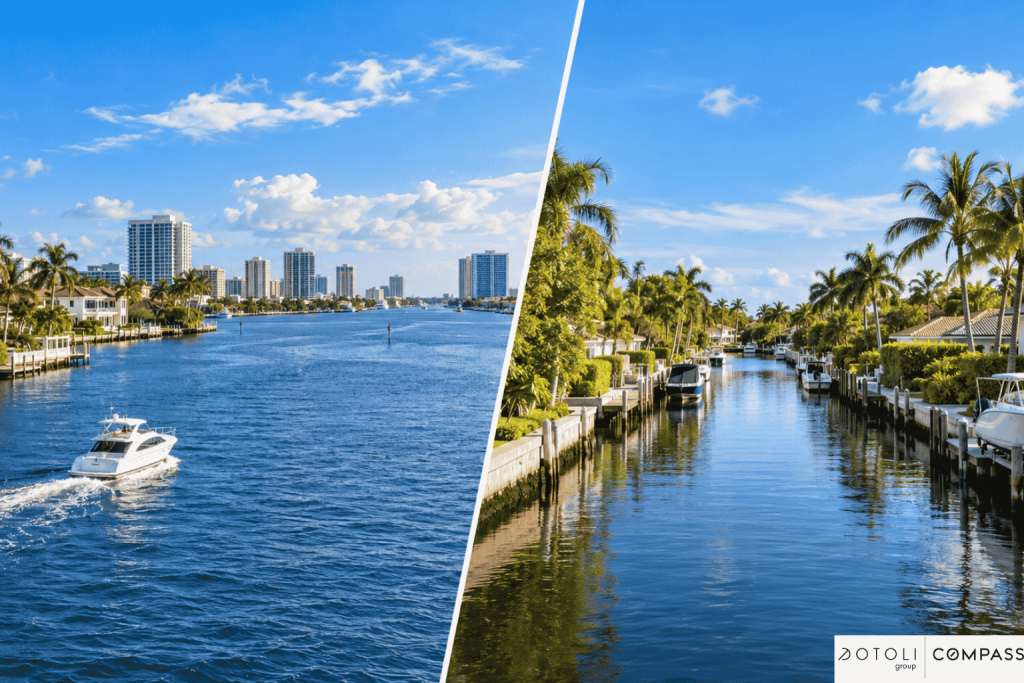

Buying a waterfront home in Fort Lauderdale involves more than choosing a beautiful view. The type of water behind the property can affect your boating experience, privacy, maintenance responsibilities, purchase price, and long-term enjoyment of the home.
Intracoastal homes offer direct frontage on a major navigable waterway, while canal-front homes sit along smaller waterways that may connect to the Intracoastal. Neither is automatically better. The right choice depends on your boat, desired lifestyle, tolerance for passing boat traffic, and the specific property’s condition and navigational access.
For buyers comparing Fort Lauderdale waterfront real estate, understanding these differences before making an offer can help narrow the search and avoid costly surprises.
What Is the Difference Between Intracoastal and Canal-Front Homes?
| Feature | Intracoastal-front home | Canal-front home |
|---|---|---|
| Waterfront location | Direct frontage on the main waterway | Frontage on a smaller canal |
| Water views | Often broader, with more open-water scenery | Depends on canal width, layout, and neighboring properties |
| Boat traffic | Generally more through traffic and passing vessels | Often less through traffic on residential canals |
| Docking | Depends on the property’s dock, water depth, and conditions | Depends on canal dimensions, depth, dock, and access route |
| Ocean access | The waterway provides a navigable route toward ocean inlets, subject to navigation conditions | Depends on the canal’s connection, route, bridges, and vessel restrictions |
| Privacy | More exposure to passing vessels may occur | Some interior canals offer a more sheltered setting |
| Maintenance | Seawall, dock, corrosion, and wake exposure require assessment | Seawall, dock, corrosion, and local water conditions require assessment |
| Pricing | Depends on frontage, location, views, condition, and comparable sales | Depends on canal characteristics, location, lot, home, and comparable sales |
These are general distinctions, not guarantees. A wide, deep, well-connected canal may be more useful to a particular boat owner than an Intracoastal property with unsuitable dock dimensions or other restrictions.
1. Boating Access: Which Waterfront Property Is Better?
For boat owners, the most important question is not simply whether a property is on the Intracoastal or a canal. It is whether the property provides practical access for the vessel you intend to use.
Intracoastal homes: Direct access to the main waterway
A home directly on the Intracoastal puts the dock along a major navigable route. Depending on its exact location and conditions, this can make the boating route more straightforward than leaving a residential canal and navigating to the main waterway.
Potential advantages include:
* Direct frontage on the main navigation corridor.
* Broad water views and an active boating environment.
* Access to routes connecting with South Florida’s coastal inlets.
* Convenient access to boating destinations and marine services, depending on location.
However, direct Intracoastal frontage does not automatically guarantee that a particular boat can be docked safely or that every voyage will be unrestricted. Dock configuration, water depth alongside the property, local navigation rules, and the vessel’s dimensions still matter.
Canal-front homes: The route matters as much as the dock
Canal-front homes can be excellent choices for boaters, but you must evaluate each canal individually.
Before purchasing, establish:
* The water depth available at the dock and along the route.
* The canal’s width and the space available for maneuvering.
* Whether fixed bridges or other overhead restrictions lie between the property and your intended destination.
* Whether the vessel’s draft, beam, air draft, and turning requirements match the route.
* Whether the dock and any boat lift suit your vessel.
A canal property may offer excellent access for a smaller center-console boat, while a larger motor yacht may require a wider, deeper route with fewer restrictions.
Buyer tip: Ask for the actual navigational route from the property’s dock to the Intracoastal and then to the intended inlet. Verify restrictions along the entire route rather than relying on a listing description that says “ocean access.”
For additional guidance, read DOTOLI Group’s guide to bridge clearance for boats in Fort Lauderdale.
2. Water Depth, Bridge Clearance, and Dock Suitability
A waterfront property is only as useful for boating as its dock and navigable route allow.
Three measurements deserve particular attention.
Water depth
Water depth determines how much water your boat needs beneath its hull. A vessel with a deeper draft may be unsuitable for a shallow canal, especially when water levels change.
Ask whether the available depth has been measured recently, whether it refers to the dock or the navigation channel, and what conditions affect the measurement. If the answer is important to your purchase, arrange for appropriate marine expertise to verify it.
Bridge clearance
Bridge clearance is the vertical space available for a vessel to pass underneath a bridge. Fixed bridges can be a decisive limitation for boats with tall masts, antennas, radar equipment, or hardtops.
A canal’s connection to the Intracoastal does not necessarily mean it offers unrestricted ocean access. Check the entire route and verify relevant clearances against your vessel’s actual air draft, including equipment that cannot be lowered.
Dock and boat-lift dimensions
Confirm the dock’s usable length and configuration, the water depth alongside it, and the boat lift’s rated capacity if one is installed.
Also determine whether the existing dock, lift, and seawall have the relevant permits and approvals. Do not assume an existing structure can automatically be modified or replaced in the same configuration.
For further reading, see DOTOLI Group’s Fort Lauderdale waterfront homes with private docks guide.
3. Privacy, Views, and Everyday Waterfront Living
The difference between Intracoastal and canal-front living is not just about navigation. It also affects what you see and hear from your backyard.
Living directly on the Intracoastal
Intracoastal frontage often appeals to buyers who enjoy expansive views, passing yachts, and the energy of a major boating corridor.
Depending on the property’s orientation and surrounding development, you may enjoy a more open outlook than on a narrow residential canal. The trade-off is that passing vessels can create noise, wakes, and activity near the seawall.
If privacy matters, visit the property at different times of day and observe boat traffic rather than judging the setting from listing photos alone.
Living on a residential canal
A residential canal may provide a more sheltered atmosphere, especially where through traffic is limited and neighboring homes are set back from the water.
Canal-front properties can suit buyers who want to spend time on a dock, enjoy water views, or keep a suitable boat behind the house without facing the activity of the main waterway.
However, not every canal is quiet or private. Width, layout, vessel traffic, neighboring docks, and the property’s location all affect the experience.
Which offers better views?
Intracoastal homes often benefit buyers who value broad, open-water scenery. Canal-front homes can offer attractive views of boats, landscaping, and residential waterfront architecture.
The better choice depends on the individual lot. Evaluate the view from the living room, outdoor entertaining areas, pool deck, and dock, not only from the street or the listing’s hero image.
4. Which Type of Home Costs More?
There is no reliable universal price difference between Intracoastal and canal-front homes. Waterfront property values depend on several variables, and two homes in the same general category can have very different asking prices and market values.
Important factors include:
Location: Neighborhood, proximity to beaches and amenities, and access to major routes.
Water frontage: The type of waterway, the width of the view, and the property’s position.
Boating utility: Water depth, bridge restrictions, dock dimensions, and access to the desired destination.
Lot characteristics: Lot size, shape, orientation, and usable outdoor space.
Home condition: Construction quality, renovations, roof condition, and modern features.
Waterfront infrastructure: Seawall condition, dock condition, and permitted improvements.
Market conditions: Comparable closed sales, current competing listings, and buyer demand.
Direct Intracoastal frontage may attract buyers who value open-water views or a specific boating location. A canal-front home may better fit buyers who prioritize a quieter setting or a different budget.
Don’t assume either outcome without comparing relevant properties.
How to compare prices fairly
When evaluating two homes, use recent comparable sales with similar characteristics. Ideally, compare properties in the same neighborhood or a closely comparable market segment, accounting for differences in lot size, frontage, home condition, dock utility, and navigational access.
Do not compare an Intracoastal estate with a smaller canal home solely on price per square foot. Waterfront characteristics can materially affect what buyers are paying.
Also distinguish asking prices from closed-sale prices. Listings show what sellers hope to receive; completed transactions show what buyers actually paid.
For current market decisions, ask a local real estate professional to prepare a comparative market analysis using recent, relevant sales rather than relying on broad citywide averages.
5. Seawalls, Docks, and Waterfront Maintenance
Both Intracoastal and canal-front properties require close attention to the structures separating land from water.
A waterfront home can look immaculate while its dock, seawall, pilings, or related infrastructure needs significant work.
What to inspect
Before making an offer, consider arranging appropriate inspections of:
1. Seawall: Look for visible cracking, movement, erosion, settlement, deterioration, or other signs that warrant professional evaluation.
2. Dock and pilings: Assess structural condition, attachment points, decking, and signs of corrosion or damage.
3. Boat lift: Verify capacity, mechanical condition, maintenance history, and suitability for the intended vessel.
4. Shoreline drainage: Check for drainage problems, erosion, or signs of water entering the property.
5. Permits and records: Request available permits, approvals, repair records, and warranties for existing waterfront structures.
The type and extent of wear will vary by property. Exposure to waves and wakes, salt or brackish water, materials, construction, and maintenance history all matter.
Fort Lauderdale’s official Living Seawall Permit Fee Assistance Program describes local requirements and potential permit-fee assistance for qualifying living-seawall projects. It also shows why buyers should review applicable city requirements before planning waterfront improvements.
Don’t assume replacing a seawall or extending a dock is straightforward. Confirm permitting requirements and feasibility with the appropriate authorities and qualified professionals before including proposed improvements in your purchase calculations.
6. Flood Risk, Insurance, and Long-Term Ownership Costs
Waterfront views can be appealing, but buyers should evaluate the financial and physical risks associated with the property’s exact location.
Neither the Intracoastal label nor the canal-front label alone determines a home’s flood risk or insurance cost.
Check the property’s flood exposure
Start with the official FEMA Flood Map Service Center to review available flood-map information for the property.
A flood-zone designation is an important part of due diligence, but it does not fully predict whether a particular home will flood. Buyers should also investigate the property’s elevation, drainage, flood history where available, construction characteristics, and potential exposure to coastal flooding.
Obtain property-specific insurance information
Request insurance estimates early in the buying process. Depending on the home and its circumstances, costs may be affected by the structure, elevation, roof and wind-mitigation features, claims history, coverage limits, deductibles, and insurance availability.
Determine whether flood coverage is required by the lender and whether additional coverage is appropriate for your circumstances. Do not assume that a quote for one waterfront home applies to another.
Budget for recurring maintenance
Beyond the mortgage and standard homeownership expenses, account for potential dock and seawall maintenance, marine hardware corrosion, landscaping, drainage, pool upkeep, and other property-specific costs.
Ask for records where available and budget for future work identified during inspections. A lower purchase price doesn’t necessarily mean a lower total cost of ownership if the property needs substantial repairs.
7. Which Fort Lauderdale Waterfront Neighborhoods Should You Consider?
Start with your lifestyle and property requirements, not a generic ranking of waterfront areas.
The following locations provide useful starting points for researching Fort Lauderdale’s waterfront market. You must still confirm the exact waterway, dock characteristics, and navigational route for each property.
Las Olas Isles
Las Olas Isles is worth exploring for buyers seeking waterfront homes near Las Olas Boulevard, with access to dining, shopping, and the city’s boating lifestyle.
Properties vary in their relationship to the Intracoastal and the surrounding canal network. Verify whether a specific listing directly fronts the main waterway or sits on a connecting canal.
Harbor Beach
Harbor Beach is a strong option for buyers seeking luxury waterfront estates, privacy, and boating-oriented properties.
The suitability of a home for a particular vessel depends on the individual property’s location, dock, water depth, and navigational route, not simply the neighborhood name.
Coral Ridge
Coral Ridge offers another area to investigate when comparing residential waterfront settings and access to local amenities.
Canal characteristics and boat access can vary, so buyers should evaluate the specific property and route before deciding whether a home meets their boating needs.
How to choose among neighborhoods
Compare the actual homes available against your priorities:
* Do you want direct Intracoastal frontage or would a residential canal meet your needs?
* How large is your boat, and what route restrictions can you accept?
* Is a quieter residential setting more important than open-water views?
* How close do you want to be to dining, shopping, beaches, and marine services?
* What purchase price and ongoing maintenance budget are comfortable for you?
For a broader market overview, visit DOTOLI Group’s Intracoastal Waterway guide for Fort Lauderdale and its waterfront home-buying checklist.
8. A Buyer Checklist Before Making an Offer
- Use this checklist when comparing an Intracoastal-front property with a canal-front home.
- Confirm the exact waterfront type and whether the property directly fronts the Intracoastal.
- Identify the route from the dock to your intended boating destination.
- Verify water depth, canal width, bridge clearance, and turning requirements for your vessel.
- Inspect the dock, seawall, pilings, and any boat lift.
- Request relevant permits, repair records, and available waterfront maintenance documentation.
- Review flood-map information and obtain property-specific insurance estimates.
- Compare recent closed sales with similar waterfront characteristics.
- Evaluate boat traffic, wake exposure, privacy, and views in person.
- Investigate applicable permits and approvals before assuming you can alter docks or seawalls.
- Estimate ongoing maintenance and potential repair costs alongside the purchase price.
For complex waterfront purchases, consider engaging a qualified marine surveyor or other appropriate specialist to assess the vessel-related requirements, as well as licensed professionals for structural, seawall, dock, and insurance questions.
Frequently Asked Questions
Is an Intracoastal home better than a canal-front home in Fort Lauderdale?
Neither is universally better. Intracoastal homes can appeal to buyers seeking broad water views and direct frontage on the main waterway. Canal-front homes may provide a more sheltered setting, and some offer excellent boating access. The right choice depends on the property, the buyer’s vessel, privacy preferences, budget, and maintenance considerations.
Are canal-front homes in Fort Lauderdale cheaper than Intracoastal homes?
Not always. Price depends on location, home condition, lot size, water frontage, dock utility, navigational access, and comparable sales. Evaluate similar properties and recent closed transactions rather than assuming that every canal home is less expensive.
Do all canal-front homes in Fort Lauderdale have ocean access?
No. A canal’s connection to the broader waterway system and the restrictions along the route determine whether a boat can reach the intended destination. Check the exact route, water depth, bridge clearances, and other relevant navigation limitations before purchasing.
Are Intracoastal homes better for large boats?
Direct Intracoastal frontage can be attractive for larger-vessel owners, but it does not guarantee that a particular dock can accommodate a particular boat. Verify water depth, dock dimensions, vessel maneuvering space, and applicable navigation conditions.
Which type of waterfront home offers more privacy?
A residential canal may offer less through traffic than a busy section of the Intracoastal, but privacy varies by location and layout. Consider canal width, neighboring properties, boat traffic, dock placement, and the home’s orientation.
What should I inspect before buying a waterfront home?
Review the seawall, dock, pilings, boat lift, drainage, flood exposure, insurance, permits, and navigational access. Use qualified professionals to investigate any structural or marine concerns before committing to the purchase.
How can I verify flood risk for a Fort Lauderdale waterfront home?
Use FEMA’s official Flood Map Service Center to review available flood-map information for the address. Then get property-specific insurance estimates and investigate elevation, drainage, flood history (where available), and other relevant risk factors.
Final Thoughts: Choose the Waterway That Fits Your Lifestyle
Choosing between Intracoastal and canal-front homes in Fort Lauderdale ultimately comes down to matching your property, boating needs, lifestyle, and budget.
An Intracoastal home may be the right fit if you value open-water views and direct frontage on a major boating corridor. A canal-front property may suit you better if you prefer a residential waterfront setting and can verify that the canal meets your boating requirements.
Before making an offer, look beyond the listing photographs and waterfront label. Confirm the navigational route, inspect the dock and seawall, review flood exposure, obtain insurance estimates, and compare relevant closed sales.
Ready to compare waterfront homes in Fort Lauderdale?
Explore DOTOLI Group’s Fort Lauderdale waterfront home buying guide or contact the team to discuss your property requirements and find homes that fit your preferred waterfront lifestyle.