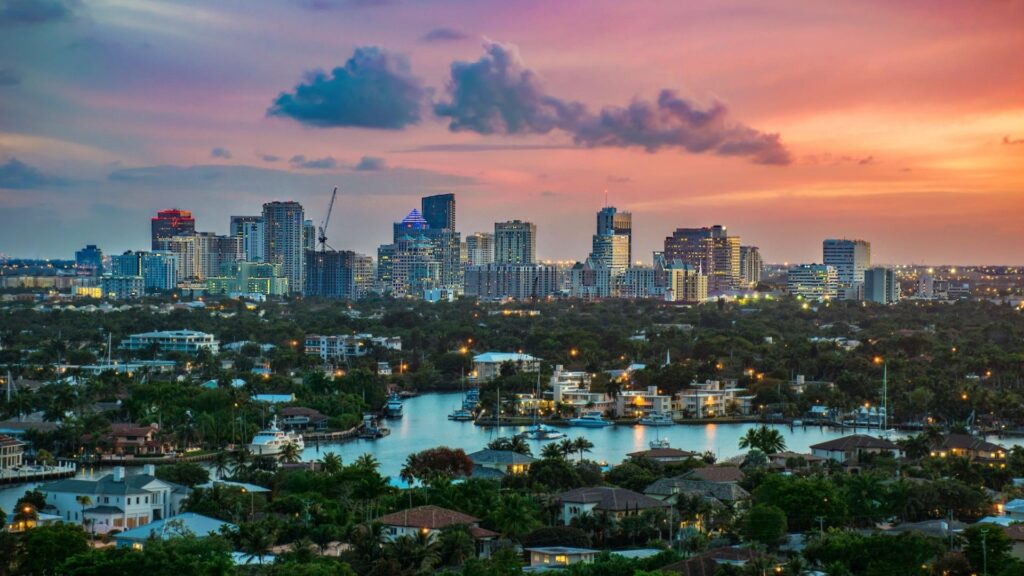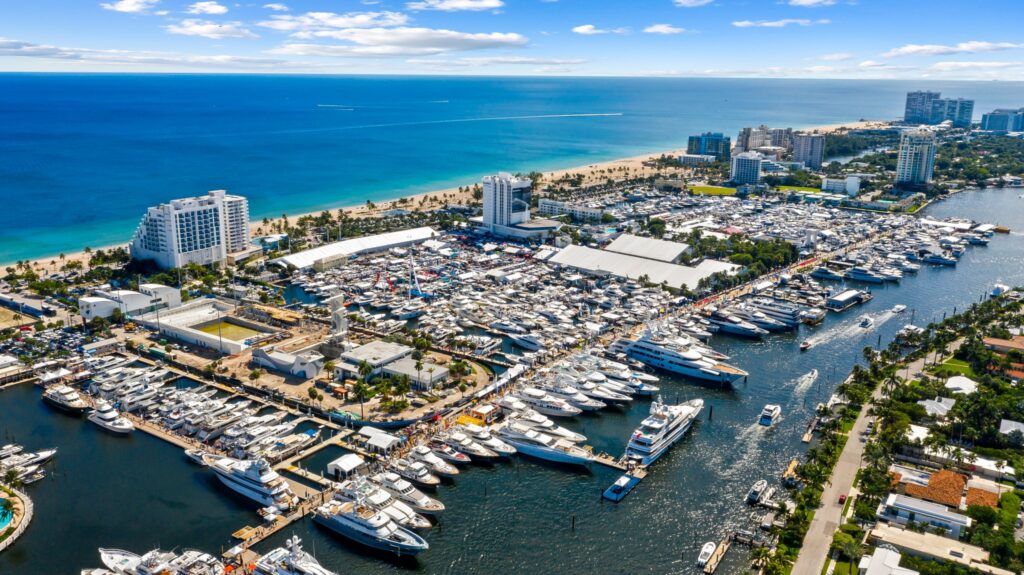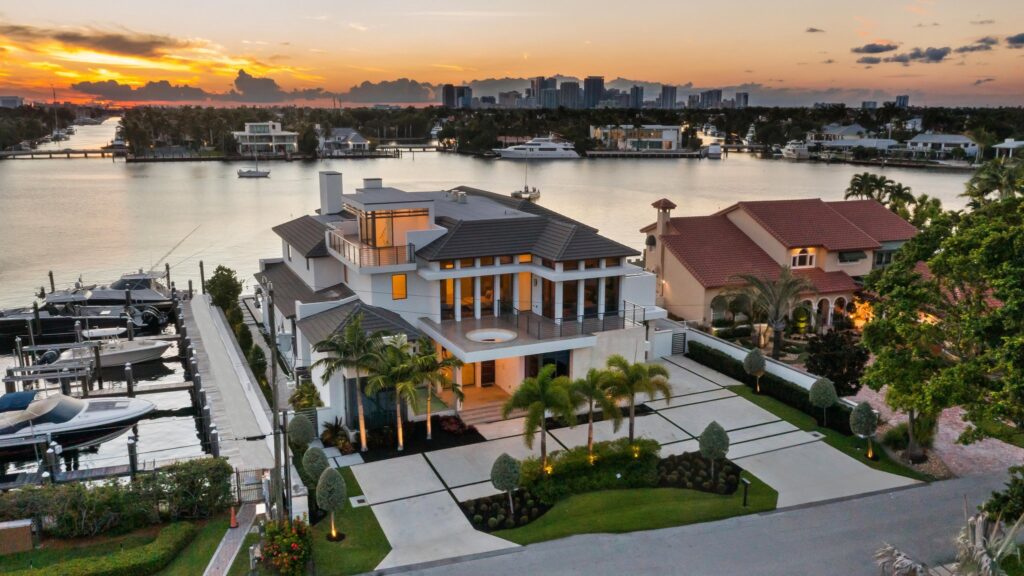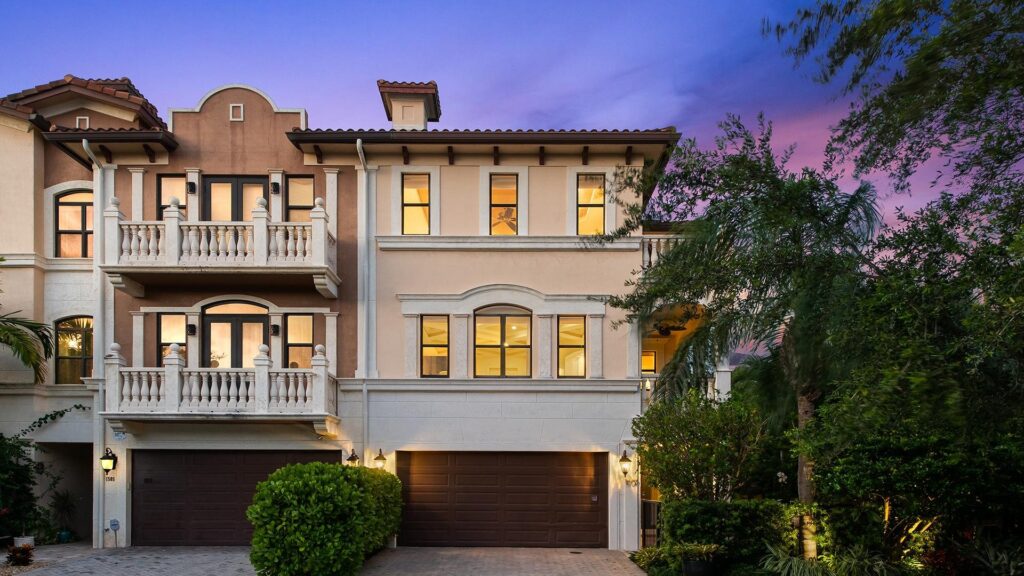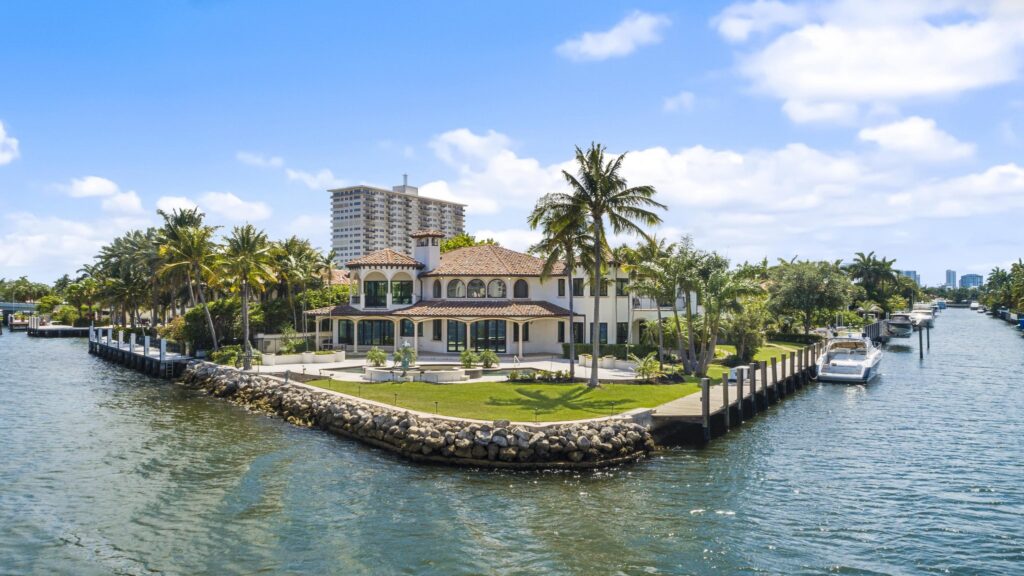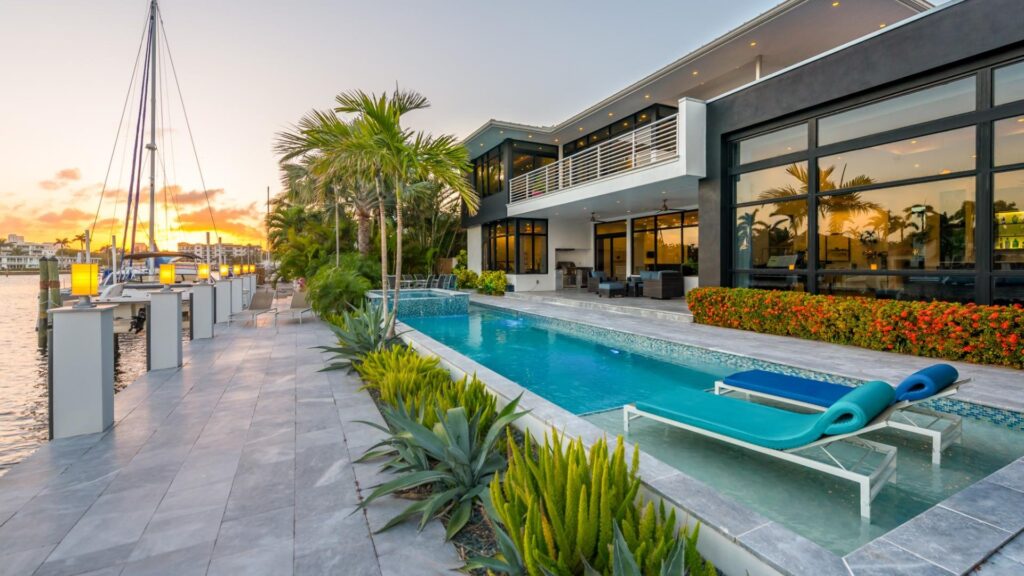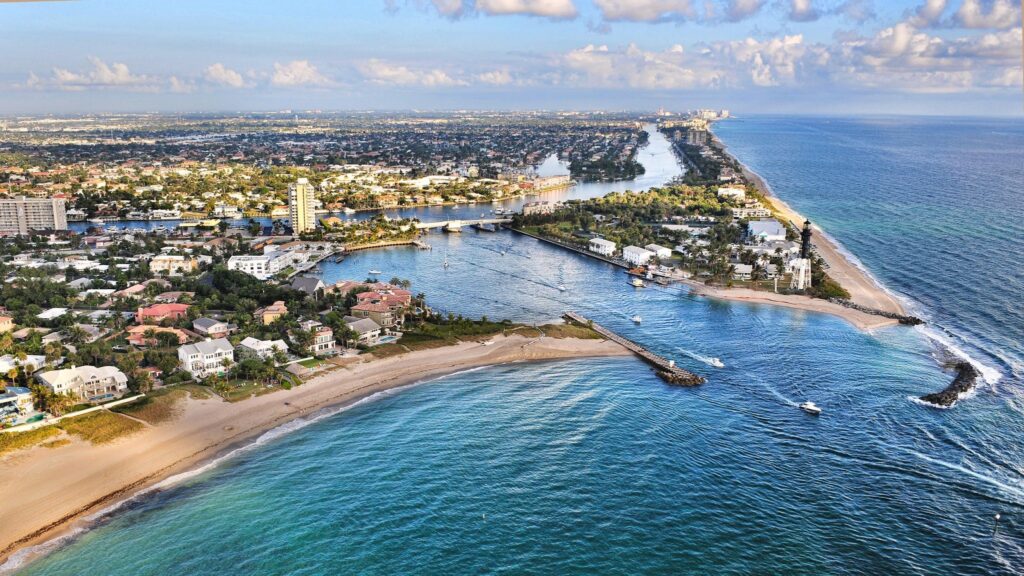
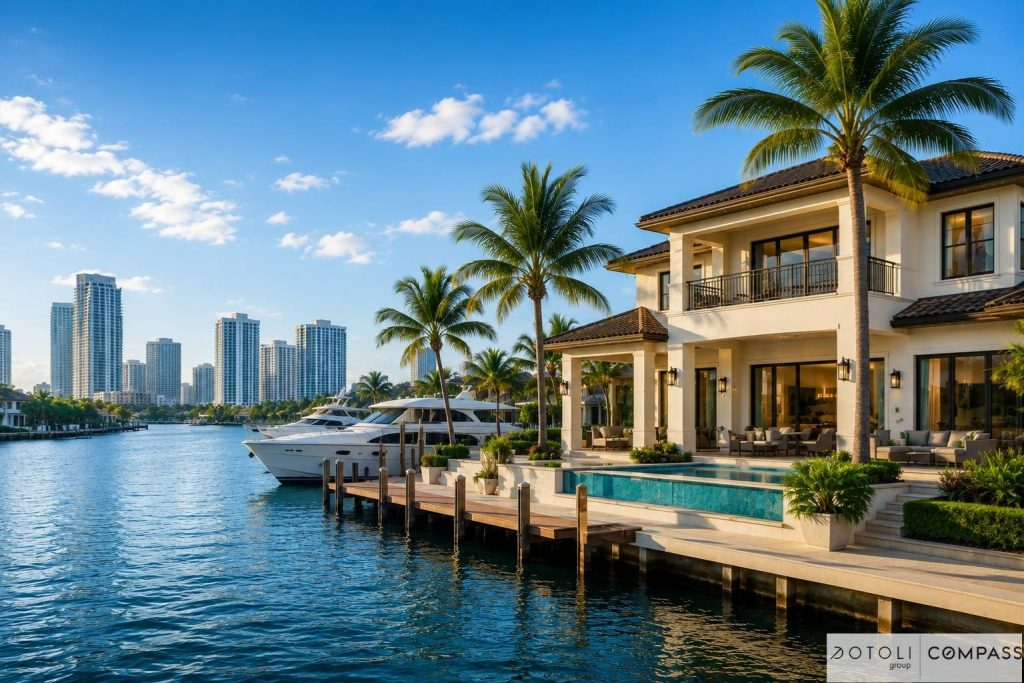

Waterfront home value retention in Fort Lauderdale is one of the most consistent patterns in South Florida real estate, and it’s no coincidence. Whether you’re eyeing an intracoastal property in Las Olas Isles or a deepwater estate in Harbor Beach, waterfront homes here have historically appreciated faster, sold faster, and recovered faster from market downturns than their inland counterparts.
If you’ve been asking why waterfront real estate investment holds up so well, the answer comes down to a combination of finite supply, lifestyle demand, and geography that cannot be replicated.
Why Does Waterfront Property Appreciate More in Fort Lauderdale?
Waterfront property appreciation in Fort Lauderdale outpaces the broader market because the supply is permanently capped. Fort Lauderdale has approximately 165 miles of navigable waterways, and not a single foot of new waterfront can be created.
When demand rises (and in South Florida, it consistently does), prices on a fixed inventory can only move in one direction. That fundamental imbalance is what makes intracoastal home investment value so durable over time.
5 Reasons Waterfront Homes Hold Their Value Better
Finite Supply
Fort Lauderdale’s 165 miles of waterways are a non-renewable asset; no developer can build more waterfront.
Inelastic Lifestyle Demand
Waterfront buyers are not upgrading; they’re committed to a specific lifestyle. That demand doesn’t soften with interest rates.
Wealthy, Equity-Rich Seller Profile
Waterfront owners rarely face forced sales, which prevents distressed comps from dragging prices down in other segments.
Navigability Premium
True ocean-access homes with no fixed-bridge restrictions command the highest premiums and the most consistent appreciation in the metro.
Institutional & International Demand
Family offices and global investors treat Fort Lauderdale waterfront as a trophy asset, creating a reliable price floor.
Why Can’t Fort Lauderdale Create More Waterfront Property?
Unlike most real estate markets where developers can build outward or upward to meet demand, Fort Lauderdale’s waterfront is finite. The city’s network of canals, the Intracoastal Waterway, the New River, and its direct ocean-access lots represent a hard ceiling on supply.
This scarcity dynamic plays out clearly in the numbers. According to the National Association of Realtors (NAR), waterfront properties in high-demand coastal markets consistently outperform inland comparables on both appreciation rate and days-on-market metrics.
Even during the 2008–2012 market correction, one of the most severe downturns in modern U.S. real estate history, Fort Lauderdale waterfront homes retained more of their peak value than non-waterfront properties in the same zip codes. Recovery timelines were shorter, and post-recovery appreciation was steeper.
When you buy waterfront real estate in Fort Lauderdale, you’re not just buying a home. You’re buying access to something that cannot be built again.
What Makes Waterfront Demand So Durable in Fort Lauderdale?
Fort Lauderdale draws a specific buyer, someone who wants to live on the water, keep a boat in their backyard, and have direct access to the ocean or the Intracoastal.
That lifestyle demand is not trend-dependent. It doesn’t evaporate when interest rates tick up or when the stock market has a rough quarter.
Buyers relocating from the Northeast, the Midwest, and increasingly from California and New York cite waterfront access as a primary motivator, not a nice-to-have. This creates a buyer pool that is both deep and inelastic. They’re not shopping for waterfront as a category upgrade; they’re shopping for waterfront as the baseline.
That depth of demand directly affects how quickly waterfront homes sell and at what price relative to the listing price. Days on market for intracoastal and deepwater properties in Fort Lauderdale have consistently run below the Broward County average, according to Broward County property market data.
What Drives Waterfront Property Appreciation in Fort Lauderdale, Specifically?
Several factors combine to make Fort Lauderdale’s waterfront uniquely resilient compared to other South Florida markets:
Navigability. Fort Lauderdale is known as the “Venice of America” for good reason. Many waterfront homes here offer true ocean access with no fixed bridges, a feature that commands a serious premium and attracts serious boaters.
Proximity to Miami without Miami pricing. Buyers who want a South Florida lifestyle but find Miami prices untenable have historically moved up the coast to Fort Lauderdale. This creates a secondary demand effect that helps support waterfront values even when the broader market softens.
Wealthy, non-distressed buyer profile. Waterfront buyers in Fort Lauderdale tend to be cash-heavy or bring significant equity. Forced selling due to financial distress is far less common than in the broader market, which reduces the volume of distressed comps that would otherwise drag prices down during corrections.
Institutional interest. Ultra-high-net-worth buyers, family offices, and international investors increasingly see Fort Lauderdale waterfront as a trophy asset and a portfolio diversifier. This institutional floor under the market adds another layer of price stability.
How Intracoastal Home Investment Value Compares to Non-Waterfront
The gap between intracoastal and inland home values in Fort Lauderdale is not just a price-per-square-foot story; it’s a resilience story.
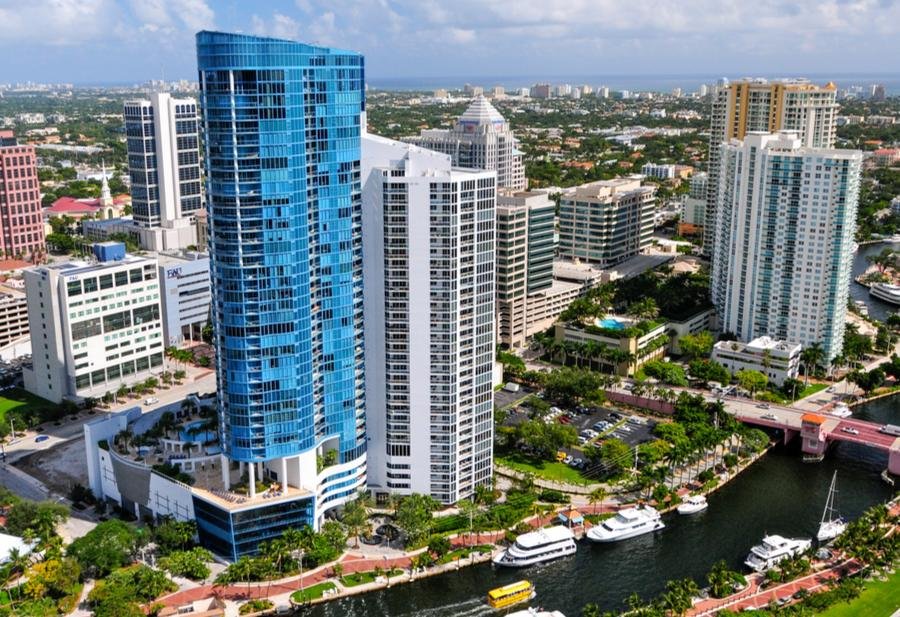
Non-waterfront homes in desirable Fort Lauderdale neighborhoods appreciate, too. Zip codes like Victoria Park, Coral Ridge, and Seven Isles all carry strong fundamentals. But when the market contracts, non-waterfront inventory tends to see sharper price corrections and longer absorption periods.
Waterfront homes, particularly those with direct water access and no fixed-bridge restrictions, hold a floor. Sellers can choose to wait rather than accept below-market offers, and because the buyer pool is wealthier and more patient on both sides, the standoff rarely resolves at a deep discount.
For investors and second-home buyers, that downside protection is as valuable as the upside appreciation story.
Is Now a Good Time to Buy Waterfront Real Estate in Fort Lauderdale?
The case for buying waterfront real estate in Fort Lauderdale doesn’t hinge on timing the market perfectly; it hinges on recognizing that the supply constraint is permanent.
Interest rate environments change. Tax policy changes. Market sentiment cycles up and down. But the number of homes with direct intracoastal or deepwater access in Fort Lauderdale stays fixed. Every year that passes, that inventory ages, turns over less frequently, and becomes more contested.
Buyers who wait for a “better time” often find themselves competing against more buyers for the same finite pool of homes, having missed months or years of appreciation in the interim.
Frequently Asked Questions
Do waterfront homes in Fort Lauderdale always appreciate faster than non-waterfront homes?
Historically, yes, but the margin varies by property type and water access. Deepwater homes with ocean access and no fixed bridges command the strongest premiums and the most consistent appreciation.
Canal-front homes without ocean access also appreciate well, but the delta over inland properties is less dramatic. Over a 10- to 20-year holding period, the supply scarcity advantage compounds significantly.
Why is waterfront real estate considered a better investment in Fort Lauderdale than in other Florida cities?
Fort Lauderdale’s advantage comes from the density and navigability of its waterway network, its proximity to Miami, and its established luxury buyer market. Cities like Boca Raton or Delray Beach have waterfront inventory, too.
Still, Fort Lauderdale’s 165 miles of waterways and its direct deepwater ocean access create a uniquely deep and competitive buyer pool that other markets struggle to match.
What’s the difference between intracoastal property and canal-front property in Fort Lauderdale?
Intracoastal Waterway (ICW) frontage typically commands higher prices because it offers wider water views, greater visibility of boat traffic, and direct navigation to either the ocean or Biscayne Bay without entering smaller canal networks.
Canal-front properties vary widely in desirability based on canal width, depth, and whether the lot offers ocean access without fixed-bridge restrictions. Both categories outperform inland properties on appreciation metrics.
How does waterfront home value hold up during a real estate downturn?
Waterfront homes tend to decline less steeply and recover more quickly than the broader market. The primary reason is seller behavior.
Waterfront owners are typically equity-rich, not financially pressured to sell, so they can afford to wait rather than accept distressed pricing. This reduces the volume of low comps that would otherwise drag down values.
Work With a Fort Lauderdale Waterfront Specialist
If you’re evaluating waterfront home investment value in Fort Lauderdale, whether you’re buying your first intracoastal property, upgrading to a deepwater estate, or adding a trophy asset to your portfolio, the DOTOLI Group has the local expertise and the transaction history to guide you through it.