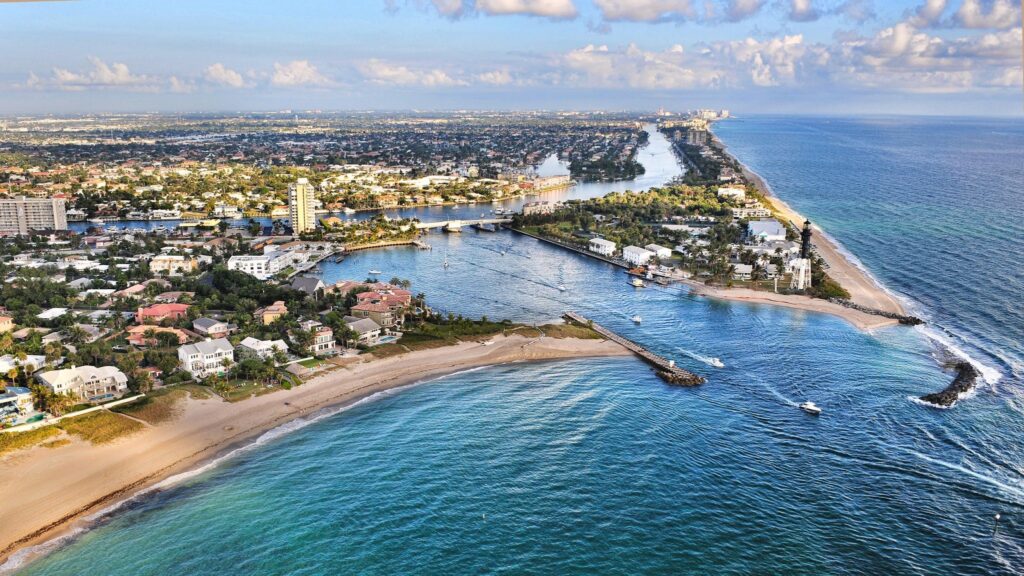
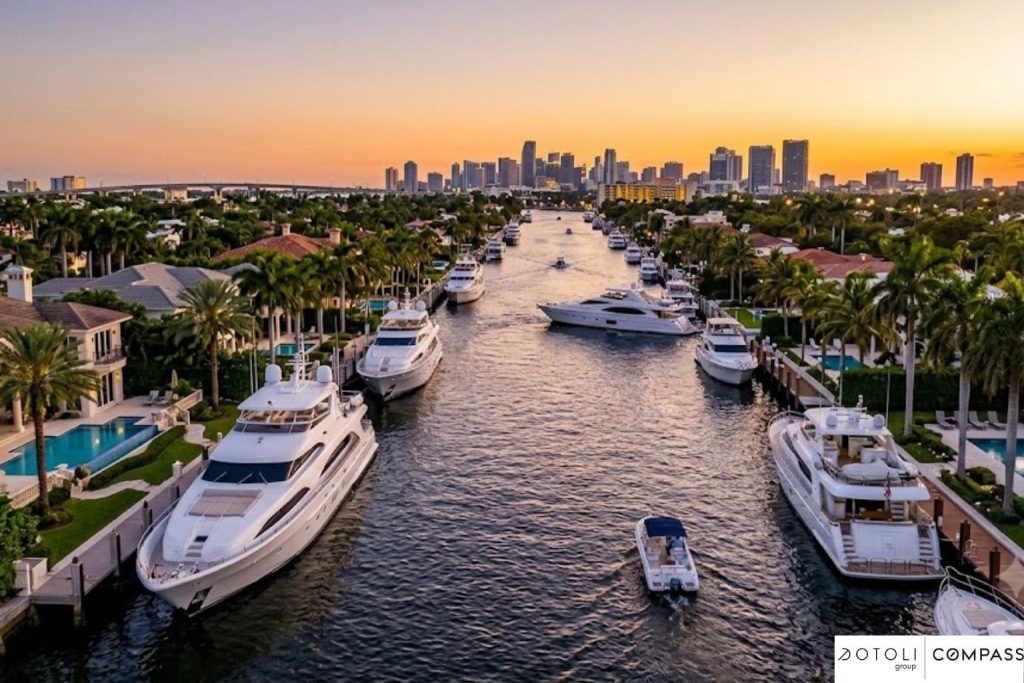

When you start searching for waterfront property in Fort Lauderdale, you will see the phrase deepwater canal Fort Lauderdale appear in listings as a selling point, but it is rarely defined. That ambiguity costs buyers.
A canal that looks deep at high tide can be a completely different situation at low tide, and if you are buying a home to use a dock, that difference determines what size vessel you can keep there year-round.
Understanding canal depth before you make an offer is one of the most important parts of waterfront due diligence in this market.
What Is a Deepwater Canal in Fort Lauderdale
A deepwater canal in Fort Lauderdale is one that maintains sufficient depth at low tide for boats to navigate and dock freely, without grounding or restricting the size of the vessel you can use. The practical threshold most buyers and local agents use is 5 to 6 feet at mean low water.
Anything below that starts to limit your options, and anything below 4 feet at low tide is shallow water by most boating standards.
Why Canal Depth Is the Number That Actually Matters
Fort Lauderdale’s canal system has more than 165 miles of navigable waterways, but not all of them are equal.
Canal width, view, and Intracoastal proximity get most of the attention in listings. Depth gets glossed over, often because listing descriptions quote depth at high tide, which tells you almost nothing useful.
Tidal fluctuations in Fort Lauderdale average 1 to 2 feet, depending on location and season. A canal listed at 5 feet in depth may drop to 3.5 feet at low tide.
For a center console or small skiff, that is workable. For a 40-foot sportfish or a trawler with a deeper draft, that is a hard stop.
Buying without confirming low-tide depth is one of the most common and expensive mistakes waterfront buyers make in this market.
What Qualifies as Deepwater in Fort Lauderdale?
There is no official city or county definition of deepwater, but the practical standards used by buyers, agents, and marine professionals in Fort Lauderdale break down roughly as follows:
4 feet or less at low tide: Shallow. Limited to small vessels with minimal draft. Not suitable for most powerboats above 25 feet.
4.5 to 5 feet at low tide: Marginal. Workable for center consoles and mid-size boats, but limits larger vessels and poses a risk during extreme low tides.
5 to 6 feet at low tide: Functional deepwater for most buyers. Accommodates center consoles, express cruisers, and mid-size sportfishers without low-tide concerns.
7 feet or more at low tide: True deepwater. Suitable for large sport yachts, trawlers, and vessels 45 to 50 feet or more. This is the range buyers with serious offshore boats or large cruising vessels are specifically looking for.
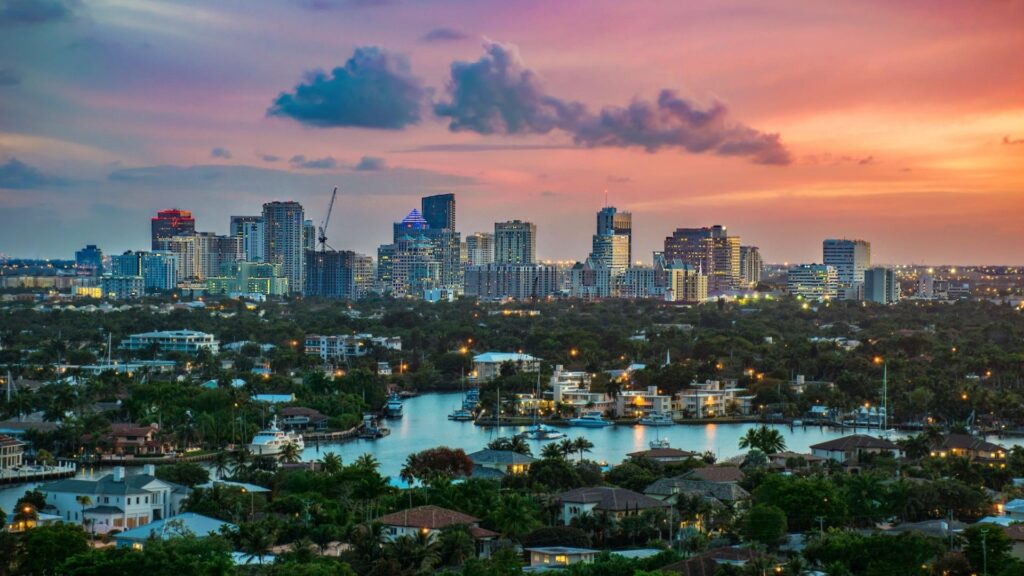
The neighborhoods with the most consistent access to the deeper end of that range are Las Olas Isles, Seven Isles, Bay Colony, Nurmi Isles, and the wider channel sections of Coral Ridge.
Deep Water Access and Fort Lauderdale Homes: How It Affects Value
Deep water access Fort Lauderdale homes command a measurable premium over comparable properties on shallow or restricted canals.
The reason is straightforward: a dock that can accommodate a 50-foot yacht attracts a different, larger pool of buyers than one limited to smaller boats, and that pool competes more aggressively when a suitable property comes to market.
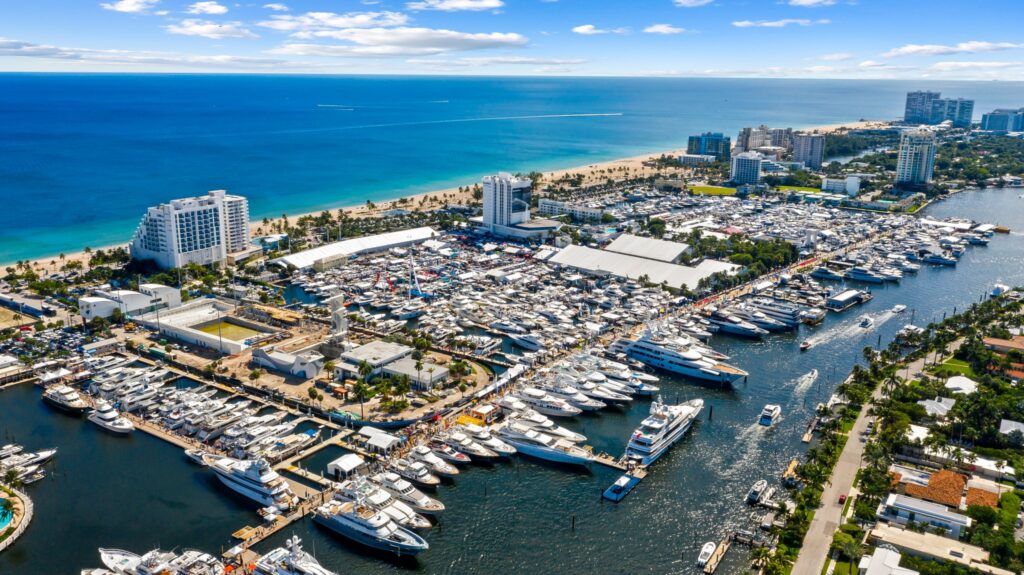
A recent study shows Fort Lauderdale has over 50,000 registered yachts and 100 marinas.
The premium is not just about boat size. Deepwater access also affects resale. When a buyer needs to know they can replace their current vessel with a larger one five years from now without moving houses, deepwater access is the deciding factor. Shallow canal homes cap out that flexibility.
Specific premium percentages for deepwater vs. shallow canal homes vary by neighborhood and year. Confirm current comparable data with Dotoli Group before citing a specific figure in client-facing materials
Wide Canal vs. Narrow Canal in Fort Lauderdale: Two Different Questions
Wide Canal vs.Narrow Canal
Fort Lauderdale is a separate consideration from depth, and conflating the two is a mistake buyers make regularly.
Canal width affects maneuvering room, views, and the sense of openness from the property. A wide canal gives you more room to turn a large vessel, better sight lines, and typically more natural light on the waterside of the home. A narrow canal can feel closed in, making it significantly more difficult to dock larger boats.
But a wide canal is not automatically a deepwater canal. Width and depth are determined by entirely different factors, including original dredging history, sediment accumulation over time, and whether the canal has been maintained.
A canal can be wide and shallow, narrow and deep, or any combination. When you are evaluating a waterfront property, you need both numbers: width for maneuvering and livability, depth at low tide for usability.
The most desirable canals in Fort Lauderdale are wide and deep. Las Olas Isles is the clearest example, with channels that are both wide enough for large vessels to navigate comfortably and deep enough to hold boats year-round without low-tide restrictions.
For a complete overview of waterfront due diligence, our guide on what to consider before buying a luxury waterfront home in Fort Lauderdale covers everything in one place.
How to Verify Canal Depth Before You Buy
The only reliable way to confirm canal depth before closing is to take a physical depth reading at the dock during a confirmed low tide. Here is how to do it correctly:
Hire a Marine Surveyor or Licensed Captain
They will take a depth sounder reading at the dock during low tide and give you a number you can rely on. This is not an expensive step relative to what you are spending on the home.
Do Not Rely On Listing Descriptions Alone
Agents often quote depth at high tide, sometimes without specifying the tidal stage. A listing that says “6 feet of water depth” doesn’t tell you what you need to know unless it specifies low tide.
Check NOAA Nautical Charts
NOAA charts cover primary navigable waterways but are not always up to date for private inland canals that may have silted since the last survey.
Ask About Dredging History
Some canals in Fort Lauderdale have been dredged by the city or by homeowner associations. Others have not been maintained and have lost depth over the decades. Knowing whether the canal has a dredging history and when the last dredge occurred tells you whether the current depth is likely to hold.
You can also read our full guide to verifying water depth before buying a waterfront home in Fort Lauderdale for a step-by-step walkthrough.
Deepwater Canal Access and the Broader Due Diligence Picture
Canal depth does not stand alone. It connects to several other due diligence items that matter on any Fort Lauderdale waterfront purchase:
Bridge Clearances
A deepwater canal does you little good if fixed bridges along your route to the Intracoastal restrict the height of the vessel you can move in and out of.
Fort Lauderdale has fixed bridges with clearances ranging from 21 to 25 feet on many routes, which cuts out sailboats and tall motoryachts regardless of canal depth. Read more in our guide to bridge clearances for boats in Fort Lauderdale.
Seawall Condition
The seawall holds the canal bank in place. A deteriorating seawall can allow soil to wash into the canal, reducing the canal’s depth over time, in addition to the structural and liability risks it poses.
Before buying on any canal, have the seawall inspected. Our seawall inspection schedule guide covers what to look for and how often to check.
Point Lots and Canal Intersections
Suppose the property sits at the intersection of two canals; the depth and maneuvering dynamics change.
Point lots in deepwater canal neighborhoods are among the most sought-after configurations in Fort Lauderdale. Read more about point lots and why buyers pay more for them.
What Josh Dotoli Says About Canal Depth
“Buyers get excited about the view and the dock and the exactly right neighborhood, but the ones who skip the depth check are the ones who call me a year later because they can’t get their boat in at low tide. Confirming low-tide depth before you make an offer takes one afternoon and costs almost nothing. Fixing a shallow canal situation after closing is not something you can fix at all.”
Josh Dotoli, Founder and CEO, Dotoli Group
FAQ’s
What is a deepwater canal in Fort Lauderdale?
A deepwater canal in Fort Lauderdale maintains sufficient depth at low tide for boats to navigate and dock freely without grounding. The practical threshold most buyers and agents use is 5 to 6 feet at mean low water, with the most desirable channels holding 7 feet or more at low tide.
What canal depth is considered deepwater in Fort Lauderdale?
There is no official definition, but 5 to 6 feet at low tide is the practical standard for functional deepwater access. Buyers with large sport yachts or vessels over 45 feet typically look for 7 feet or more at low tide. Anything below 4.5 feet at low tide begins to restrict mid-size boats and limits your long-term options.
Which Fort Lauderdale neighborhoods have deepwater canal access?
Las Olas Isles, Seven Isles, Bay Colony, Nurmi Isles, and parts of Coral Ridge along the wider channels are consistently associated with deepwater canal access. Las Olas Isles and Seven Isles are the most frequently cited for having the deepest maintained channels, direct Intracoastal access, and no fixed-bridge obstructions on primary routes.
What is the difference between a wide canal and a deepwater canal in Fort Lauderdale?
Width and depth are two separate measurements. A wide canal gives you maneuvering room and better views, but does not guarantee depth. A canal can be wide and shallow, or narrow and deep.
When evaluating a waterfront home, you need to confirm both width for usability and aesthetics, and depth at low tide for the size of vessel you can actually keep at the dock.
How do I verify water depth before buying a waterfront home in Fort Lauderdale?
Hire a marine surveyor or a licensed captain to take a depth-sounder reading at the dock during a confirmed low tide. Do not rely on listing descriptions, which often quote depth at high tide.
NOAA charts provide a starting point but are not always up to date for private inland canals. A physical reading at low tide is the only number you can rely on.
Does deepwater canal access affect home value in Fort Lauderdale?
Yes. Homes on deepwater canals command a premium over comparable homes on shallow or restricted canals, because deepwater access expands the buyer pool and preserves long-term flexibility to upgrade vessels.
The premium varies by neighborhood, canal width, and proximity to the Intracoastal, but deepwater access is consistently one of the most searched filters among serious waterfront buyers in Fort Lauderdale.
Talk to Dotoli Group Before You Make an Offer
Canal depth is one of those details that gets confirmed in ten minutes with the right agent and ignored for years without one. Dotoli Group specializes in Fort Lauderdale’s waterfront market and knows which canals retain their depth and which look better on paper than in practice.
Whether you are narrowing down neighborhoods or already have a specific property in mind, contact Dotoli Group before you go under contract.
You can also explore our neighborhood guide to see which areas consistently offer deepwater access, along with everything else you are looking for.