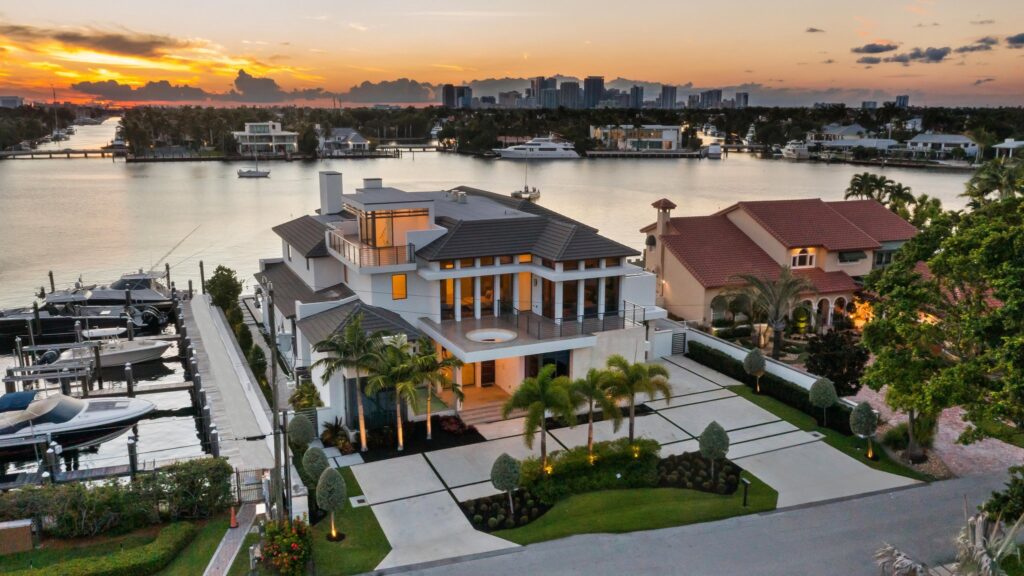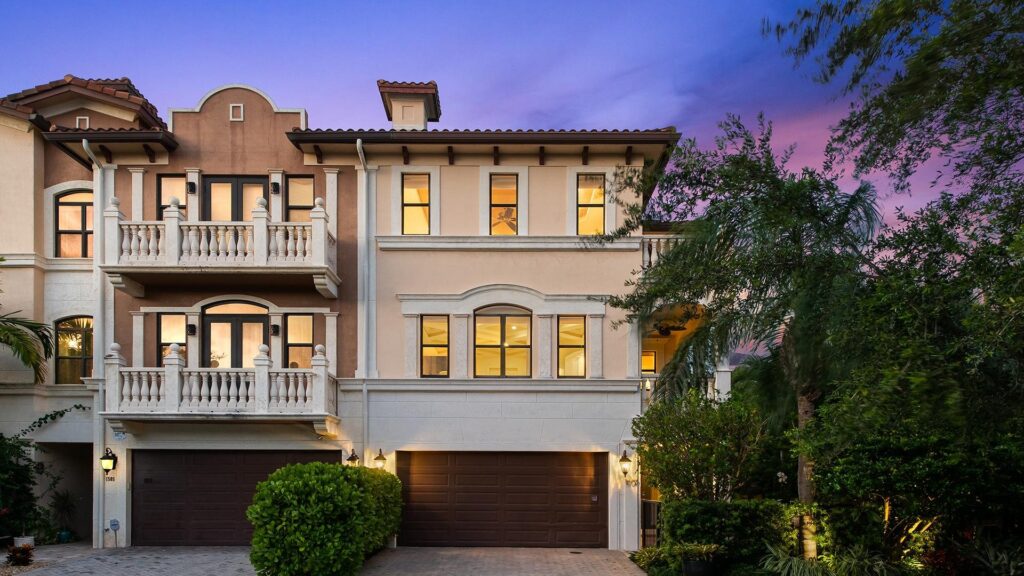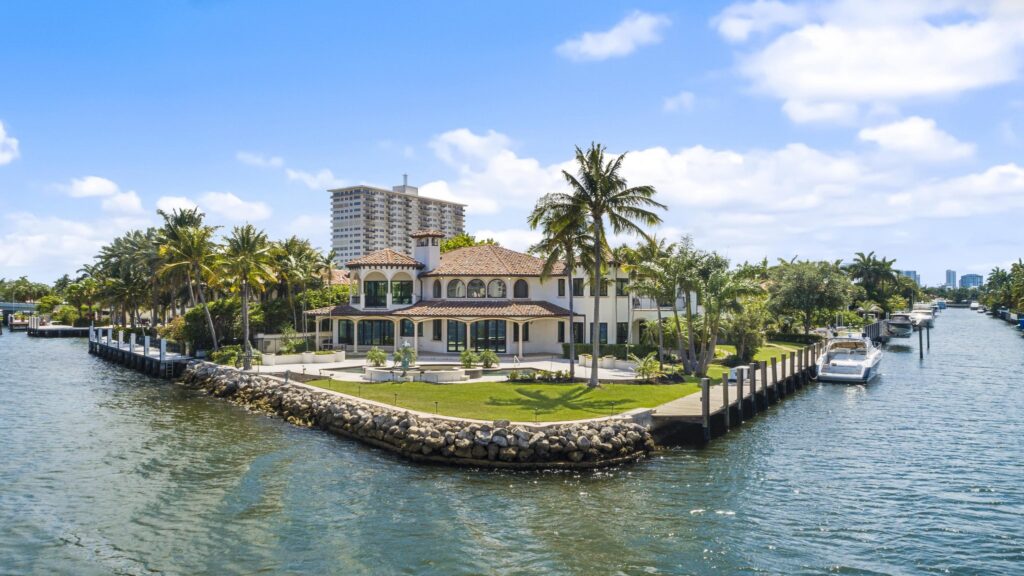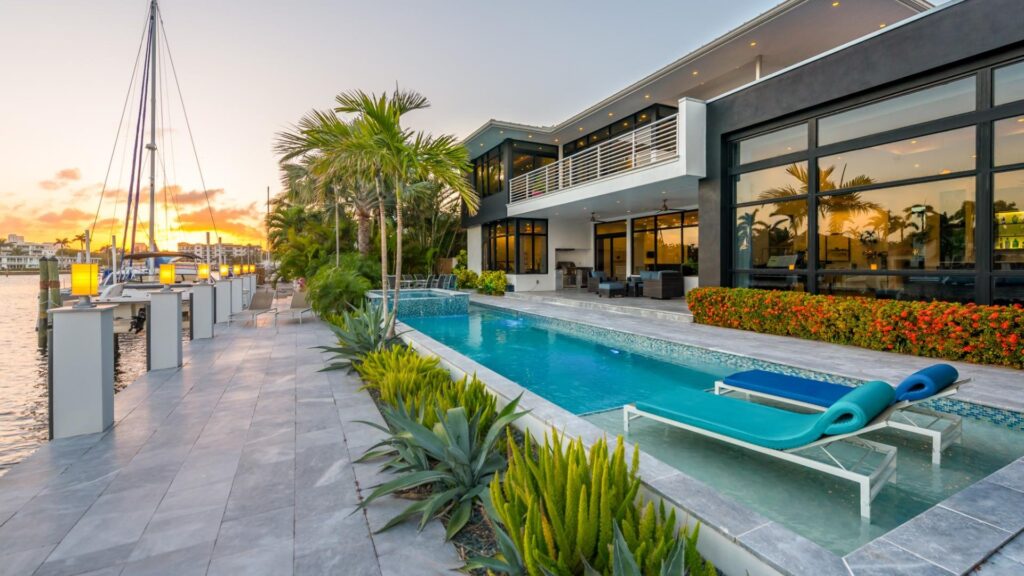
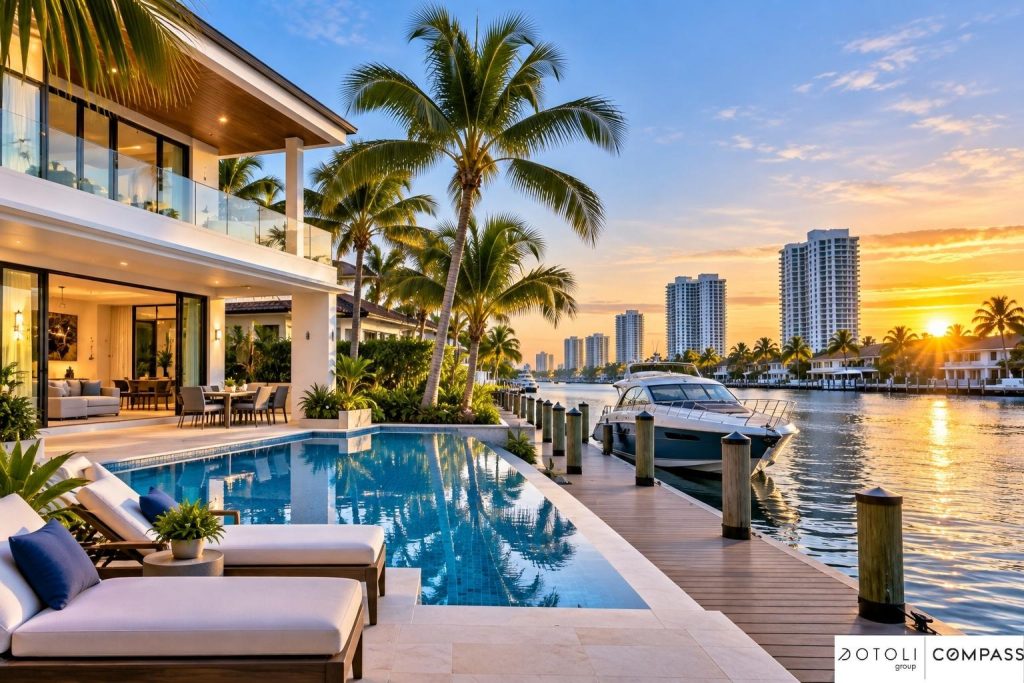

Buying a waterfront home in Fort Lauderdale is a different transaction than buying an inland home. The due diligence list is longer, the costs are higher, and several of the most significant financial exposures, including seawall replacement, flood insurance, and salt-air maintenance, are easy to miss during a standard home search.
This guide covers the six areas where Fort Lauderdale waterfront buyers most commonly encounter surprises after closing, and what to verify before you get there.
What Water Access Factors Should You Verify Before Buying?
Water access quality determines whether a waterfront property actually delivers the lifestyle it is priced for. Three factors determine that: canal depth, dock type, and bridge clearance.
Canal Depth
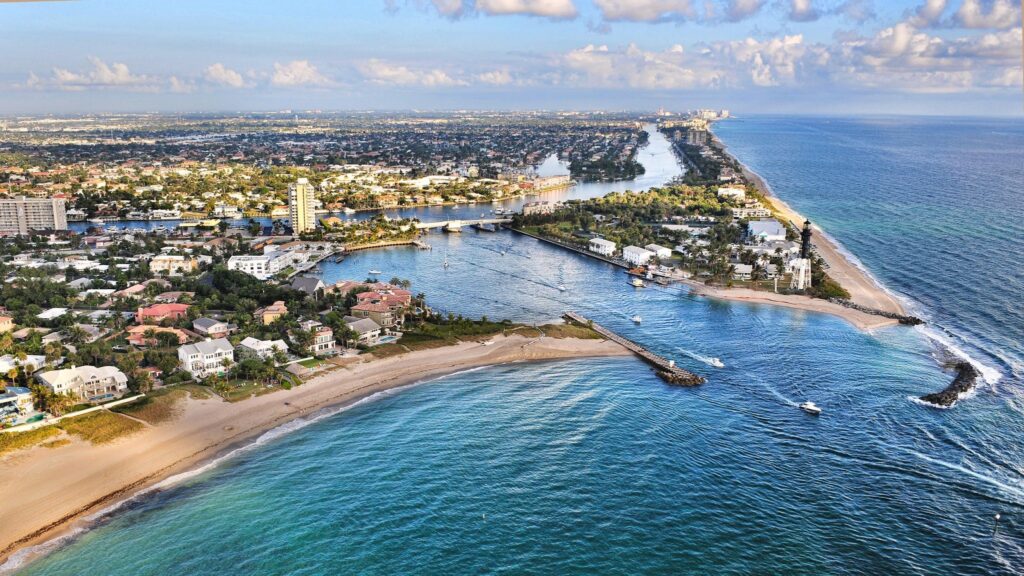
Canal depth varies significantly across Fort Lauderdale’s 165-mile canal system. The federal Intracoastal Waterway channel maintains a depth of 12 feet.
Residential finger canals range from 4 to 9 feet depending on the neighborhood, maintenance history, and proximity to the Intracoastal.
A property with a dock that sits in 4 feet of water at mean low tide cannot accommodate most powerboats drawing more than 3 feet. Verify the depth at the dock end of the property, not just at the canal centerline.
Dock Type
Dock type matters for ownership and liability. A deeded dock is legally part of the property and transfers with the sale. An easement dock gives the owner the right to use a dock but does not transfer the underlying land.
A shared dock means multiple property owners have access rights. Each has different maintenance obligations and resale implications. Confirm the dock arrangement in the title and property records before the inspection period closes.
Bridge Clearances
Bridge clearances on Fort Lauderdale’s canal system range from approximately 14 feet on fixed residential bridges to 35-plus feet on the Intracoastal. The Las Olas Boulevard bridge has a fixed clearance of approximately 14 feet.
If you have or plan to purchase a vessel with a fixed tower, hardtop, or mast that exceeds 14 feet, map every bridge between the property and open water before you buy.
A boat that cannot exit the canal is not a boat you can use. The Fort Lauderdale Water Taxi canal system guide covers the Intracoastal and New River routes.
Is Flood Insurance Required for Fort Lauderdale Waterfront Homes?
Yes, for any financed purchase in a FEMA Special Flood Hazard Area (SFHA), which includes most Fort Lauderdale waterfront properties.
Lenders require flood insurance as a mortgage condition when the property is in a FEMA AE, VE, or AO flood zone. Even cash buyers should purchase flood insurance given the financial exposure.
NFIP (National Flood Insurance Program) policies cover building damage up to $250,000 and contents up to $100,000. For waterfront properties priced above $1 million, private flood insurance is available and typically required to cover the full replacement value above NFIP limits.
Annual flood insurance premiums for Fort Lauderdale waterfront properties range from approximately $1,500 to $10,000 or more, depending on FEMA zone designation, the property’s elevation certificate, first-floor elevation relative to base flood elevation, and the insurer.
What Does a Waterfront Home Inspection Need to Cover?
A standard general inspection is not sufficient for a waterfront property. Two additional specialist inspections are required before the inspection period closes.
Seawall Inspection
The seawall is the concrete or sheet pile barrier separating the property from the water. It is the single most expensive maintenance item on a waterfront property, and the one buyers most commonly overlook when using only a general inspector.
Seawall replacement in Fort Lauderdale costs approximately $1,000 to $1,500 per linear foot for a full rebuild. A 60-linear-foot seawall, typical for a residential canal lot, represents $60,000 to $90,000 in replacement exposure.
Cap-only repair, which addresses surface cracking without full replacement, runs $200 to $400 per linear foot. Seawalls in salt-water environments have a functional lifespan of 20 to 30 years depending on material and maintenance history.
Hire a licensed marine contractor or seawall specialist separately from your general inspector. They look for cracking at the cap and panels, voiding behind the wall (hollow sounds when tapped), sinkholes or soil movement in the yard adjacent to the seawall, and tie-back rod corrosion.
A seawall showing these signs may be 2 to 5 years from failure. Factor that cost into your offer or address it as a repair condition before closing.
Structural and Systems Inspection
Salt air accelerates corrosion on HVAC components, metal fixtures, and electrical panels much faster than on inland properties. HVAC systems on Fort Lauderdale waterfront homes typically require replacement every 10 to 12 years versus 15 to 20 years for inland systems and cost about $8,000 to $15,000 to replace every 10 years.
Exterior paint on salt-air-exposed surfaces requires repainting every 5 to 7 years versus 8 to 10 years inland.
Stainless steel and marine-grade hardware corrode faster than standard residential hardware. Impact windows and doors, required by Florida building code, provide structural protection, but the frames and hardware still require regular inspection and maintenance in a salt environment.
What Legal Considerations Are Unique to Waterfront Property?
Riparian Rights
In Florida, a waterfront property owner has riparian rights, meaning the legal right to access and use the adjacent water body and to install a dock with proper permitting. Florida does not grant ownership of the water bottom, which the state owns. The property conveys the right of access and use.
Riparian rights attach to the land that borders the water. If the property has a seawall easement, a public right-of-way, or any condition that breaks the contiguous ownership between the land and the water’s edge, the riparian rights may be compromised. Confirm that the property has clear, unencumbered riparian rights in the title search before closing.
Dock permits are required by the Florida Department of Environmental Protection (FDEP) and Broward County for any dock installation or significant modification.
Verify that the existing dock has a valid permit and complies with current dimensions and construction requirements. An unpermitted dock is the buyer’s problem after closing.
Seller Disclosures and Florida As-Is Contracts
Florida real estate contracts are As-Is contracts. The buyer accepts the property in its current condition and waives the right to demand repairs unless the contract includes specific repair conditions.
The standard FAR/BAR contract provides an inspection period, typically 15 days, during which the buyer can cancel for any reason. After that window closes, the buyer is committed.
Sellers must disclose all known material defects. A seawall in declining condition, a flood insurance claim history, prior storm damage, or a dock in non-compliance are all material disclosures.
If a seller conceals a known defect and it surfaces post-closing, the buyer has legal recourse, but pursuing it is costly and time-consuming. The inspection period is your practical protection. Use it fully.
For buyers navigating their first Fort Lauderdale waterfront purchase, working with a South Florida real estate agent with specific waterfront transaction experience can change the outcome of the inspection period negotiation.
Agents who regularly handle waterfront contracts know which inspection findings are leverage points and which are normal for waterfront inventory.
Which Fort Lauderdale Neighborhoods Should Waterfront Buyers Consider?
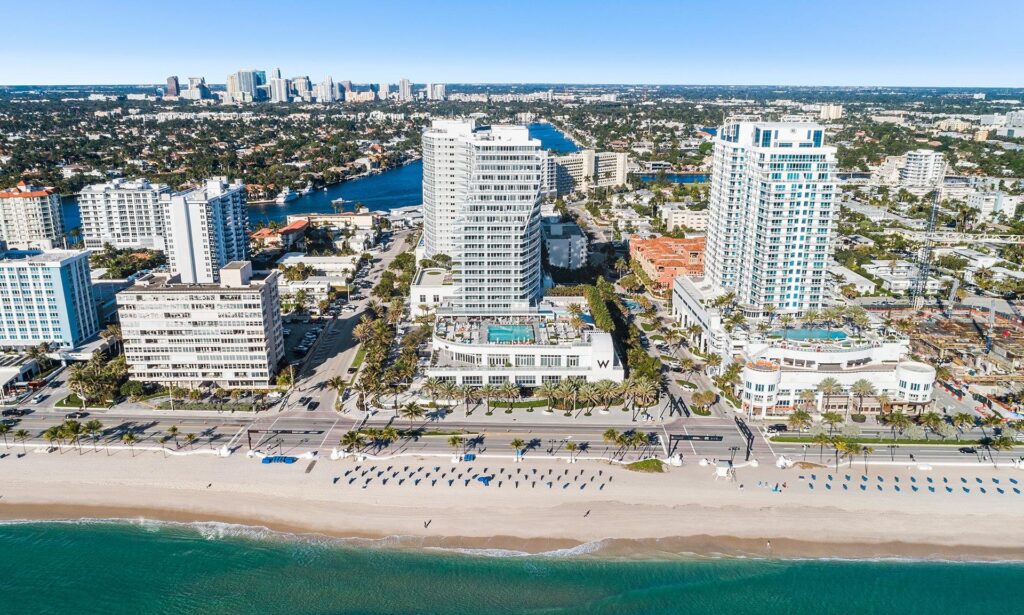
Fort Lauderdale’s waterfront inventory is concentrated in the eastern neighborhoods, each with distinct characteristics that affect the specific due diligence items above.
Harbor Beach has some of the deepest canal access in the city with direct Intracoastal frontage on most streets. It sits behind a staffed security gate. Seawall ages vary widely, and buyers should budget for inspection and potential remediation in this established neighborhood.
Seven Isles is a bridge-access island where most properties have fixed-bridge clearance constraints above the neighborhood’s entry bridges. Buyers with larger vessels should map the route before committing.
Las Olas Isles sits directly adjacent to Las Olas Boulevard with canal-front lots and Intracoastal access on the eastern streets. Canal depths vary by street and location within the neighborhood.
Idlewyld is a small, quiet island with large lots and waterway frontage. It has limited through traffic and a residential character that attracts buyers who want the waterfront lifestyle without the activity of higher-density neighborhoods. Idlewyld homes are among the most private waterfront addresses in the eastern city.
The reasons high-net-worth buyers choose Fort Lauderdale for luxury living reflect the broader market context that lets these neighborhoods command consistent premiums.
What Should Buyers Know Before Making an Offer?
The inspection period is the buyer’s primary protection in a Florida As-Is waterfront transaction. Use all of it. Order the seawall inspection and the general inspection simultaneously in the first days, not the last, so you can evaluate findings and negotiate before the window closes.
Get flood insurance quotes before making an offer on a property you are serious about. A property that looks affordable at list price can become unaffordable when you add the annual flood insurance premium to carrying costs. The elevation certificate determines that number.
Ask the seller for the elevation certificate, the dock permit, the seawall inspection history, and the flood insurance claim history as part of your due diligence.
A seller who doesn’t have these documents isn’t necessarily concealing something, but a seller who refuses to provide them is a significant warning sign.
Current Fort Lauderdale traffic patterns also matter for buyers evaluating which waterfront neighborhood fits their daily commute.
Eastern neighborhoods are 5 to 20 minutes from downtown Fort Lauderdale, depending on the specific address, and that range matters for buyers who commute.
Looking To Buy a Home
Dotoli Group works exclusively in Fort Lauderdale residential real estate and has handled waterfront transactions across every neighborhood covered in this guide.
If you’re evaluating a specific property or neighborhood, we can walk you through the due diligence checklist before you make an offer.