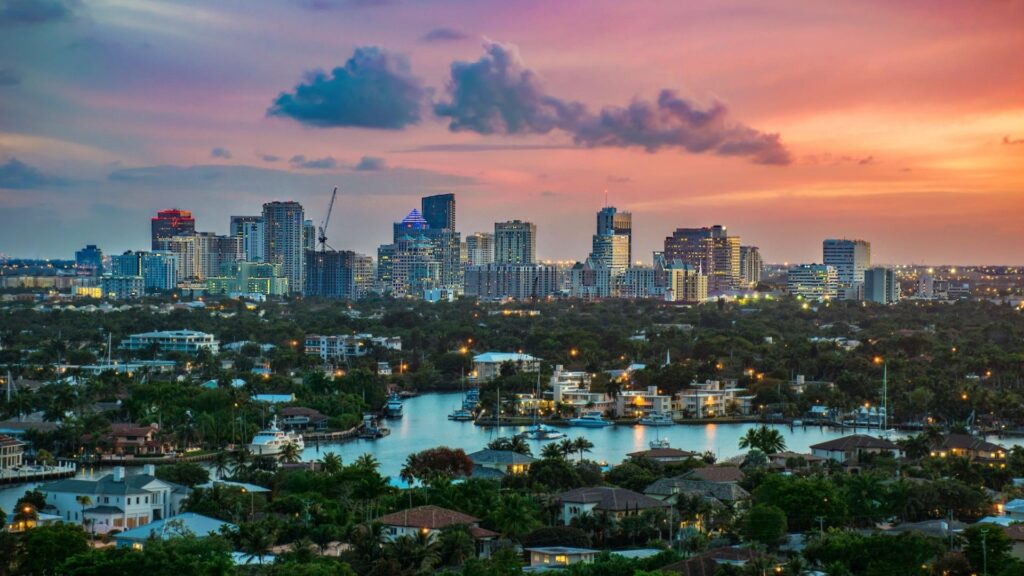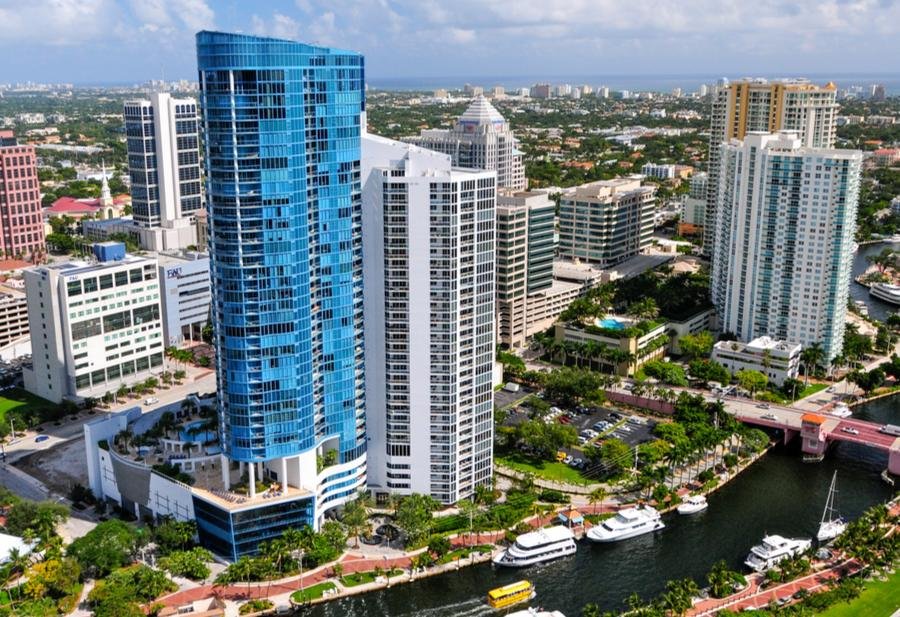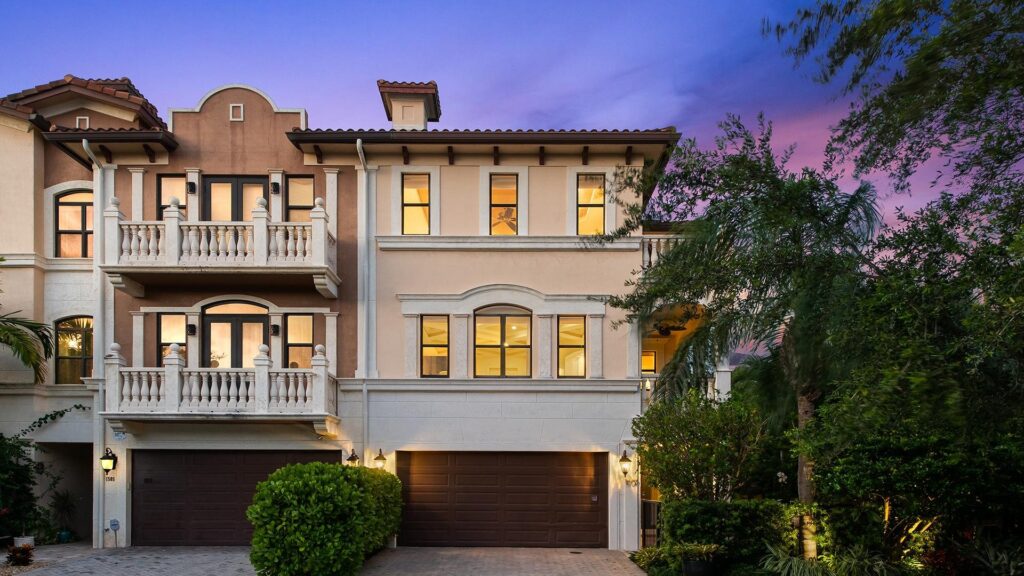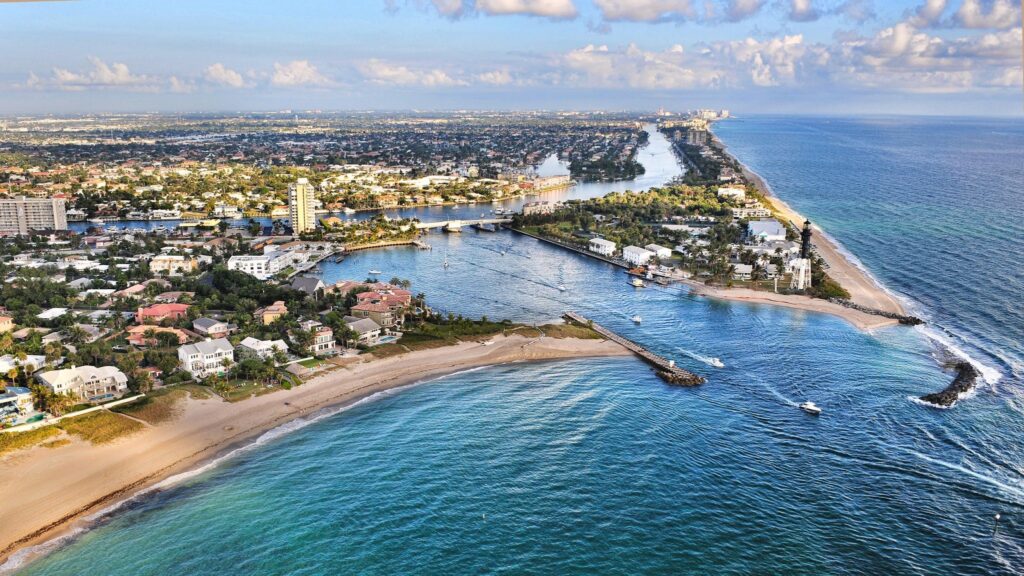

Fort Lauderdale is South Florida’s most financially rational luxury market for high-net-worth buyers. No state income tax, waterfront inventory that appreciated 63.45 percent over five years, private aviation two miles from residential neighborhoods, and gated communities with controlled physical access are the reasons buyers in the $3 million to $20 million range consistently choose this market over Miami, Palm Beach, and Naples.
What Are the Tax Benefits of Buying in Fort Lauderdale?
Florida eliminates three categories of state tax that buyers relocating from high-tax states pay every year. The savings are immediate and compounding.
No State Income Tax
Florida has no state income tax. A buyer relocating from California, where the top marginal rate is 13.3 percent, eliminates that liability from the first year of Florida residency.
On a $2 million annual income, that is a saving of $266,000 per year compared to California and $218,000 compared to New York’s 10.9 percent top rate.
Property Tax Protections
Florida’s homestead exemption reduces a primary residence’s assessed value by up to $50,000 for property tax purposes. The Save Our Homes cap limits annual assessment increases to 3 percent or the inflation rate, whichever is lower.
That cap is portable to a new Florida property, which matters for buyers who plan to upgrade within the state.
No Estate or Inheritance Tax
Florida has no estate or inheritance tax. The federal exemption threshold ($13.61 million per individual in 2024) is the only applicable threshold.
Buyers moving from Massachusetts, Oregon, or Washington eliminate their state estate tax liability entirely by establishing Florida domicile.
How Has Fort Lauderdale’s Luxury Market Performed?
Fort Lauderdale residential property appreciated 63.45 percent over the five years through Q4 2025, per NeighborhoodScout.
Waterfront-specific properties in the eastern neighborhoods have outperformed that figure because supply is fixed.
Broward County has 165 miles of inland waterways, and developers can’t add or replicate the residential lots along them.
The luxury segment above $3 million has seen consistent absorption with significant off-market activity in Harbor Beach, Seven Isles, and Idlewyld. That off-market volume means published MLS data understates actual transaction prices and velocity in the top tier of this market.
Buyers who purchased waterfront homes in these neighborhoods in 2019 captured appreciation that Miami Beach buyers paid a higher starting price to access.
What Waterfront Properties Does Fort Lauderdale Offer?
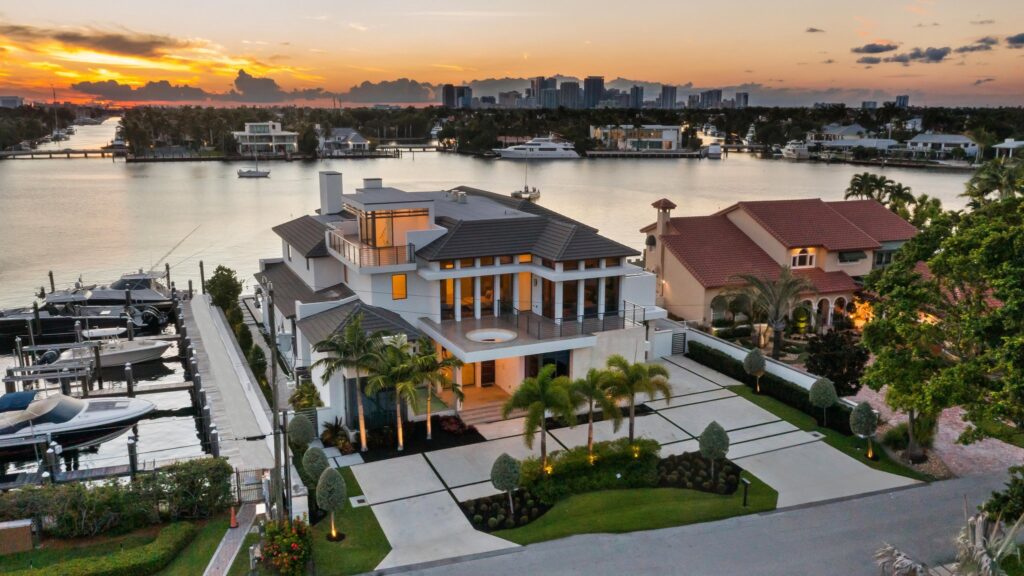
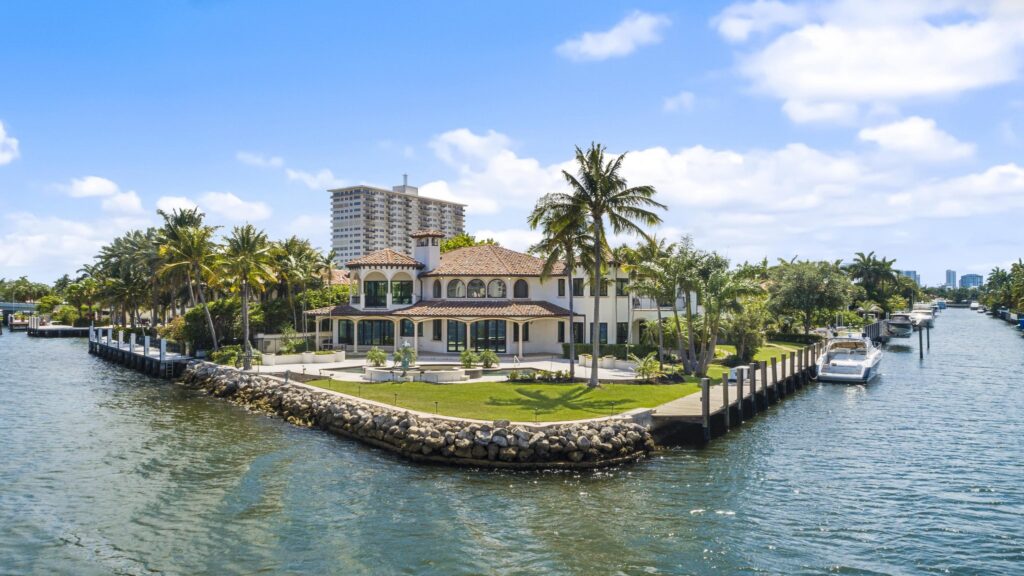
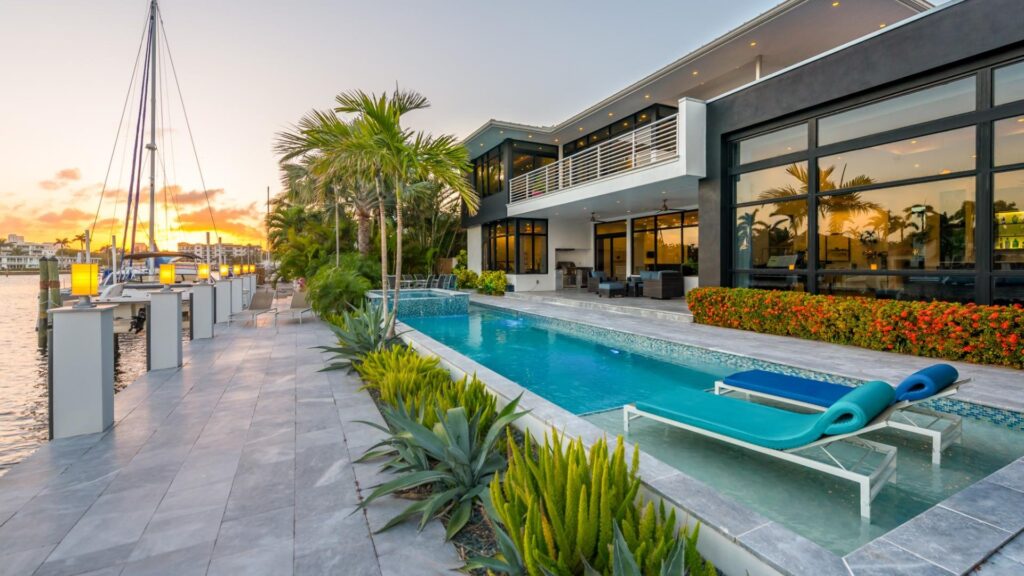
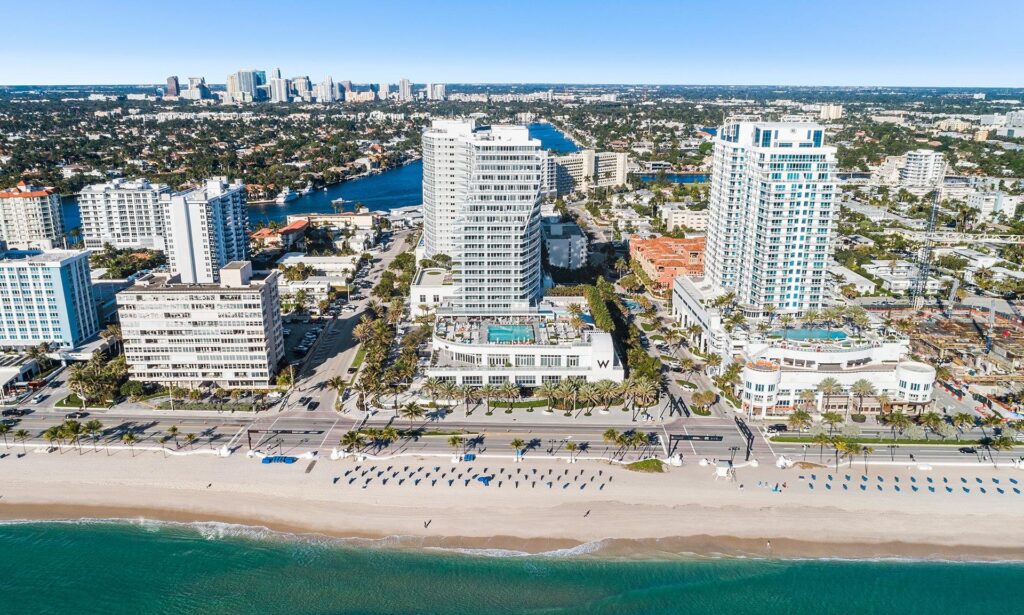
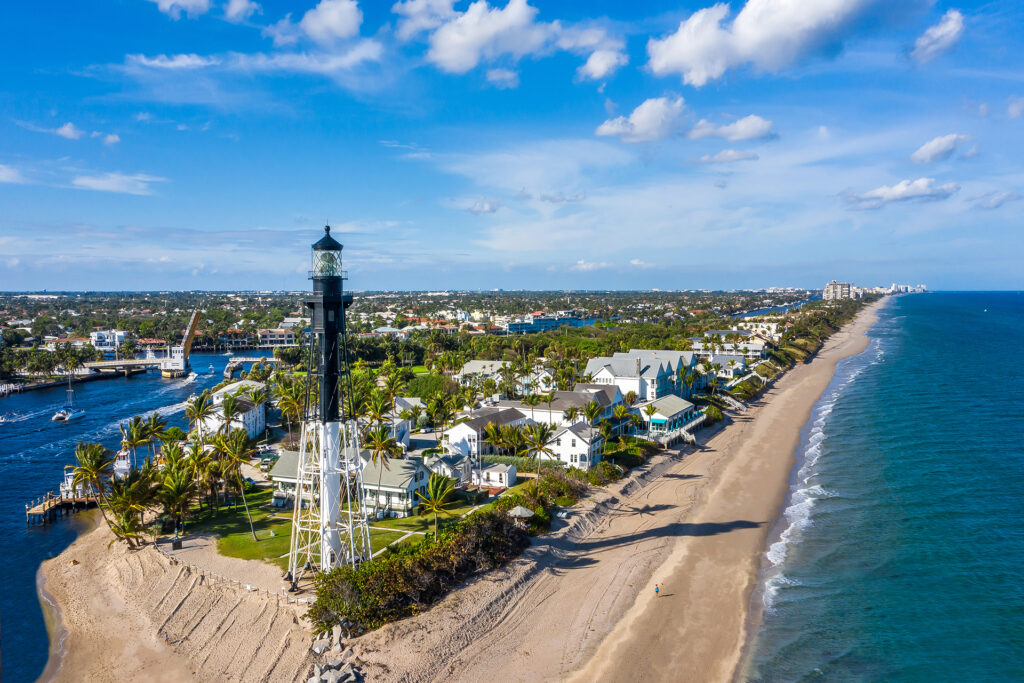
Fort Lauderdale’s waterfront inventory spans the Intracoastal Waterway, the New River, and 165 miles of interior canals. Deepwater properties that can accommodate large yachts are concentrated in three neighborhoods.
Harbor Beach
Harbor Beach has some of the largest residential lots in the eastern city, deepwater canal frontage, a staffed security gate at the neighborhood entrance, and a private beach club accessible only to residents and their guests.
It is the most complete package of lot size, water depth, security, and beach access available in Fort Lauderdale.
Seven Isles and Idlewyld
Seven Isles is a bridge-access island with a single entry point, which limits non-resident traffic by geography rather than staffing. Idlewyld is a compact, quiet island neighborhood with large lots and minimal through traffic.
Both attract buyers who want the access control built into the physical environment. Fort Lauderdale luxury homes in the $5 million to $15 million range are heavily concentrated across these two neighborhoods.
Las Olas Isles
Las Olas Isles offers canal-front properties at a somewhat lower price point, with one advantage the deeper waterfront neighborhoods lack: walkable access to Las Olas Boulevard.
Buyers who prioritize both water frontage and walkable access to dinner consistently evaluate Las Olas Isles as the city’s most balanced option.
Which Neighborhoods Offer Privacy and Security?
Fort Lauderdale’s most privacy-suited neighborhoods have access controls built into their geography. HOA rules and private security are additions on top of a physical baseline that already limits access.
Harbor Beach
Harbor Beach has a staffed gate at the single road entrance and a private beach club with no public access.
The gate is staffed around the clock. Residents arrive and depart through one controlled point, and the neighborhood’s cul-de-sac street layout eliminates through traffic entirely.
Seven Isles
Seven Isles is accessed by drawbridge with one entry point. Non-resident vehicles have no reason to enter and no alternate route through. The bridge itself is the physical access control, which functions more reliably than any staffed gate.
Idlewyld
Idlewyld is a small island with one bridge access and streets that do not connect through to any other area. The neighborhood’s size, roughly 60 residential properties, means unfamiliar vehicles are immediately visible to residents.
The combination of island geography and small community creates a privacy environment that larger gated communities cannot replicate.
For buyers whose privacy requirements extend to the transaction itself, the How Wealthy Families Protect Privacy in Real Estate guide covers entity-based purchasing, NDAs, and off-market access in detail.
How Accessible Is Fort Lauderdale for Frequent Travelers?
Fort Lauderdale has two airports that serve distinct travel needs, and residential neighborhoods sit between them.
Private Aviation
Fort Lauderdale Executive Airport (FXE) is a dedicated general aviation facility approximately two miles north of downtown. It handles private jet arrivals and departures with on-site customs and border protection for international arrivals.
Most eastern Fort Lauderdale residential addresses reach FXE in under 15 minutes. Buyers who travel primarily by private jet treat FXE as their operational base without the complications of a commercial airport.
Commercial Travel
Fort Lauderdale-Hollywood International Airport (FLL) serves 35 million passengers annually with direct routes to over 100 domestic and international destinations.
FLL is 20 minutes from most Fort Lauderdale residential neighborhoods with direct flights to New York, Chicago, Boston, London, and major Latin American markets.
For buyers who split time between Fort Lauderdale and a primary business market, FLL provides connectivity without routing through Miami International’s congestion.
What Lifestyle Does Fort Lauderdale Luxury Living Offer?
The lifestyle infrastructure in Fort Lauderdale’s eastern neighborhoods is concentrated enough that residents use it regularly, not occasionally.
Dining, Arts, and Culture
Las Olas Boulevard has over 50 restaurants, galleries, and boutiques within a one-mile walk. The Broward Center for the Performing Arts draws over 700,000 visitors annually with Broadway touring productions and concerts.
The NSU Art Museum holds a permanent collection of over 7,000 works and is a 10-minute drive from every eastern neighborhood. The Las Olas Art Fair draws 250,000 visitors annually.
Marine Infrastructure
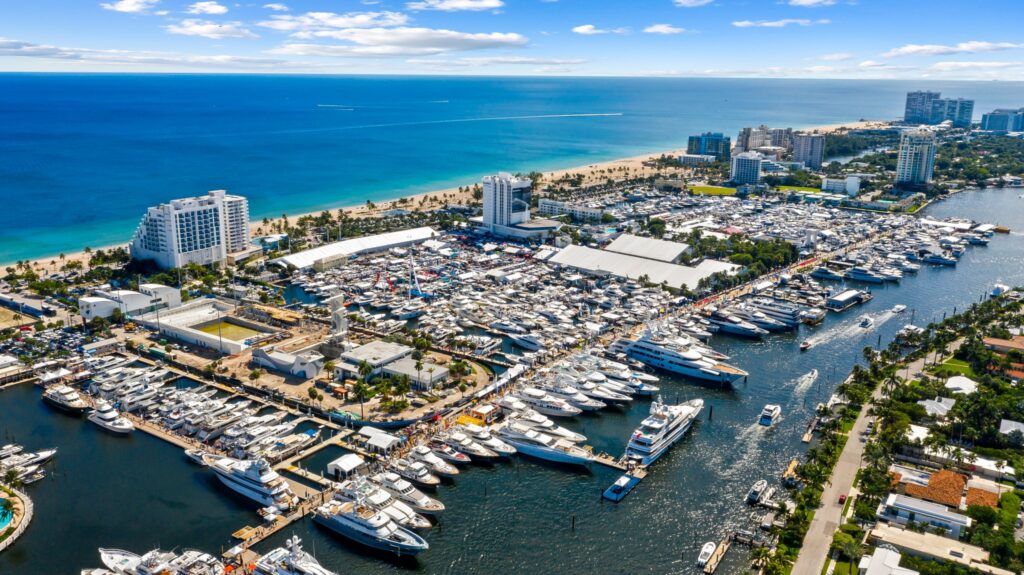
Fort Lauderdale is the yachting capital of the world by industry designation. The city has more marine businesses, refit facilities, and crew services per square mile than any other U.S. city.
Bahia Mar Marina, Pier 66 Marina (currently under full luxury redevelopment), and Las Olas Marina all operate within the city. For buyers who own or intend to acquire a yacht, the support infrastructure here is unmatched in domestic markets.
Schools
For buyers relocating with children, Fort Lauderdale has a well-documented private school ecosystem that families use when evaluating the market.
Private schools in Fort Lauderdale cover the specific institutions, grade structures, and admissions context that luxury buyers in this market typically evaluate.
How Does Fort Lauderdale Compare to Miami and Palm Beach?
Miami Beach prices at a premium to Fort Lauderdale for comparable waterfront square footage. Buyers who purchased in Seven Isles or Harbor Beach in 2019 entered at a lower price point and captured equivalent appreciation.
Miami’s cultural calendar, Art Basel, and nightlife infrastructure are larger. Buyers who prioritize that environment still choose Miami.
Buyers who want residential quiet, marine access, and tax efficiency without sacrificing dining or cultural access consistently find that Fort Lauderdale is the rational answer.
Palm Beach compares differently. Palm Beach prices above Fort Lauderdale for equivalent waterfront square footage, the social infrastructure is more private-club-dependent, and the marine infrastructure for yachting is substantially smaller. Buyers who want yacht operations specifically tend to prefer Fort Lauderdale for that reason.
Dotoli Group works exclusively in Fort Lauderdale residential real estate at the luxury level. If you are evaluating Fort Lauderdale against another South Florida market, contact us. The comparison is worth having with someone who works this market every day.