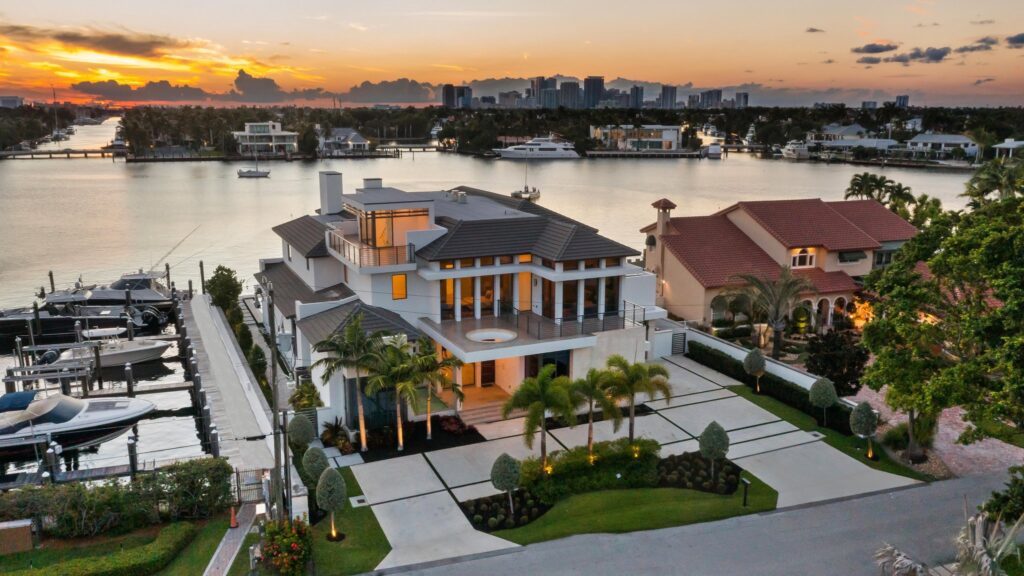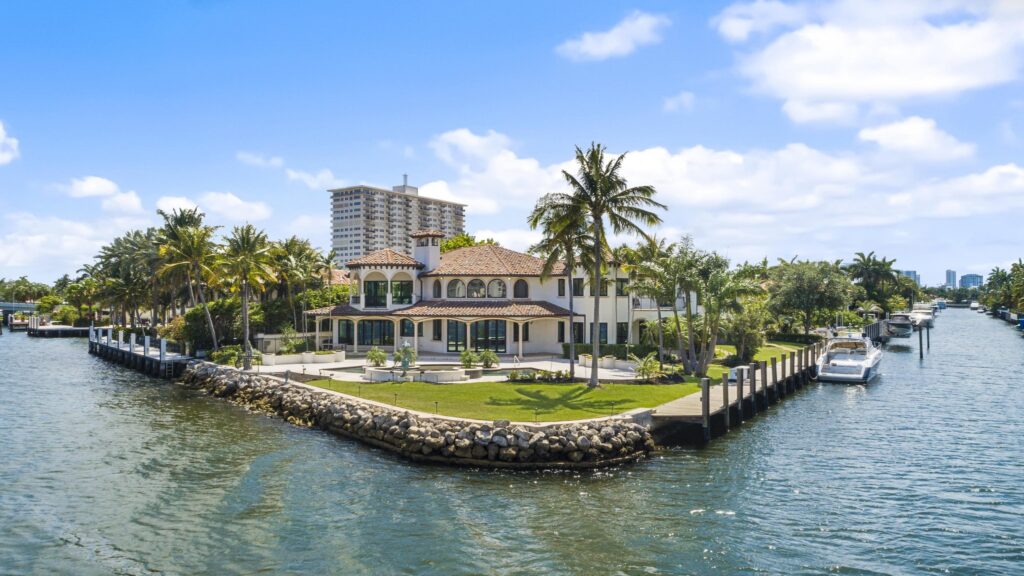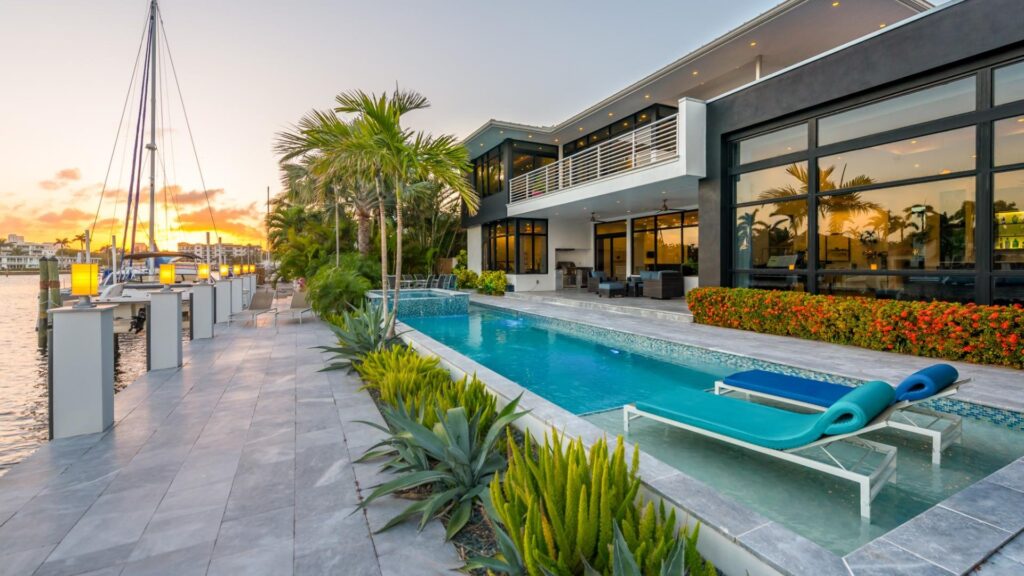

Fort Lauderdale Waterfront Homes with Private Docks
written By :

Fort Lauderdale Waterfront Homes with Private Docks: What Buyers Must Check

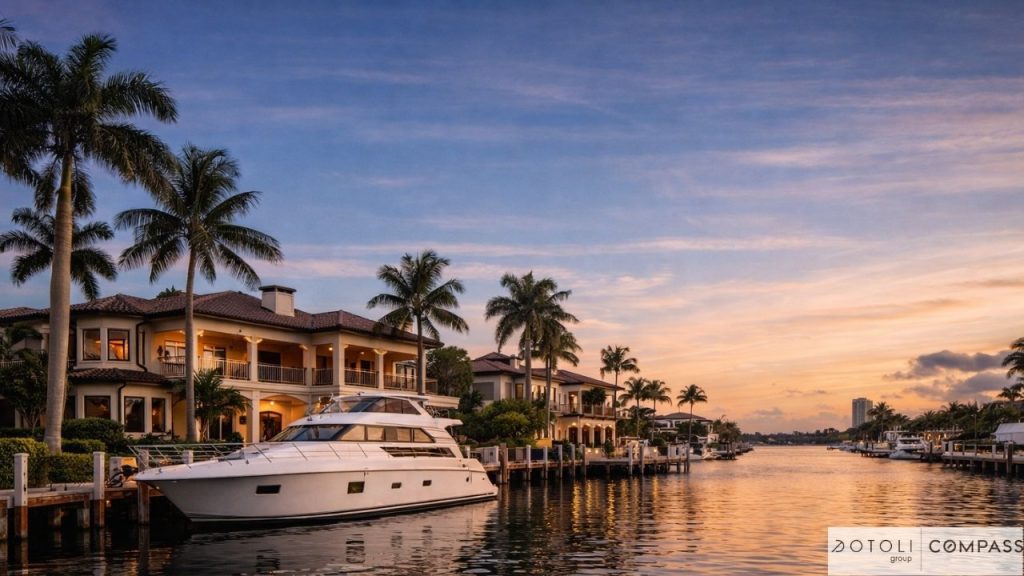
A private dock in Fort Lauderdale is not a standard amenity. It is a marine structure with its own engineering requirements, permit history, regulatory status, and replacement cost. Two homes at the same price point on the same canal can have completely different dock situations in terms of what a buyer can actually do.

The boat you own, or plan to own, determines what dock specifications you need. Most buyers find that out after the offer.

What Should Buyers Check Before Making an Offer on a Fort Lauderdale Dock Home?

Six items belong in every dock home due diligence review before the inspection period closes:

Water depth at the dock slip at mean low tide. This is the controlling factor for whether your vessel can use the dock. Depth varies by canal location, dredging history, and tidal range.

Dock length and slip configuration. Dock length determines which vessels fit. A 30-foot dock won’t accommodate a 40-foot boat, regardless of water depth.

Canal width and turning radius. Narrow canals limit which vessels can maneuver in and out. A 40-foot sportfish needs room to turn.

Seawall condition and age. Seawall replacement is a major capital expense. A failing seawall affects the dock, the yard, and the property’s insurability.

Permit history for the dock and any modifications. Unpermitted dock construction creates title complications and can trigger mandatory removal orders.

Bridge clearance on the route to open water. A boat that fits the slip is useless if a fixed bridge between the canal and the Intracoastal blocks it.

How Much Dock Length Do You Need for Your Boat in Fort Lauderdale?

Dock length must exceed the vessel’s overall length (LOA) to allow safe boarding, line management, and fender placement. The general standard is a dock that is at least 10% longer than the boat.

A 40-foot boat requires a minimum 44-foot slip. A 60-foot motor yacht requires a minimum 66-foot slip, and more is better for crew access and provisioning.

Dock Requirements by Vessel Type in Fort Lauderdale

Vessel Type Min. Dock Length Min. Water Depth Min. Canal Width
Jet ski / PWC 20 ft 3 ft 30 ft
20–35 ft powerboat 45 ft 5 ft 50 ft
35–60 ft yacht 70 ft 7 ft 80 ft
60–100 ft mega yacht 115 ft 10 ft 120 ft
100 ft+ superyacht 120 ft+ 12 ft+ 150 ft+
MLW = mean low water. A marine surveyor should verify depth using current soundings, not the seller’s representation.
Fort Lauderdale’s tidal range is about 2.5 feet, so a canal that reads 5 feet at high tide may show only 2.5 feet at mean low water. Buyers must confirm depth at MLW, not at whatever tide the seller or their agent measured.

What Water Depth Do You Need for a Private Dock in Fort Lauderdale?

Deepwater in Fort Lauderdale’s residential canal system is generally considered 5 feet or more at mean low water. That depth accommodates most center consoles, express cruisers, and mid-size sportfish boats. Larger vessels require 6 to 8 feet or more.

New River and direct Intracoastal frontage properties often have the deepest water because the U.S. Army Corps of Engineers (USACE Jacksonville District) maintains those waterways.

Interior canal depths vary significantly across Fort Lauderdale’s residential neighborhoods. Some canals in older subdivisions have not been dredged in decades and may have shoaling at the canal ends or near seawalls, reducing usable depth below what the centerline suggests. A professional marine depth survey is the only way to confirm actual usable depth at a specific slip.

How Does Seawall Condition Affect a Waterfront Property Purchase?

The seawall is the structural element that holds the land behind it. When it fails, it takes the dock, the yard grade, and sometimes the pool or structures with it. In Fort Lauderdale’s saltwater canal environment, seawalls typically last 30 to 50 years, depending on construction material, tidal exposure, and maintenance history.

Cap concrete and aluminum panel seawalls are most common. Steel sheet pile seawalls are less common in residential applications but perform well.

Seawall replacement in Fort Lauderdale typically costs $500 to $1,200 per linear foot depending on wall type, access conditions, and permit complexity, based on current Broward County contractor pricing and Dotoli Group transaction experience.

A 100-foot seawall in poor condition represents a $50,000 to $120,000 capital exposure. Buyers who do not commission a seawall inspection before closing carry that exposure without knowing it.

A licensed marine contractor or civil engineer should perform a seawall inspection, not a general home inspector. The inspection should assess wall deflection, tie-rod condition where accessible, cap condition, soil erosion behind the wall, and the remaining service-life estimate.

Does Canal Width Matter When Buying a Fort Lauderdale Dock Home?

Canal width determines whether a vessel can maneuver from the slip to the canal centerline and proceed out without grounding or hitting neighboring docks. The minimum usable canal width for a given vessel depends on the boat’s beam, turning radius, and whether the canal is a dead-end finger or a through-canal.

A 40-foot sportfish with a 14-foot beam needs approximately 60 to 70 feet of clear water to execute a practical turn in a dead-end finger canal. Canals narrower than that require spring line departure techniques or towing assistance, which is a daily operational consideration, not a one-time inconvenience.

Buyers who own or plan to own vessels over 35 feet should walk the canal at the property before closing and assess the actual turning room available.

Through-canals, which connect to the Intracoastal or New River at both ends, allow vessels to transit in and out without turning in the finger. Properties on through-canals have fewer vessel-size restrictions than dead-end fingers, regardless of canal width.


What Dock Features Matter Beyond the Slip Itself?

Dock infrastructure beyond the slip affects daily usability and replacement cost.
Boat lifts remove the vessel from the water between uses, preventing biofouling, osmotic blistering, and wear on dock hardware. Lift capacity must match the vessel’s fully loaded weight including fuel and gear.
Lifts in Fort Lauderdale’s residential market typically range from 10,000 to 80,000 lbs, with hydraulic and electric drive options (Florida Fish and Wildlife Conservation Commission, dock permitting). An undersized lift is a liability, not an asset.
Shore power and water connections matter for vessels used as liveaboards or for extended dockside stays. 30-amp service handles smaller boats. 50-amp service handles most cruisers and sportfish. 100-amp or 200-amp service handles large motoryachts and is uncommon in residential dock installations.
Dock lighting, cleats, and fender attachments are maintenance items, but they also indicate how well the dock has been maintained overall.
Corroded cleats, rotted wood decking, and missing fender piling suggest deferred maintenance that may extend below the waterline.

Which Fort Lauderdale Neighborhoods Have the Best Private Dock Access?

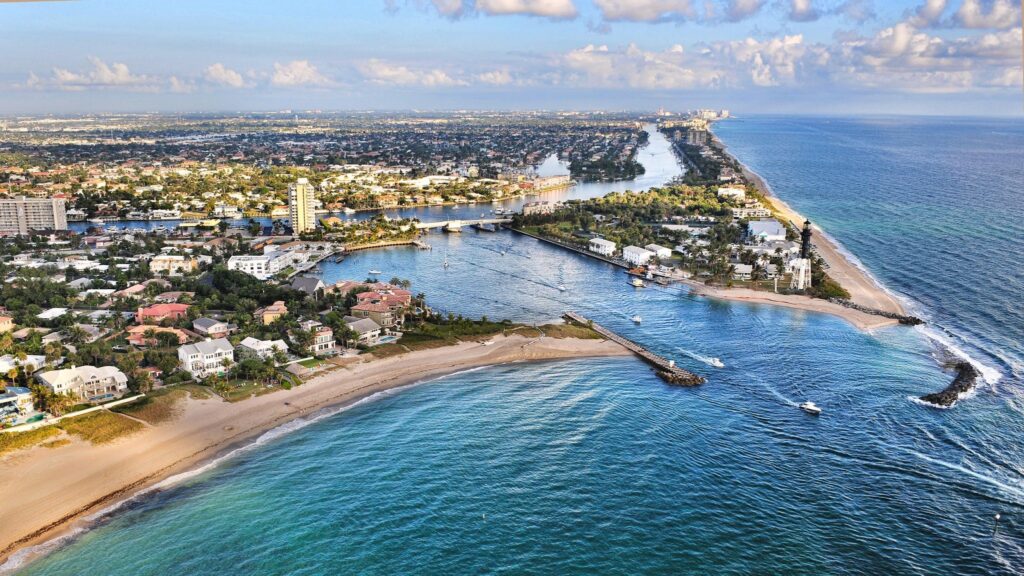
Fort Lauderdale’s residential canal system covers hundreds of miles of navigable waterway, but the neighborhoods with the best combination of water depth, canal width, and route to open water are concentrated in specific areas.
Las Olas Isles occupies a series of finger islands between the New River and the Intracoastal. The Intracoastal Waterway frontage properties have direct deepwater access. Interior canal lots vary in depth, but most accommodate mid-size cruisers.
The route to the Port Everglades inlet and the Atlantic is straightforward via the Intracoastal, with no fixed-bridge restrictions for most vessels.
Seven Isles is one of Fort Lauderdale’s most consistently deep-water neighborhoods, with direct Intracoastal frontage and interior canals maintained at navigable depths. It is the neighborhood of choice for buyers with vessels above 50 feet who want residential dock access without the constraints of narrower interior canals.
Harbor Beach, Rio Vista on the New River, and the Coral Ridge canal system all have private dock access but with different depth and width profiles. Buyers with specific vessel requirements should verify canal conditions at the target property rather than assuming neighborhood reputation applies to every parcel.
For buyers evaluating the total cost of waterfront ownership alongside dock quality, waterfront home insurance costs in Fort Lauderdale cover how dock presence and waterfront type affect annual insurance premiums.
The impact of waterfront living on property value covers how private dock access affects resale price relative to non-dock waterfront properties.

How Much Does a Private Dock Add to Home Value in Fort Lauderdale?

A functional, permitted private dock with adequate water depth and lift infrastructure typically adds 5% to 15% to a waterfront home’s value relative to a comparable non-dock property on the same canal, based on Dotoli Group transaction data across Fort Lauderdale’s waterfront neighborhoods.
The range depends on dock size, lift capacity, water depth, and whether the dock can accommodate the buyer pool’s likely vessel size.
A dock that cannot accommodate a vessel larger than 25 feet because of shallow water or a short slip adds less value than a deepwater dock with a high-capacity lift. Dock condition matters.
A deteriorated dock with a failing seawall can subtract from value rather than add to it because the buyer is inheriting a capital project.

Are Private Docks Regulated in Fort Lauderdale?

Yes. Private dock construction and modification in Fort Lauderdale requires permits from the City of Fort Lauderdale, the Florida Department of Environmental Protection, and, in some cases, the U.S.
Army Corps of Engineers, depending on waterway classification. Boat lifts require separate permits from the Florida Fish and Wildlife Conservation Commission (myfwc.com).
Unpermitted dock construction is a title and compliance risk. The city can require removal of unpermitted structures regardless of when they were built.
Buyers should request the permit history for the dock, seawall, and any lifts from the seller and verify it against city records at fortlauderdale.gov before closing.
An unpermitted dock addition doesn’t necessarily kill a deal, but you should negotiate it into the contract as a seller credit or a seller obligation to resolve.

Frequently Asked Questions

What is considered deep water in Fort Lauderdale canals?
Five feet or more at mean low water is the general threshold for deepwater in Fort Lauderdale’s residential canal system. That depth accommodates most center consoles, express cruisers, and mid-size sportfish. Larger vessels require 6 to 8 feet. Confirm actual depth with a current marine survey, not the seller’s representation.
Do all Fort Lauderdale waterfront homes have private docks?
No. Many Fort Lauderdale waterfront homes have water frontage without dock structures. Some have seawalls only. Others have derelict docks that are not usable. A waterfront listing does not guarantee a functional dock. Verify dock condition, dimensions, water depth, and permit status independently during due diligence.
Can any Fort Lauderdale waterfront home accommodate a yacht?
Not all. Vessels above 50 feet require specific combinations of water depth (6+ feet MLW), slip length (60+ feet), canal width for maneuvering, and clear bridge height on the route to open water. Las Olas Isles, Seven Isles, and New River frontage properties are most likely to meet these requirements. Interior canal lots in older subdivisions often cannot.
Is a seawall inspection necessary when buying a waterfront home?
Yes. General home inspectors do not assess seawall condition adequately. A licensed marine contractor or civil engineer inspection is the standard. Seawall failure is a $50,000 to $120,000+ capital exposure depending on linear footage. Buyers who skip this inspection carry that risk without any visibility into it.
What bridge clearances should Fort Lauderdale dock home buyers check?
The fixed bridges between a property’s canal and the Port Everglades inlet control the maximum mast height, or air draft, for any vessel using that dock. Drawbridges open on schedule but add transit time. Buyers with sailboats or vessels with fixed superstructure above 65 feet should map the full route from the dock to open water and verify clearances at every fixed bridge.

You Found the House. Now Make Sure the Dock Actually Works for Your Boat.

The Dotoli Group has represented buyers on hundreds of Fort Lauderdale waterfront transactions. We know which canals have the water depth, which neighborhoods have the turning room, and which listings have permit issues that will surface at closing.
Tell us what you own or plan to own. We will match you to the right dock before you fall in love with the wrong one.

Josh Dotoli


    website logo image

    Connect with Fort Lauderdale's Top Real Estate Team

    Popular

    Neighborhoods