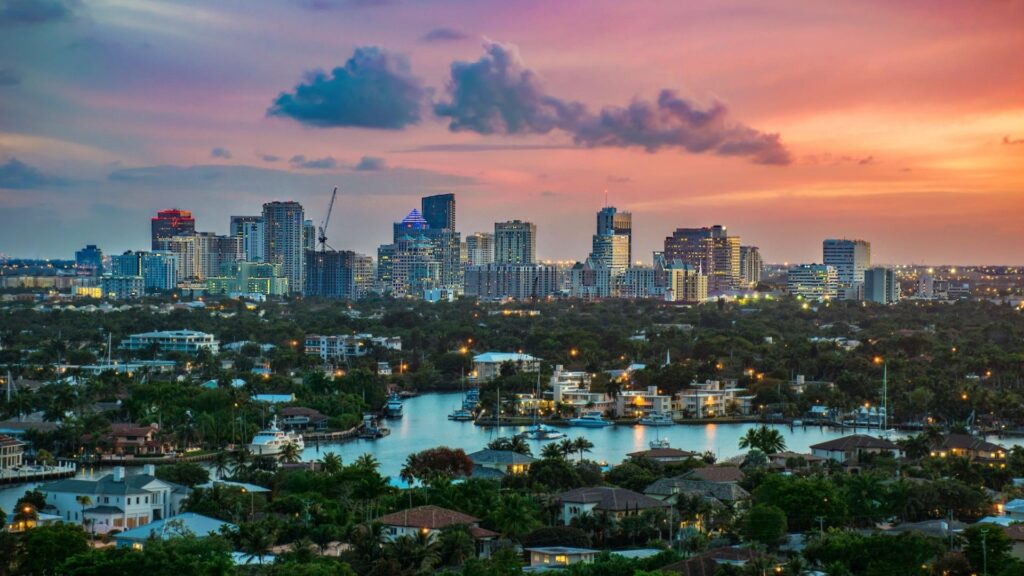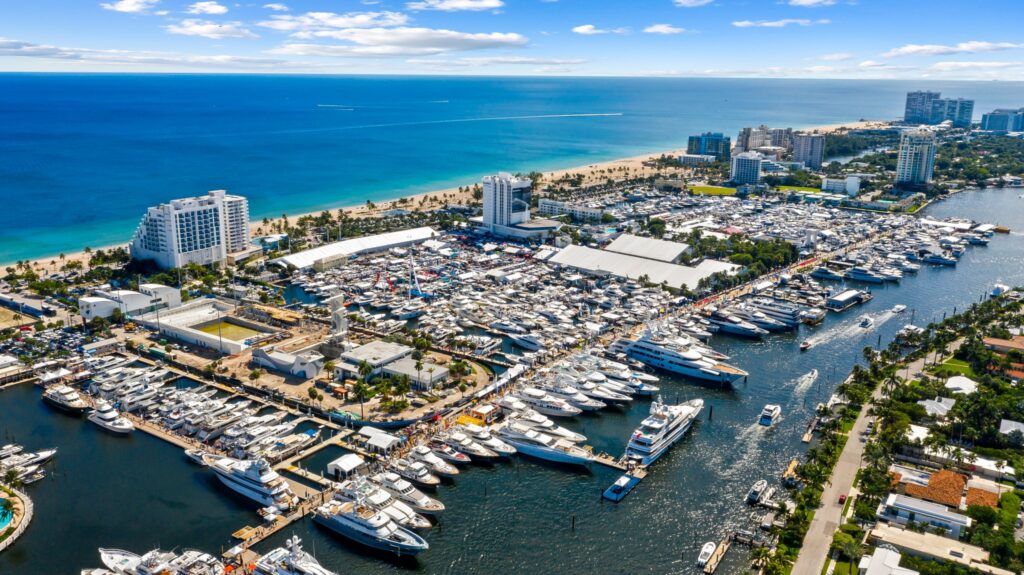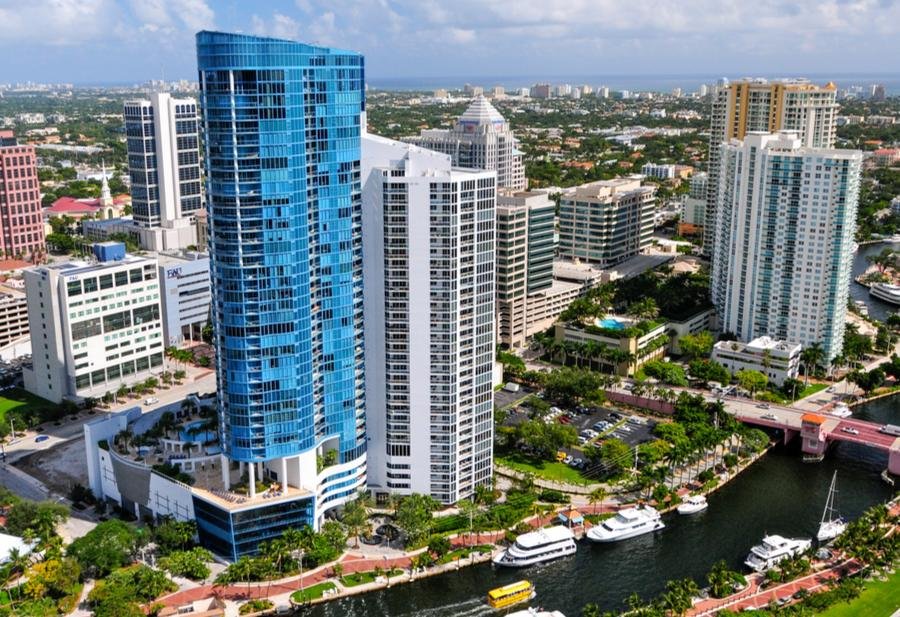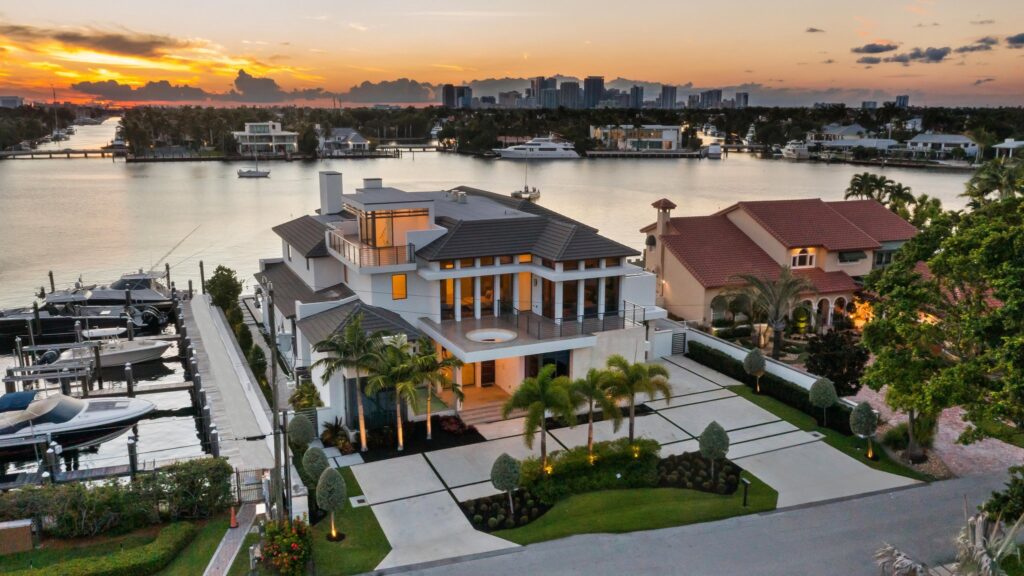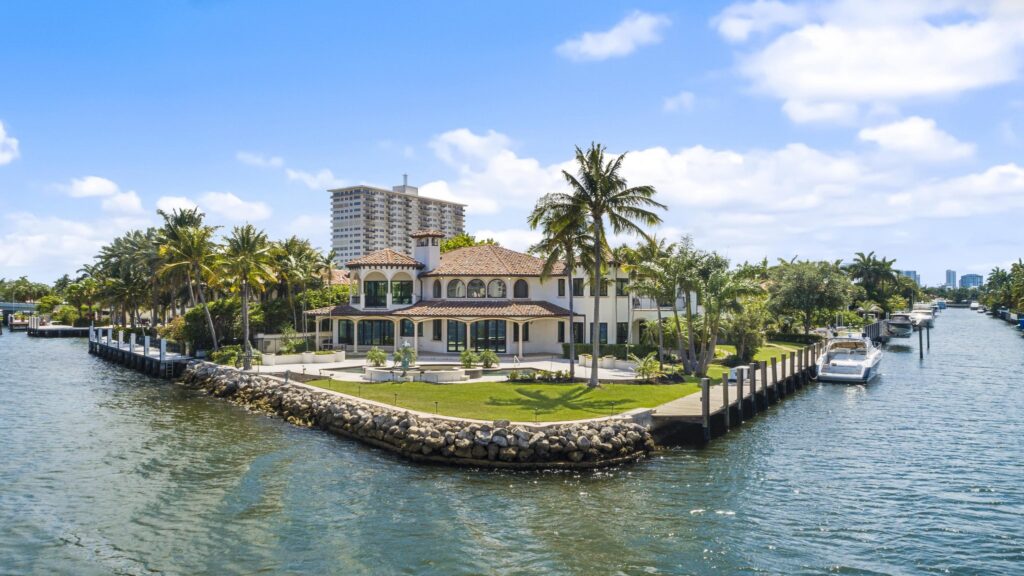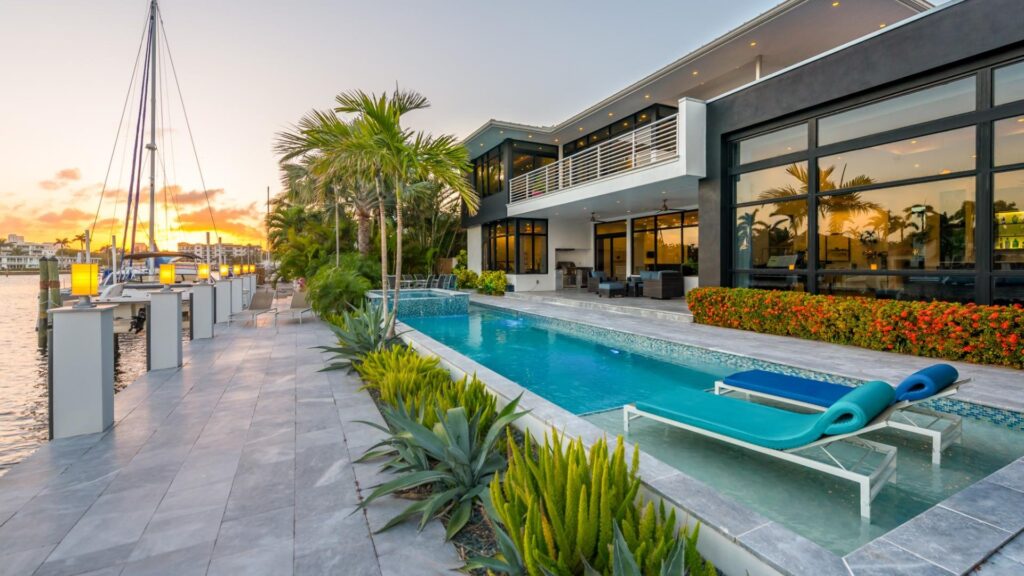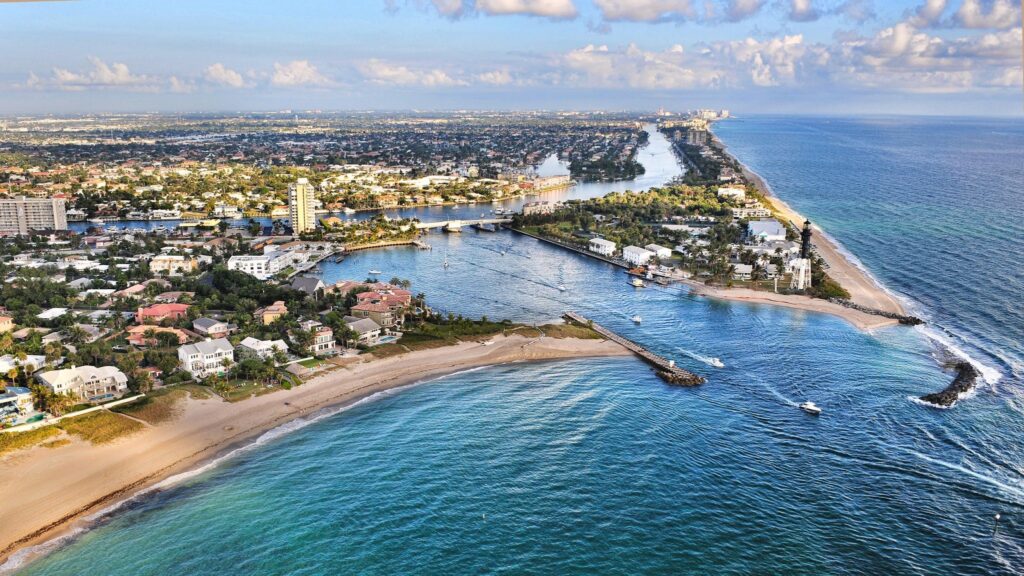
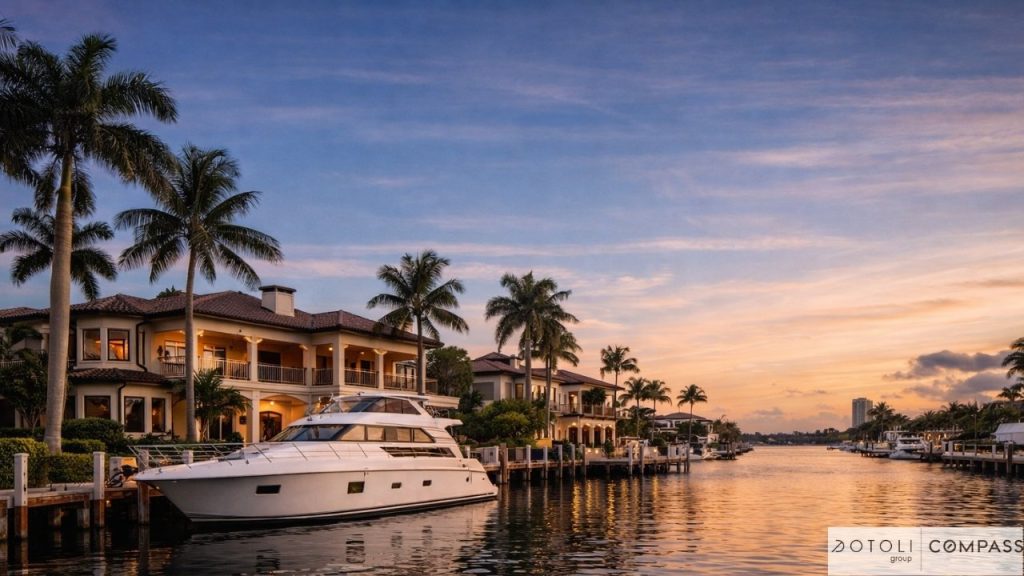

Buying a waterfront home with a private dock in Fort Lauderdale offers one of the most desirable lifestyles in South Florida, with immediate boating access, stunning water views, and the convenience of keeping your vessel right behind your home. For many luxury buyers, this feature is the deciding factor.
However, not all waterfront homes offer the same boating functionality. A property may advertise a private dock, but differences in water depth, dock length, seawall condition, and ocean access can dramatically affect usability. Understanding these details before purchasing ensures the home truly supports your boating lifestyle.
What Should You Check Before Buying a Fort Lauderdale Waterfront Home with a Private Dock?
Before buying a waterfront home with a private dock, buyers should evaluate six critical factors: dock length, water depth, bridge clearance, canal width, seawall condition, and ocean access.
These determine whether your boat can safely dock, how easily you can navigate, and how valuable the property will be in the long term.
Homes that combine deep water (8 feet or more at low tide), wide canals (60+ feet), and unrestricted Intracoastal or ocean access command a significant premium, typically 15–25% above comparable non-boating waterfront properties in Fort Lauderdale.
What Is a Waterfront Home with a Private Dock?
A waterfront home with a private dock is a residential property located on navigable water, allowing boat owners to dock directly behind their home. These properties typically sit on canals, Intracoastal waterways, or deep-water channels with direct boating access.
In Fort Lauderdale, these homes are especially popular because of the city’s extensive canal system, over 165 miles of waterways, and its proximity to Port Everglades Inlet, one of the most active ocean access points in South Florida.
How Important Is Dock Length When Buying a Waterfront Home?
Dock length determines whether your boat can fit comfortably and safely. As a general rule, your dock should be at least 10–15 feet longer than your vessel to allow for safe maneuvering, fender placement, and access to cleats. For example:
- A 30-foot boat needs a minimum dock length of 40–45 feet
- A 50-foot yacht needs a minimum dock length of 60–65 feet
- A 100-foot superyacht requires 115+ feet of dock space
Dock positioning also matters. Corner lots and properties on wider canals generally allow more flexibility for larger vessels and easier ingress and egress.
Dock Requirements by Vessel Type in Fort Lauderdale
| Vessel Type | Min. Dock Length | Min. Water Depth | Min. Canal Width |
|---|---|---|---|
| Jet ski / PWC | 20 ft | 3 ft | 30 ft |
| 20–35 ft powerboat | 45 ft | 5 ft | 50 ft |
| 35–60 ft yacht | 70 ft | 7 ft | 80 ft |
| 60–100 ft mega yacht | 115 ft | 10 ft | 120 ft |
| 100 ft+ superyacht | 120 ft+ | 12 ft+ | 150 ft+ |
Why Does Water Depth Matter for Private Dock Homes?
Water depth determines the maximum size of vessel a property can accommodate. Shallow canals restrict vessel size and pose grounding risks, especially at low tide, when depths can drop by 1–2 feet below their mean high-water mark.
In Fort Lauderdale, deep water is generally defined as 8 feet or more at mean low water, which accommodates most yachts up to 100 feet.
Depths of 10–12 feet are considered premium and are required for larger motoryachts and mega yachts. Properties in shallow-water canals (under 5 feet) are largely limited to smaller powerboats, kayaks, and paddle craft.
Deep-water properties are typically 10–20% more valuable than comparable homes on shallow canals, because they attract yacht owners and offer greater flexibility as buyers upgrade vessels over time.
Do All Fort Lauderdale Waterfront Homes Have Ocean Access?
No. Ocean access in Fort Lauderdale varies significantly by location. There are three main access categories buyers should understand:
- Unrestricted ocean access: Direct connection to the Intracoastal Waterway and Port Everglades Inlet with no fixed bridges. Suitable for any vessel height. Found in Harbor Beach, Las Olas Isles outer islands, and Lighthouse Point.
- Fixed bridge access: Route to the ocean passes under one or more fixed bridges. Bridge clearances in Fort Lauderdale typically range from 21 to 56 feet at high tide. Vessels with flybridges, towers, or masts taller than the lowest bridge on the route cannot reach open water.
- No ocean access: Property on a dead-end canal with no navigable outlet. These are unsuitable for serious boating use.
Always confirm the exact bridge clearances on the navigation route from the property before purchasing. Even a low bridge, such as the Davie Boulevard Bridge at 21 feet, can prevent a 30-foot flybridge boat from reaching the ocean.
How Does Seawall Condition Affect a Waterfront Property?
The seawall is the retaining wall that separates the property from the water. It supports the dock, prevents soil erosion, and protects the home’s foundation. Seawall condition is one of the most important and most commonly overlooked factors in waterfront home evaluation.
Signs of seawall deterioration include: visible cracking or spalling of the concrete cap; soil voids or sinkholes near the wall; leaning or horizontal movement; and rust staining from corroding steel tie-backs.
Seawall repair in Fort Lauderdale typically costs $150–$500 per linear foot, depending on severity. A 100-foot seawall in poor condition can represent a $50,000–$100,000+ repair obligation.
Why Does Canal Width Matter for Boat Owners?
Canal width affects how easily you can maneuver your boat when leaving or returning to your dock. A general boating guideline is that you need approximately 2.5 times your boat’s length in canal width to turn around safely without assistance. On narrow canals, larger boats must exit stern-first or use bow thrusters.
Wider canals, turning basins, and corner lot positions all improve usability. For buyers planning to dock vessels 40 feet or longer, canals narrower than 80 feet can make daily docking challenging.
Are Boat Lifts and Dock Features Important?
Many waterfront homes include boat lifts, shore power pedestals, and extended dock platforms. These add significant convenience but must match your vessel’s specifications:
- Boat lift capacity: Must exceed your vessel’s total weight (boat, fuel, gear). Lifts in Fort Lauderdale typically range from 10,000 to 80,000 lbs. Undersized lifts are a liability.
- Beam clearance: The lift’s cradle width must accommodate your boat’s beam. Wide-beam vessels (≥ 14 ft) require custom or wide-format lift configurations.
- Shore power: 30-amp service is standard for smaller boats; 50-amp or 100-amp service is needed for larger yachts with air conditioning, generators, or multiple systems running at once.
- Dock material: Composite decking is preferred for low maintenance. Older wood docks should be inspected for rot and structural integrity.
Which Fort Lauderdale Neighborhoods Are Best for Private Dock Homes?
Several Fort Lauderdale neighborhoods consistently attract boating buyers due to deep-water canals, ocean access, and yacht-friendly infrastructure:
- Las Olas Isles: One of the most prestigious boating communities in South Florida, with deep canals and proximity to the Intracoastal. Some sections have bridge restrictions; confirm clearance by sub-island.
- Harbor Beach: Gated community with direct Intracoastal access and some of the widest canals in Fort Lauderdale. No fixed bridge restrictions for most routes.
- Seven Isles: Deep-water canals, wide lots, and no bridge restrictions. A top choice for mega yacht owners.
- Rio Vista: Slightly shallower than Seven Isles but well-positioned near Las Olas Boulevard with a strong luxury market.
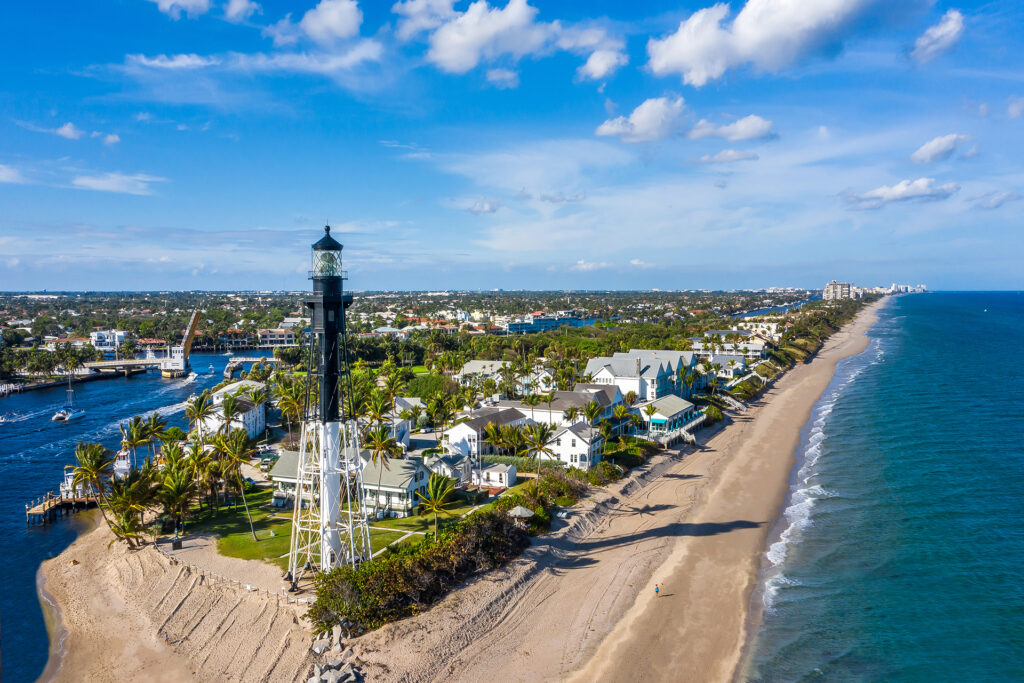
- Lighthouse Point (Broward County): Just north of Fort Lauderdale, with deep-water canals, wide lots, and direct Hillsboro Inlet access. Popular with larger yacht owners.
How to Inspect a Waterfront Dock Before Buying: Step-by-Step
A thorough pre-purchase dock inspection should cover the following steps:
- Hire a licensed marine contractor or dock inspector, not a general home inspector. Marine inspectors are trained to evaluate submerged pilings, seawall tie-backs, and dock hardware.
- Inspect pilings at and below the waterline. Wooden pilings are vulnerable to marine borers; concrete and composite pilings are more durable. Ask for the approximate installation date.
- Check the seawall cap and face wall for cracking, horizontal movement, or voids behind the wall.
- Test all dock electrical systems. Shore power pedestals, lighting, and any pump-out connections should meet NFPA 303 (Fire Protection Standard for Marinas) and ABYC standards.
- Measure actual water depth at the dock at low tide. Do not rely on county or MLS data, which may be outdated.
- Confirm all dock structures and boat lifts have active Broward County permits. Unpermitted structures may need to be removed at the buyer’s expense.
- Review any HOA or waterway authority restrictions on vessel size, liveaboards, or dock modifications.
Biggest Mistakes Buyers Make When Buying Waterfront Dock Homes
Many buyers assume all waterfront homes offer similar boating access. The most common and costly mistakes include:
- Assuming the listed water depth is accurate, always measure at low tide in person
- Ignoring bridge clearances on the route to the ocean
- Failing to obtain a seawall inspection before closing
- Overlooking unpermitted dock structures that may require costly remediation
- Buying a dock that is too short or a lift that is undersized for their vessel
- Not accounting for future boat upgrades when evaluating depth and canal width
FAQs
What is considered deep water in Fort Lauderdale?
Deep water in Fort Lauderdale is generally defined as 8 feet or more at mean low water. This depth accommodates most yachts up to approximately 80–100 feet in length. Depths of 10 feet or more are considered premium and are required for larger motoryachts and mega yachts. Canal depths of less than 5 feet are considered shallow-water and significantly limit usable vessel size.
Can any waterfront home accommodate a yacht?
No. Yacht compatibility depends on dock length, water depth at low tide, canal width for maneuvering, and bridge clearances on the route to open water. A home may have a large dock but sit on a shallow canal or behind a low fixed bridge, making it unusable for most yachts. Buyers with vessels over 40 feet should verify all four factors independently before making an offer.
Do waterfront homes in Fort Lauderdale include private docks?
Many do, but not all. Some waterfront properties feature a seawall without any dock structure, meaning the buyer would need to design, permit, and build a dock after purchase, a process that typically takes 3–6 months and costs $30,000–$150,000+ depending on length and materials. Always confirm whether an existing dock is included and whether it is fully permitted.
Is a seawall inspection necessary when buying a waterfront home?
Yes, and it should be treated as non-negotiable. A seawall inspection by a licensed marine contractor can identify hidden cracking, soil voids, or structural failure that a standard home inspection may miss.
Seawall repairs in Fort Lauderdale cost $150–$500 per linear foot, meaning a failing 80-foot seawall could represent a $40,000–$80,000 liability. Identifying this before closing gives buyers leverage to negotiate a price reduction or require the seller to repair before closing.
Are private docks regulated in Fort Lauderdale?
Yes. All dock structures, boat lifts, and seawall modifications in Fort Lauderdale and Broward County require permits from the City of Fort Lauderdale and, in many cases, from the Florida Department of Environmental Protection (FDEP) and the U.S. Army Corps of Engineers.
Unpermitted structures are a significant legal and financial risk for buyers. Always request permit documentation for any dock structure during due diligence.
How much does a private dock add to property value in Fort Lauderdale?
A functional private dock in Fort Lauderdale typically adds 5–15% to a waterfront home’s value compared to a similar property with only a seawall.
Deep-water docks capable of accommodating yachts 50 feet or larger can add 15–25% or more, particularly in premium boating neighborhoods like Harbor Beach, Seven Isles, and Las Olas Isles. A permitted boat lift typically adds $15,000–$50,000 in value, depending on capacity and condition.
Find Fort Lauderdale Waterfront Homes with Private Docks
If you’re searching for a Fort Lauderdale waterfront home with a private dock, working with a team experienced in boating properties makes a significant difference.
DOTOLI Group specializes in deep-water homes, yacht-friendly properties, and luxury waterfront estates throughout Fort Lauderdale and Broward County.
Their expertise helps buyers identify homes with the right dock setup, verified ocean access, and long-term value, and avoid costly mistakes that come from overlooking the technical details.