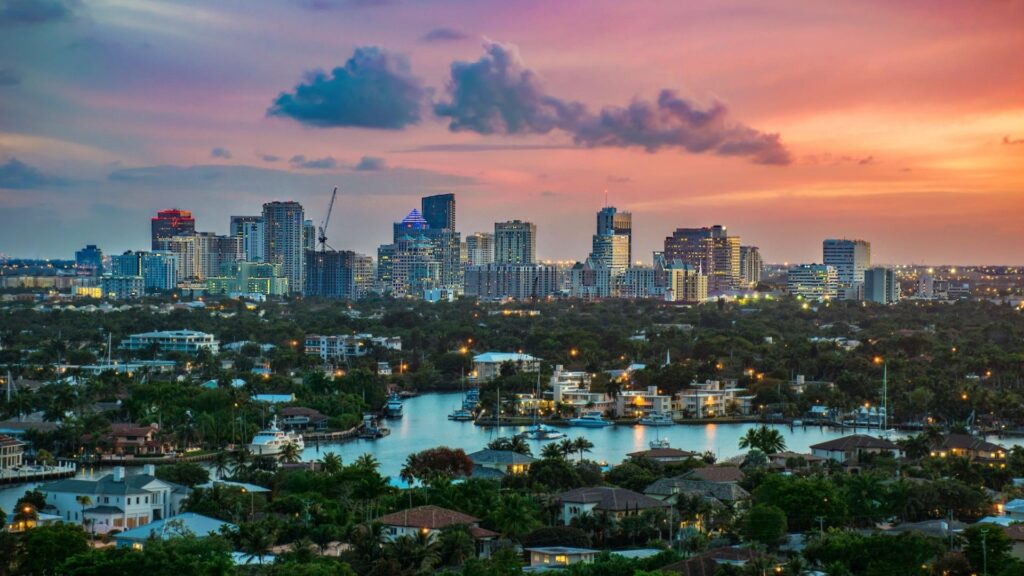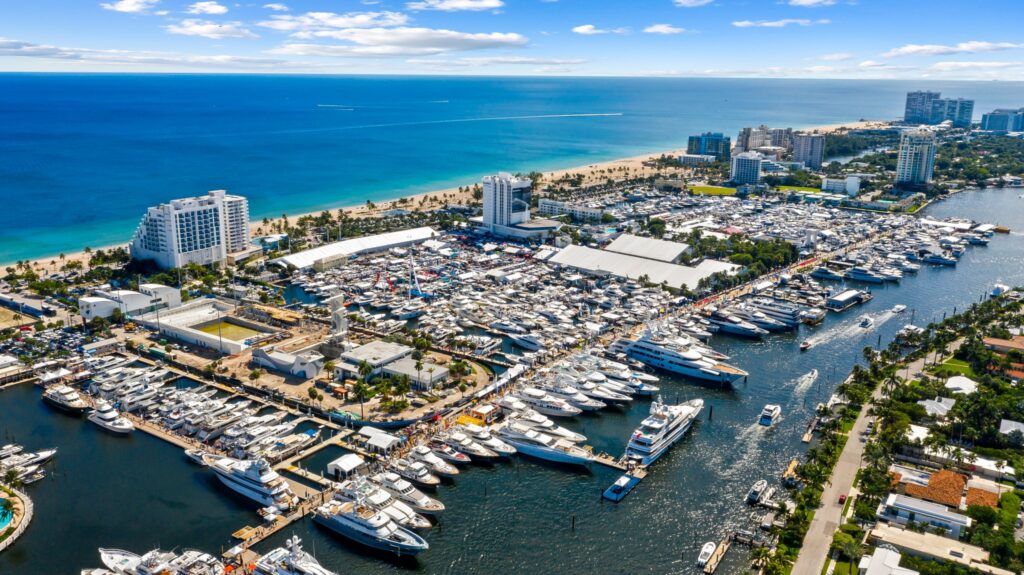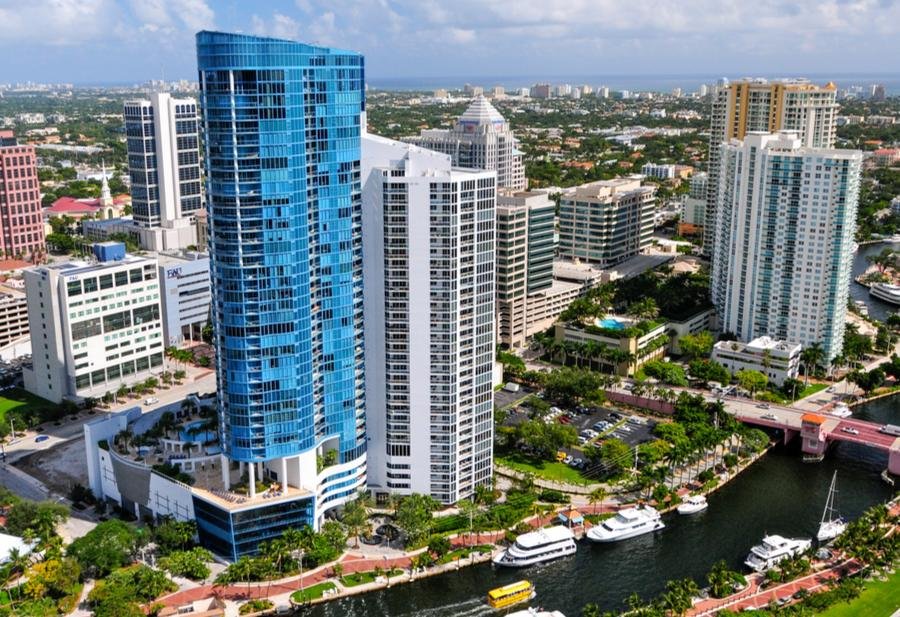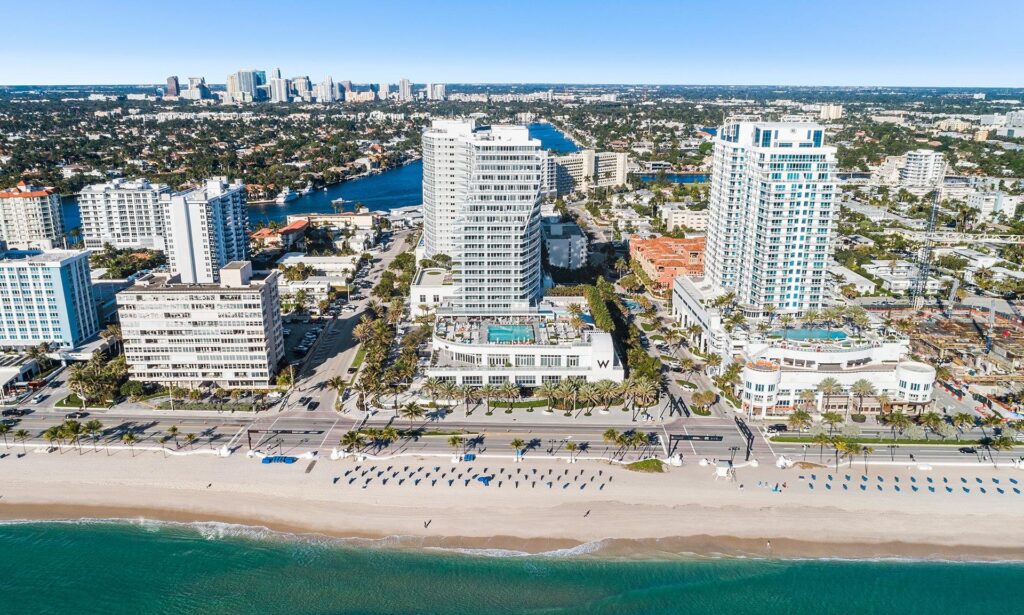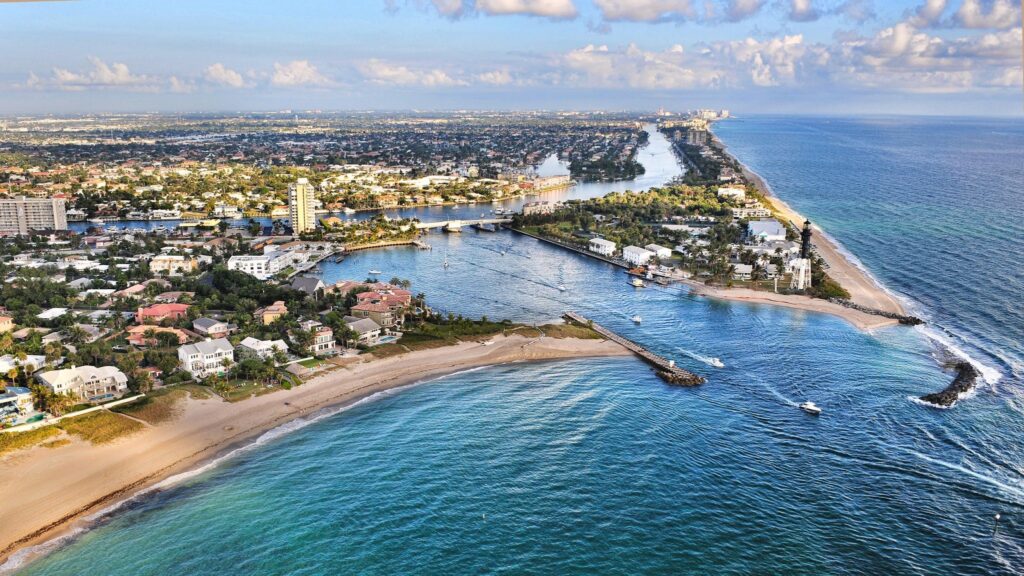
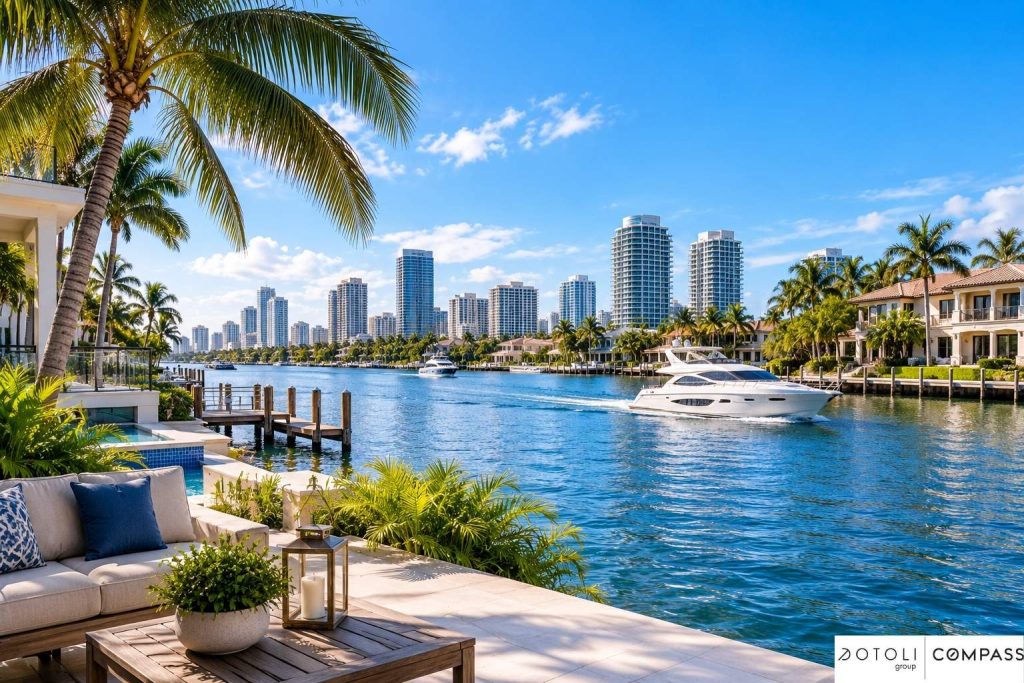

Fort Lauderdale is not a beach town that happens to have real estate. It is a city of 182,000 people with distinct residential neighborhoods, a functioning arts district, a deepwater port, and one of the highest concentrations of navigable waterways in the United States.
Buyers who move here from high-tax states are making a financial decision as much as a lifestyle one. Florida’s 0% state income tax means a household earning $500,000 annually saves over $50,000 per year compared to California’s 13.3% top rate (Florida Department of Revenue). That number funds a meaningful portion of a Fort Lauderdale mortgage payment.
This guide covers what living in Fort Lauderdale actually costs, which neighborhoods fit which buyer profiles, what the real estate market looks like in 2026, and what newcomers consistently underestimate before closing.
What Does It Cost to Live in Fort Lauderdale?
Fort Lauderdale’s cost of living is above the national average, driven primarily by housing. The Broward County median home price reached $620,000 in Q1 2026, according to Florida Realtors.
Property taxes in Broward County run between 19 and 21 mills depending on the municipality, which translates to roughly $28,500 to $52,500 annually on a $1.5 million home before exemptions.
Florida has no state income tax, inheritance tax, or estate tax, which offsets the housing premium for buyers relocating from New York, California, or Illinois.
The Homestead Exemption and What It Means for Your Tax Bill
Florida’s homestead exemption reduces a primary residence’s assessed value by $50,000 for property tax purposes. More importantly, the Save Our Homes cap limits annual assessment increases to 3% or the Consumer Price Index, whichever is lower, once you establish homestead.
For buyers planning to stay five or more years, the cap compounds into material tax savings relative to assessed market value.
The application deadline is March 1 of the year following your purchase. Miss it, and you wait another full year. The Broward County Property Appraiser processes homestead applications at bcpa.net.
Day-to-day costs outside housing are more manageable. Groceries, utilities, and transportation run close to the national average. Fort Lauderdale has no city income tax on top of Florida’s zero state rate. Flood insurance is the cost most buyers underestimate.
The hidden costs of buying a home in Fort Lauderdale include insurance, HOA fees, and closing costs, with full details.
What Are the Best Neighborhoods in Fort Lauderdale for Buyers?
Fort Lauderdale’s residential neighborhoods are distinct enough that two properties a mile apart can have different school zones, flood designations, bridge clearance constraints, and price-per-square-foot profiles. Buyers most consistently research three neighborhoods: Victoria Park, Coral Ridge, and the Las Olas corridor.
Victoria Park
Victoria Park sits immediately east of downtown Fort Lauderdale, bounded roughly by Sunrise Boulevard to the north, Federal Highway to the west, and the Middle River to the east. It is a walkable neighborhood by Fort Lauderdale standards.
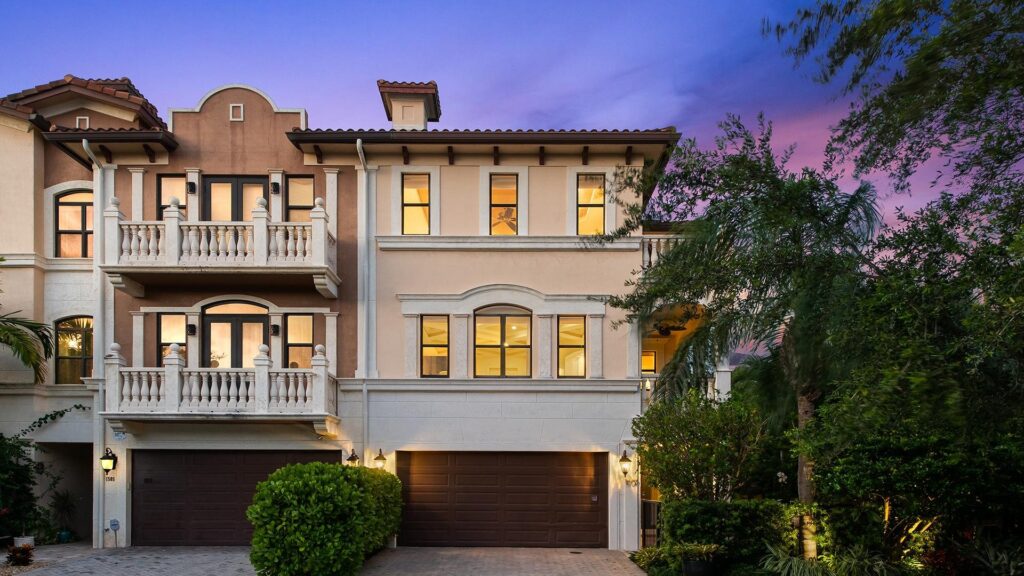
Residents bike to Las Olas, Hugh Taylor Birch State Park, and the beach without getting on I-95. The housing stock is a mix of 1950s and 1960s ranch homes, newer construction townhomes, and mid-century modern renovations.
Entry price points start lower than in waterfront neighborhoods, making Victoria Park one of the first places buyers look when they want urban walkability without a waterfront premium. See current Victoria Park homes active inventory and price ranges.
Coral Ridge
Coral Ridge runs along the Intracoastal Waterway north of Sunrise Boulevard. The neighborhood has a range of property types from Intracoastal-front lots with deepwater dock access to interior streets with no water frontage.
Buyers who want a quieter residential feel without the density of downtown or the tourist traffic of the beach corridor often end up here.
Coral Ridge Country Club anchors the neighborhood’s western edge and provides a community focal point for residents not focused on waterfront access.
Price per square foot varies significantly between Intracoastal-front and interior lots, and the gap between those two categories has widened as deepwater access has appreciated faster than the broader market.
Las Olas Isles and Seven Isles
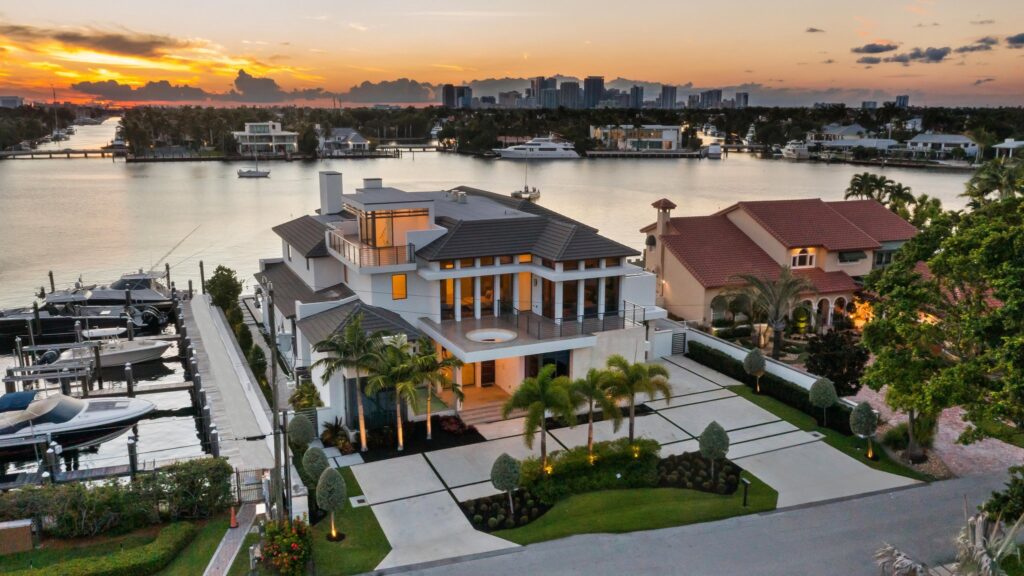
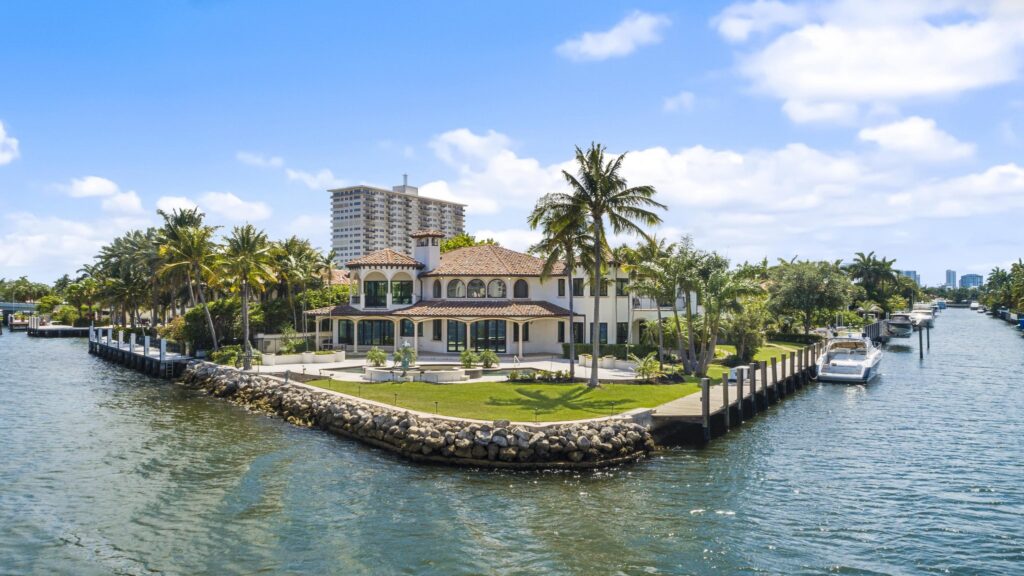
Las Olas Isles and Seven Isles are the two neighborhoods that define Fort Lauderdale’s luxury waterfront market. Both sit on finger islands created by mid-20th-century canal dredging.
Every lot has canal frontage. The primary variable between properties is whether the canal connects to the Intracoastal without a fixed bridge restriction and the depth of the navigable channel.
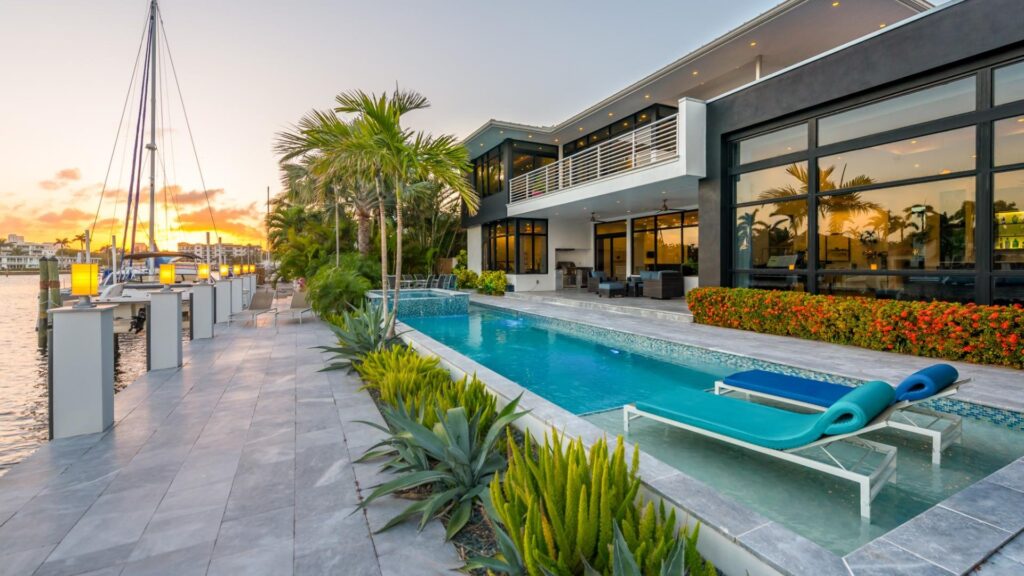
For buyers with vessels above 40 feet, those two variables determine which specific lots are viable. Prices in both neighborhoods range widely based on lot size, dock configuration, and water access, with the top end reaching into eight figures for large Intracoastal-front estates.
What Is the Fort Lauderdale Real Estate Market Like in 2026?
Broward County’s median home price of $620,000 in Q1 2026 reflects 59% appreciation over the prior five years, according to Florida Realtors.
The market is not uniform. Waterfront properties have appreciated faster than the broader county median. Inland properties in western Broward have seen more price softening as mortgage rates have kept first-time buyers on the sidelines.
The conforming loan limit in Broward County is $766,550 as of 2026 (FHFA). Purchases above that threshold require jumbo financing, which has different underwriting standards and typically requires a larger down payment. Most Fort Lauderdale waterfront transactions fall into the jumbo range.
For a step-by-step breakdown of the purchase process under Florida contract law, the Fort Lauderdale home buying process guide covers the full sequence from offer to closing.
What Is the Weather Like Year-Round in Fort Lauderdale?
Fort Lauderdale averages 3,000 hours of sunshine per year and 246 sunny days (Visit Lauderdale). Practical breakdown for residents: winters are dry, mild, and a reason people move here.
From November through April, daytime temperatures run in the mid-70s to low 80s with low humidity. This is when outdoor dining, boating, and the beach are most comfortable.
Summer runs May through October. Temperatures stay in the upper 80s to low 90s, but humidity is the bigger factor. Afternoon thunderstorms develop almost daily from June through September. Hurricane season runs June 1 through November 30.
Winter is the high season in Fort Lauderdale. Seasonal residents from the Northeast and Midwest arrive from December through April, which affects everything from restaurant wait times to marina availability.
Full-time residents generally prefer September and October, when the summer crowd has thinned and hurricane risk is declining, but the weather is still warm.
What Are the Schools Like in Fort Lauderdale?
Fort Lauderdale falls within Broward County Public Schools, the sixth-largest school district in the United States with approximately 260,000 students (Broward County Public Schools). School quality varies significantly by zone within Fort Lauderdale.
Buyers with school-age children should verify the specific elementary, middle, and high school zoning for any property address using the district’s school locator at browardschools.com before making an offer, not after.
School zone boundaries do not always follow neighborhood lines, and two adjacent streets can feed into materially different schools.
Private school options in Fort Lauderdale and adjacent Broward cities are extensive. The corridor from Fort Lauderdale north through Boca Raton includes a range of private and independent K-12 schools.
For buyers for whom private school access is a primary factor, proximity to I-95 and US-1 matters more than the specific public school zone.
The Right Fort Lauderdale Neighborhood Depends on How You Plan to Live Here.
Victoria Park, Coral Ridge, Las Olas Isles, and Seven Isles are all in Fort Lauderdale, but they serve different buyers. Key factors include water access, school zone, walkability, and what you plan to do with a boat slip, if you have one. Those variables determine your price range as much as square footage does.
The Dotoli Group has closed over $1 billion in Fort Lauderdale transactions since 2013 and is ranked #1 Fort Lauderdale Large Team by RealTrends Verified 2026 (realtrends.com).
Contact the Dotoli Group for a neighborhood comparison matched to your timeline, budget, and how you plan to use the city.