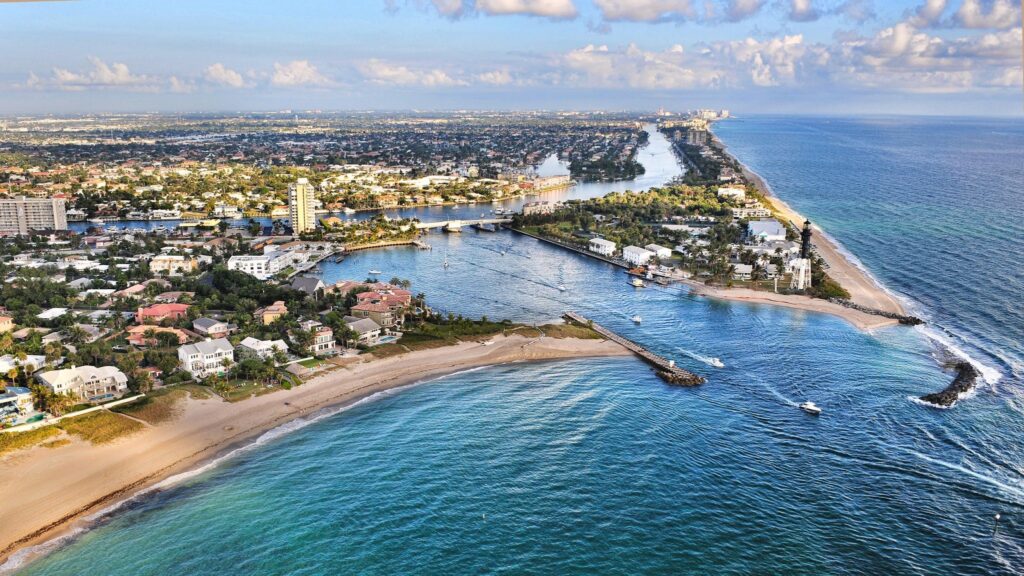


Fort Lauderdale is one of the most tax-efficient places in the United States for high-net-worth families to establish a primary residence. Florida imposes no state income tax, estate tax, inheritance tax, or state capital gains tax.
For a family earning $3 million annually relocating from California, that single change eliminates approximately $399,000 in annual state income tax liability.
Combined with Florida’s unlimited homestead exemption, creditor protection laws, and favorable trust statutes, Fort Lauderdale offers legal and tax efficiency that very few markets in the country can match, at the lifestyle level this city provides.
This guide breaks down every material tax advantage, shows the actual dollar impact by income level and source state, and explains what high-net-worth families need to do to establish Florida domicile in a way that survives scrutiny.
Why Are High-Net-Worth Families Moving to Fort Lauderdale for Tax Reasons?
High-net-worth families are leaving California, New York, New Jersey, Illinois, and Connecticut at an accelerating rate, and Fort Lauderdale is capturing a disproportionate share of that migration.
The reason is straightforward: Florida has no state income tax, and the dollar savings at high income levels are large enough to alter a family’s long-term wealth accumulation trajectory materially.
Fort Lauderdale specifically attracts buyers who want the tax efficiency of Florida, deepwater boating access, proximity to a major international airport, and a luxury real estate market with a strong history of appreciation.
How Much Do High-Net-Worth Families Actually Save by Moving to Fort Lauderdale?
The table below uses 2025 top marginal state income tax rates from the Tax Foundation for the states most commonly cited by relocating high-net-worth families.
Federal taxes apply equally in all states and are excluded. The savings column reflects the annual state income tax that is eliminated when Florida is designated as a primary residence.
| Annual Income | California (13.3%) | New York (10.9%) | New Jersey (10.75%) | Florida (0%) | Annual Savings from CA |
|---|---|---|---|---|---|
| $1,000,000 | $133,000 | $109,000 | $107,500 | $0 | $133,000 |
| $3,000,000 | $399,000 | $327,000 | $322,500 | $0 | $399,000 |
| $5,000,000 | $665,000 | $545,000 | $537,500 | $0 | $665,000 |
Source: Tax Foundation, 2025 State Individual Income Tax Rates — taxfoundation.org
These are annual figures. Over 10 years, a family earning $5 million annually saves $6.65 million in state income tax compared to living in a state with higher rates, assuming rates remain constant. That is the scale of the financial decision Fort Lauderdale buyers in this income range are making.
What Are Florida’s Specific Tax Advantages for High-Net-Worth Families?
Does Florida Really Have No State Income Tax?
Yes. Florida’s constitution prohibits a personal income tax. This applies to wages, salary, business distributions, investment income, rental income, and capital gains.
There is no mechanism by which Florida can impose a state income tax without a constitutional amendment approved by voters. It is not a temporary policy or a rate that the legislature can change.
This constitutional prohibition is the foundation of Florida’s tax appeal for high-net-worth relocators. It distinguishes it from states that offer temporary tax incentives or exemptions that can be repealed.
How Does Florida’s Lack of Estate and Inheritance Tax Benefit Wealthy Families?
Florida imposes no estate or inheritance tax at the state level. Beneficiaries receive inherited assets subject only to the federal estate tax, which applies to estates above $13.61 million per individual for 2024 (indexed annually).
States like Massachusetts, Oregon, and Washington impose estate taxes on estates above $1 million to $2 million at rates up to 20 percent.
For families with multi-generational wealth transfer goals, Florida’s absence of a state estate tax can preserve millions in assets that would otherwise be captured by a high-tax state at death.
How Does Florida Treat Capital Gains for High-Net-Worth Investors?
Florida imposes no state capital gains tax. Investment income, business sale proceeds, and real estate appreciation are taxed only at the federal level for Florida residents. California taxes capital gains as ordinary income at the top marginal rate of 13.3 percent.
A Fort Lauderdale resident selling a business for $20 million retains approximately $2.66 million more in after-tax proceeds than a California resident completing the same transaction, assuming long-term capital gains treatment at the federal level applies equally to both.
What Asset Protection Does Florida Law Provide to High-Net-Worth Residents?
Florida offers one of the strongest creditor-protection frameworks in the country. The Florida homestead exemption protects the full equity value of a primary residence from creditor claims, with no cap on the home’s protected value, provided the homeowner has been a Florida resident for at least 1,215 days before filing.
For a high-net-worth family in a high-litigation-risk profession, a $10 million Fort Lauderdale estate can be entirely protected from business creditors, malpractice judgments, and personal liability claims under Florida law.
Why Is Fort Lauderdale Specifically the Right Florida City for High-Net-Worth Families?
Florida has no state income tax statewide. The question is which Florida city provides the lifestyle, infrastructure, and real estate profile that justifies establishing primary residence there. Fort Lauderdale makes the case on several specific grounds that other Florida markets do not match simultaneously.
What Does Fort Lauderdale Offer That Other Florida Cities Do Not?
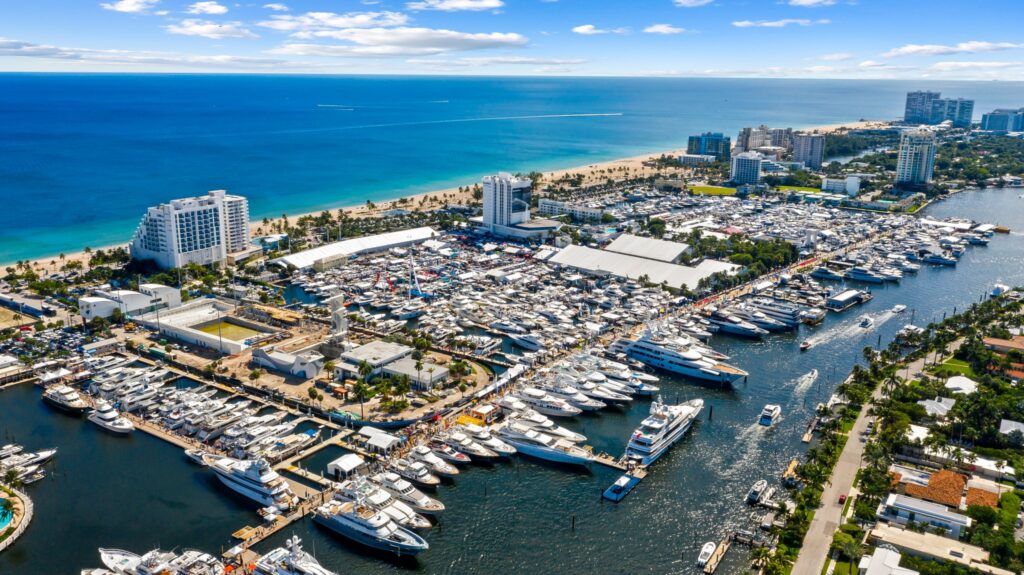
Fort Lauderdale has 300 miles of navigable inland waterways, direct ocean access through Port Everglades and the Hillsboro Inlet to the north, and a deepwater canal network that accommodates private yachts above 100 feet in premium neighborhoods.
No other Florida city combines this level of private deepwater boating access with a world-class restaurant and arts scene, proximity to a major international airport, and a concentrated luxury real estate market in a compact, navigable geography.
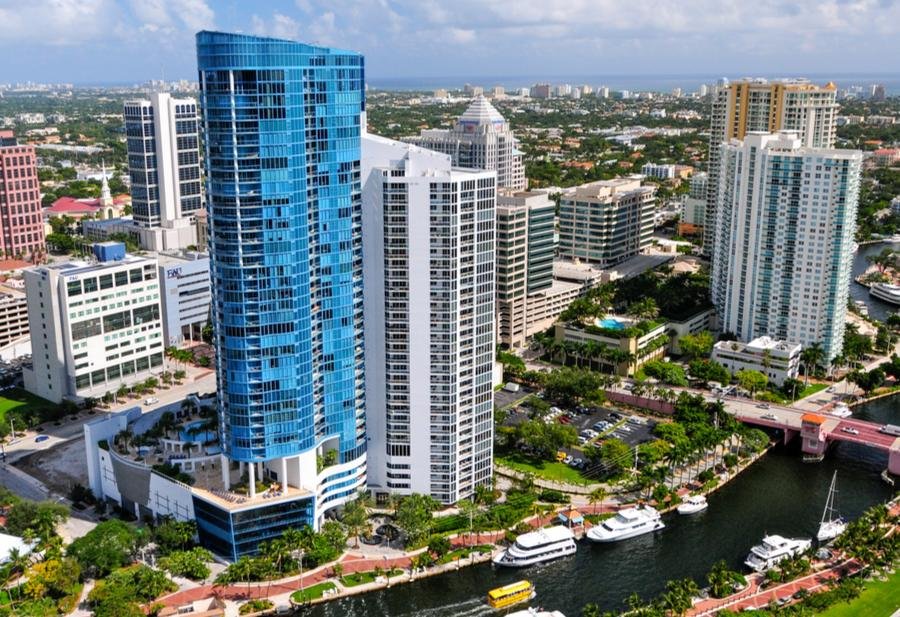
What Is the Fort Lauderdale Luxury Real Estate Market Like in 2026?
Fort Lauderdale residential real estate has appreciated 63.45% over the last five years, according to NeighborhoodScout Q4 2025 data. The Broward County median sale price reached $564,100 as of October 2025, per Steadily, citing Zillow data, but luxury waterfront properties trade in a different segment entirely.
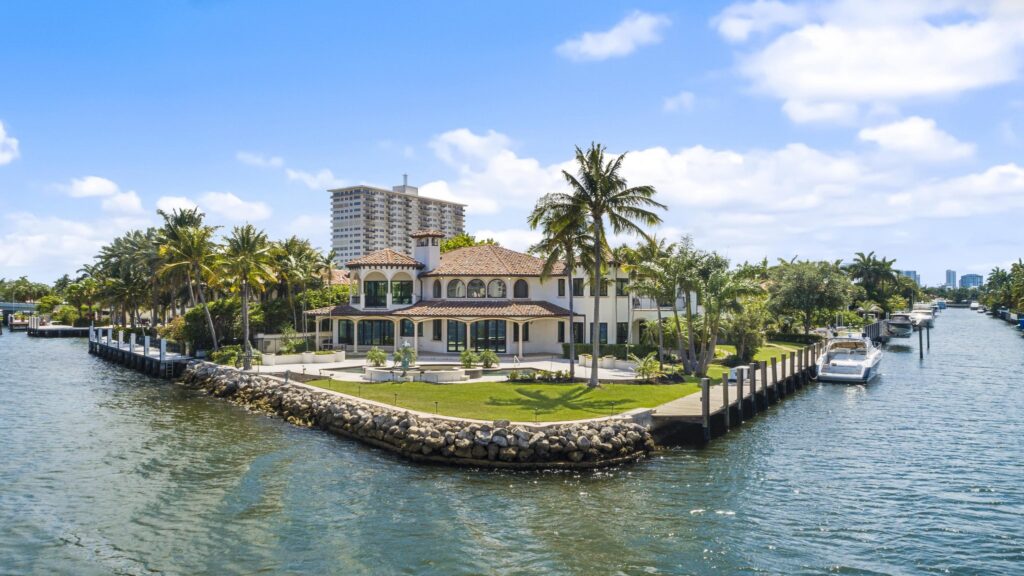
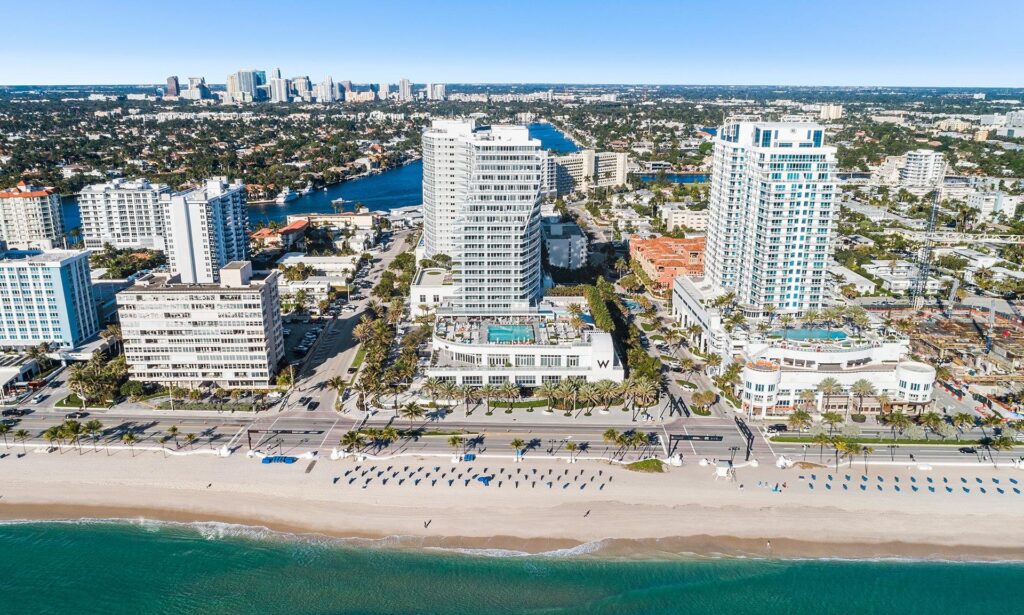
Deepwater canal estates in Las Olas Isles range from $3 million to $20 million. Harbor Beach beachfront homes start around $4 million.
The luxury waterfront market has shown consistent value retention through market cycles, supported by the fixed supply of deepwater canal lots and sustained demand from high-net-worth relocators.
What Is Florida’s Homestead Exemption and Why Does It Matter for Wealthy Families?
How Does the Florida Homestead Exemption Work?
The Florida homestead exemption provides two distinct benefits that matter significantly to high-net-worth buyers.
The first is a property tax reduction: the first $25,000 of a home’s assessed value is exempt from all property taxes, and an additional $25,000 is exempt from non-school property taxes, for a combined reduction of up to $50,000 in assessed value. On a $5 million Fort Lauderdale estate, this produces a modest but real annual property tax saving.
Does the Homestead Exemption Apply to Waterfront Properties?
Yes. There is no property type exclusion for the Florida homestead exemption. A $20 million waterfront estate in Harbor Beach qualifies for the same creditor protection and property tax benefits as a $600,000 inland home, provided it is established as the owner’s primary residence.
This is a significant differentiator from other states where homestead exemptions are capped at values that exclude luxury real estate from meaningful protection.
Buyers who want to understand what the full due diligence process looks like for a Fort Lauderdale luxury waterfront purchase, including how primary residence designation is established at closing, will find a complete walkthrough in the “what to consider before buying a luxury waterfront home” guide.
Is Fort Lauderdale Worth It as a Primary Residence for High-Net-Worth Families?
How Do You Calculate Whether the Move Makes Financial Sense?
The calculation is straightforward for most high-net-worth families relocating from a high-tax state. Take the top marginal state income tax rate in the current state, apply it to annual taxable income, and that figure represents the annual tax savings from establishing Florida domicile.
For a family earning $5 million annually in California, the annual savings is approximately $665,000. Over ten years, assuming constant income and rates, the cumulative savings exceed $6.6 million.
What Are the Lifestyle Trade-Offs of Fort Lauderdale vs. High-Tax State Cities?
For most high-net-worth families relocating from New York, California, or Chicago, Fort Lauderdale represents a net lifestyle improvement rather than a trade-off.
The city has a mature dining and arts scene, world-class boating access, a walkable waterfront district centered on Las Olas Boulevard, and an international airport with direct connections to major cities.
The primary adjustment is the climate: Fort Lauderdale has a subtropical climate with a distinct hurricane season from June through November, which requires preparation and appropriate insurance planning.