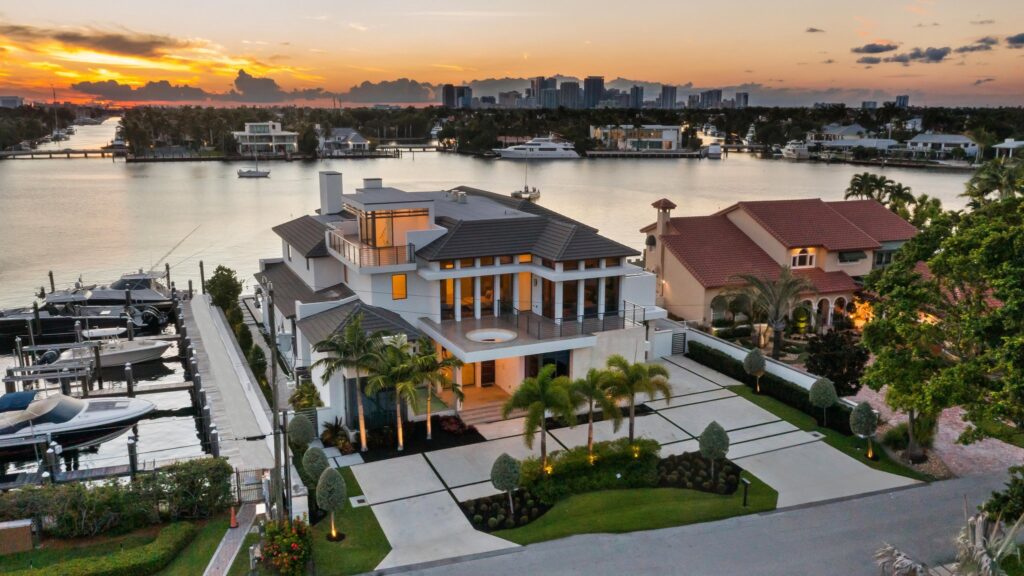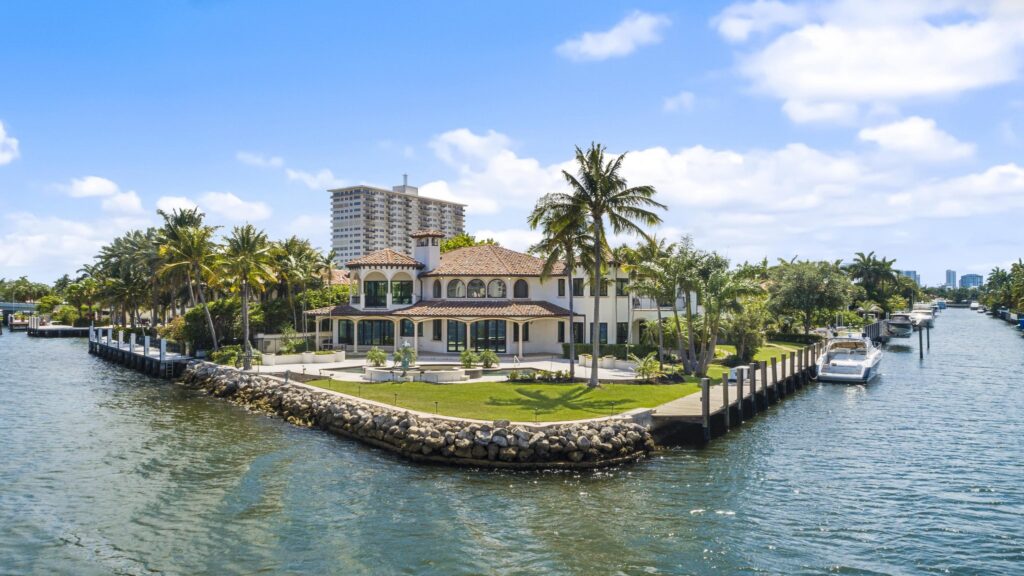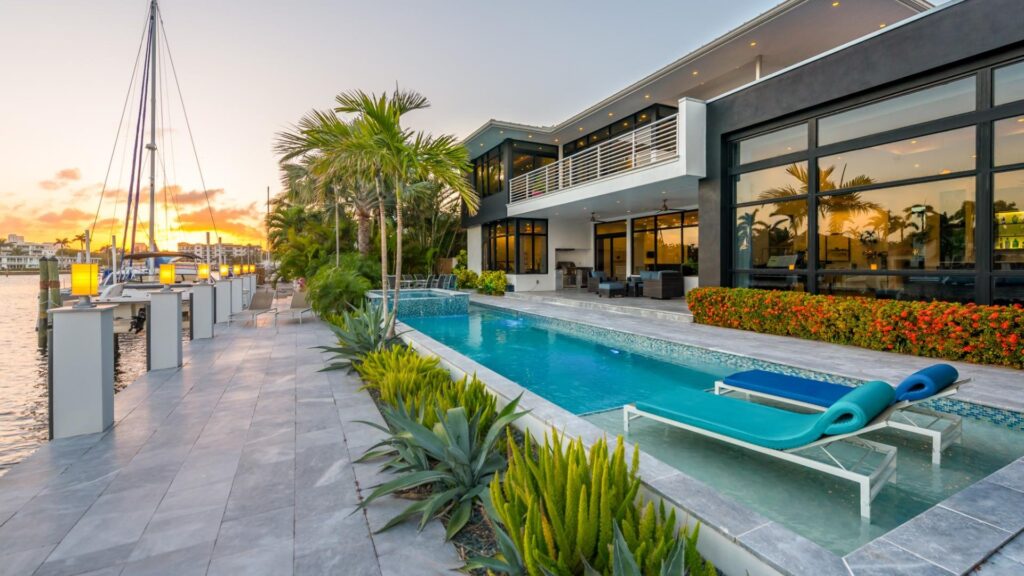

The size of boat you can keep at a Fort Lauderdale canal home depends on three things: water depth at your dock, bridge clearances along your route to open water, and the dock permits your property holds.
Most Fort Lauderdale canals can accommodate boats between 30 and 60 feet. Still, that range varies significantly by neighborhood, canal, and the specific waterway you need to pass through to reach the Intracoastal or Atlantic.
This guide covers what determines boat size at Fort Lauderdale canal homes and what to verify before you buy.
What Determines What Size Boat You Can Keep at a Fort Lauderdale Canal Home?
Three factors set the ceiling on boat size at any Fort Lauderdale canal property: water depth, overhead clearance, and dock configuration.
You can have a 65-foot slip and a 10-foot canal, but if a fixed bridge with 14 feet of clearance sits between your dock and open water, your boat height is capped at under 14 feet at mean high water. All three variables need to match the boat you intend to keep before you commit to a property.
How Does Canal Depth Affect Boat Size?
Canal depth sets the draft limit for any vessel using the dock. Most navigable canals in Fort Lauderdale residential neighborhoods run between 6 and 12 feet at mean low water.
NOAA nautical chart 11470, which covers the Port Lauderdale and Intracoastal Waterway area, is the reference document for charted depths across Fort Lauderdale’s waterways and is publicly available at nauticalcharts.noaa.gov.
Shallower canals in older subdivisions can drop to 5 or 6 feet, limiting boats to those with drafts under 4 feet. Deepwater canals in premium neighborhoods like Las Olas Isles and Rio Vista typically run 8 to 12 feet, which accommodates larger sportfishing boats, motor yachts, and sailing vessels with deeper keels.
Draft is only part of the depth equation. Tidal variation in Fort Lauderdale runs approximately 2.5 feet between mean low and mean high water. A canal that reads 8 feet at mean low water can be 10.5 feet at high tide, which matters for vessels operating close to their draft limits.
Do Fixed Bridges Limit Boat Height on Fort Lauderdale Canals?
Yes. Fixed bridges are the most common obstacle for tall boats on Fort Lauderdale’s inland canal network. Clearance is measured at mean high water, which is the worst-case scenario for overhead space.
Several fixed bridges in Fort Lauderdale residential neighborhoods provide 14 to 17 feet of clearance at mean high water, which is sufficient for most powerboats with standard T-tops and radar arches but rules out taller sportfishing towers, flybridge yachts, and sailboats.
Before purchasing a canal property, identify every fixed bridge between the dock and open water and confirm the clearance on each. A single 14-foot fixed bridge anywhere along the route caps the height of every boat that will use that dock.
Drawbridges and bascule bridges along the Intracoastal Waterway open on signal and do not limit height when open. Hence, properties with Intracoastal-direct access or routes that pass only drawbridges have far fewer height restrictions.
Which Fort Lauderdale Neighborhoods Have the Best Canal Access for Larger Boats?
Las Olas Isles
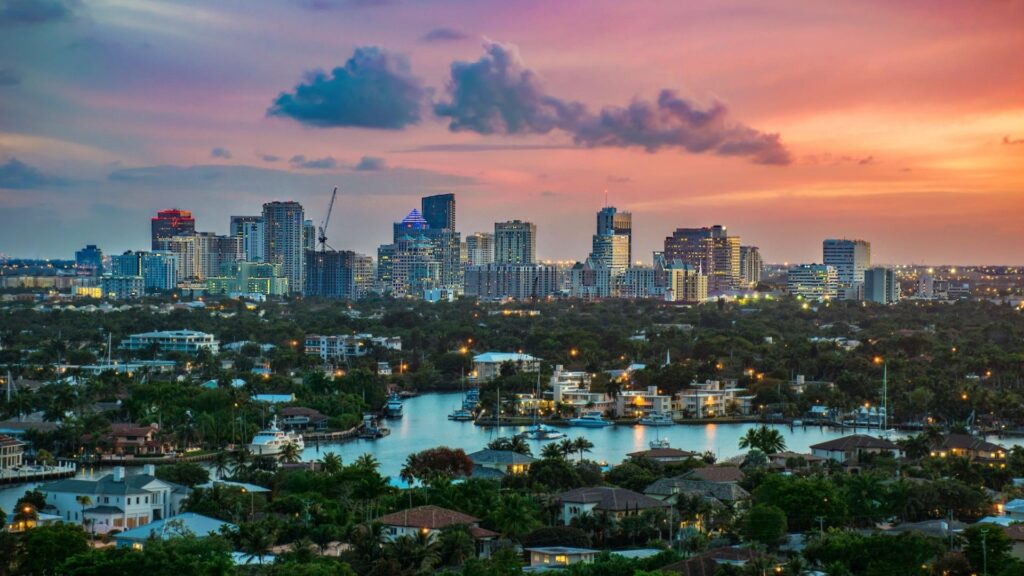
Las Olas Isles is Fort Lauderdale’s premier deepwater canal community. Canals here connect directly to the Intracoastal Waterway, with deep water and minimal fixed-bridge interference along most routes.
Properties can accommodate boats from 40 feet to well over 100 feet on the right lots. This is where Fort Lauderdale’s largest private yacht dockage concentrates.
Buyers researching this neighborhood can explore available Las Olas Isles homes for sale to see current inventory with dock specifications.
Rio Vista
Rio Vista sits along the New River and its tributaries south of Las Olas Boulevard. Canals here are deep and well-maintained, and many properties have direct or near-direct Intracoastal access. Boats in the 40- to 65-foot range are common on Rio Vista docks.
Buyers should verify bridge clearances on the specific route from any Rio Vista address to open water, as the New River passes under several bridges with varying clearances.
Harbor Beach
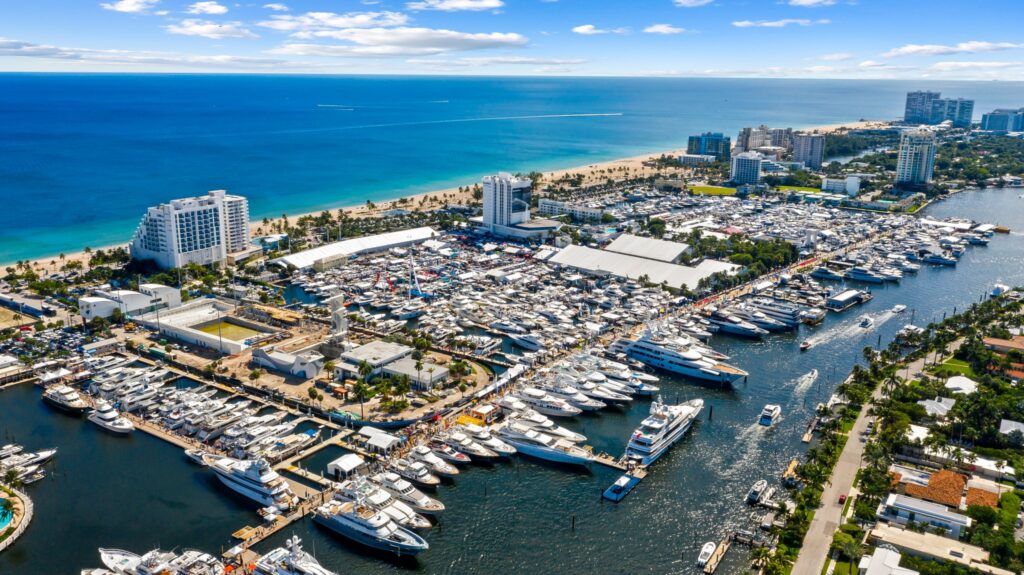
Harbor Beach properties on the canal network offer deep water and access to Port Everglades inlet, which is one of the deepest and most direct routes to open ocean in South Florida.
This place is among the most practical neighborhoods for large sportfishing boats and motor yachts because the Port Everglades inlet route avoids many of the fixed bridge limitations that affect inland canals.
Coral Ridge and Coral Ridge Country Club
Coral Ridge canals north of Fort Lauderdale provide access to the Intracoastal and generally accommodate mid-size powerboats in the 25 to 45-foot range comfortably.
Depths and bridge clearances vary by specific canal, so buyers interested in larger boats should verify the route before purchasing.
What Dock Specifications Matter for Boat Size?
What Is the Maximum Boat Length a Residential Dock Can Hold?
Dock length, dock configuration, and permit authorizations all determine the maximum boat length a property can legally accommodate.
Broward County and the City of Fort Lauderdale require permits for docks, and those permits specify allowable dock dimensions, which in turn limit how long a vessel can legally be moored. A dock permitted for a 40-foot vessel cannot be used for a 65-foot boat without a permit amendment.
Buyers purchasing a waterfront property specifically for a known vessel should pull the existing dock permits and confirm they cover the boat’s length, beam, and draft before closing. Permit records are available through the City of Fort Lauderdale Building Department and Broward County.
Does Seawall Condition Affect What Boats You Can Dock?
Yes. A deteriorating seawall can limit dock use and, in some cases, make mooring large vessels unsafe or unpermittable. Fort Lauderdale seawalls are subject to the same saltwater and tidal exposure as the vessels using them.
Before purchasing any Fort Lauderdale canal property, a professional seawall inspection is a necessary step, not an optional one.
Buyers who want to understand what inspectors look for and what seawall repairs typically cost can find a detailed breakdown in the Fort Lauderdale seawall inspection guide.
What Should Boaters Verify Before Buying a Fort Lauderdale Canal Home?
What Due Diligence Does a Boater Need to Complete?
Buyers purchasing a Fort Lauderdale canal home for boating access need to complete several checks the standard home inspection does not cover.
Canal depth survey: Commission a depth survey of the canal at the specific property, not just a review of chart data. Silting, debris, and localized shoaling can make actual depths different from charted depths.
Bridge clearance route map: Identify every bridge between the dock and open water. Record whether each is fixed or operates on a schedule. Confirm the clearance of every fixed bridge at mean high water.
Dock permit review: Pull the current dock permit and confirm it covers the vessel you intend to moor. Check whether the permit allows live-aboard use if that is a consideration.
Seawall condition report: Have a licensed inspector assess seawall condition before closing. Seawall replacement in Fort Lauderdale runs $500 to $1,500 per linear foot depending on material and access.
Flood zone designation: Canal properties in Fort Lauderdale sit in various FEMA flood zones that affect insurance costs. Buyers can review how FEMA designations apply to Fort Lauderdale waterfront properties in the Fort Lauderdale flood zones guide. This covers the insurance cost implications for each zone.
Are There Restrictions on Boat Size in Fort Lauderdale HOAs?
Some Fort Lauderdale waterfront communities with HOA governance have deed restrictions or community rules that limit vessel size, type, or appearance. Las Olas Isles, for example, has specific rules about vessels kept at residential docks.
Buyers should request and review HOA governing documents and any deed restrictions before assuming any boat they own can be docked at the property.
How Do You Match a Fort Lauderdale Canal Home to the Boat You Own?
The cleanest approach is to start with the boat specifications and work backward. Know the length overall, beam, draft, and air draft (height above water) of the vessel. Then evaluate any canal property against those four numbers, the canal depth, route clearances, dock permit, and seawall condition.
Buyers who are not yet sure what size boat they will own should purchase for the largest boat the property can practically accommodate, not the one they currently own.
The infrastructure around the property fixes canal access. You can always buy a smaller boat. You cannot change a fixed bridge clearance.
The full checklist of what to evaluate before committing to a waterfront purchase is covered in the guide on what to consider before buying a luxury waterfront home, which walks through dock access, waterway specifications, and what to ask the seller before going under contract.
Buyers who want a broader overview of how the Fort Lauderdale waterfront purchase process works from offer to closing will find the buying a waterfront home in Fort Lauderdale guide covers the full timeline, including inspections and contingencies.
Frequently Asked Questions
What size boat can I keep at a Fort Lauderdale canal home?
Most Fort Lauderdale canal homes accommodate boats between 30 and 65 feet depending on canal depth, fixed bridge clearances on your route to open water, and dock permit authorizations. Deepwater neighborhoods like Las Olas Isles can accommodate larger vessels above 65 feet on the right lots.
How deep are the canals in Fort Lauderdale?
Fort Lauderdale residential canals range from 5 to 12 feet at mean low water, depending on neighborhood and specific waterway. Deepwater canals in Las Olas Isles and Rio Vista typically run 8 to 12 feet. Older subdivisions with less-maintained canals can be as shallow as 5 to 6 feet.
Do fixed bridges limit boat height in Fort Lauderdale?
Yes. Fixed bridges on routes between residential docks and open water are the most common height restriction for Fort Lauderdale boaters.
Clearances range from 14 to 25 feet at mean high water. Any fixed bridge along your route caps the air draft of every vessel using that dock.
Which Fort Lauderdale neighborhood is best for large boats?
Las Olas Isles and Harbor Beach are the top neighborhoods for large boats. Las Olas Isles offers deepwater canals with direct Intracoastal access.
What permits do I need to check before buying a Fort Lauderdale canal home?
Pull the dock permit from the City of Fort Lauderdale Building Department or Broward County before closing. Confirm the permit covers the length and configuration of the vessel you intend to moor.
Does seawall condition matter for boat dockage in Fort Lauderdale?
Yes. A deteriorating seawall can make mooring large vessels unsafe and may require costly repairs before the dock can be used at full capacity.
Ready to Find a Fort Lauderdale Canal Home That Fits Your Boat?
The Dotoli Group works exclusively in Fort Lauderdale waterfront real estate. The team knows which neighborhoods and specific canals can accommodate which vessel types, which bridges restrict height on each route, and which properties have the dock permits and water depth your boat requires.
Contact the Dotoli Group to get a list of Fort Lauderdale canal homes that match your boat specifications or to evaluate a specific property before you make an offer.