
Saltwater corrosion is the accelerated deterioration of metals, concrete, and building materials caused by exposure to salt-laden water and air. For a saltwater corrosion waterfront home Fort Lauderdale buyer or owner, this is not a distant risk. It is an active, ongoing process that attacks the seawall, HVAC system, structural steel, electrical components, and exterior finishes of a canal property every single day.
What Is Saltwater Corrosion?
Saltwater corrosion is the accelerated deterioration of metals, concrete, and building materials caused by exposure to salt-laden water and air. For a saltwater corrosion waterfront home Fort Lauderdale buyer or owner, this is not a distant risk.
It is an active, ongoing process that attacks the seawall, HVAC system, structural steel, electrical components, and exterior finishes of a canal property every single day.
How Much Does Corrosion Actually Cost?
The scale of the problem nationally is significant. According to AMPP (formerly NACE International), corrosion costs the United States economy approximately $276 billion annually across all industries, with marine and coastal environments accounting for some of the highest per-structure costs.
For a Fort Lauderdale waterfront homeowner, that macro figure translates into real maintenance budgets, replacement timelines, and inspection schedules that inland buyers never have to think about.
Knowing what corrosion does, where it starts, and what to look for before you buy is not optional knowledge in this market. It is the difference between a well-maintained waterfront home and a money pit with a beautiful view.
What Does Saltwater Corrosion Actually Do to a Building?
Saltwater corrosion works through two mechanisms operating simultaneously. The first is direct contact. Saltwater that splashes onto metal surfaces, concrete seawalls, dock hardware, and structural components introduces chloride ions that break down the protective oxide layer on metal, allowing rust and oxidation to accelerate far faster than in a dry or freshwater environment.
The second is salt air. You do not need to be sitting on the water’s edge for salt air to reach your home. Salt aerosols from Fort Lauderdale’s canal network and the nearby Atlantic travel inland on wind, depositing chloride on exterior surfaces, window frames, HVAC equipment, electrical panels, and roofing hardware, even on properties set back from the waterline.
Together, these two mechanisms make waterfront property maintenance fundamentally different from standard residential maintenance. The materials and systems that last 20 to 30 years in an inland Florida home may need attention or replacement in 5 to 15 years on a canal property if they are not protected correctly.
Which Parts of a Fort Lauderdale Waterfront Home Does Corrosion Attack First?
Corrosion does not attack everything at once. It follows a predictable sequence based on material vulnerability and exposure level. Understanding that sequence tells you where to look first on any property.
The Seawall
The seawall is the most exposed structure on any Fort Lauderdale canal property. A concrete seawall sits in direct, continuous contact with saltwater.
The steel reinforcement inside the concrete panels corrodes when chloride ions penetrate the concrete surface over time, causing the rebar to expand as it rusts and crack the panel from inside. This is why concrete seawalls that look intact on the surface can be structurally compromised underneath.
A seawall in good condition is a significant asset. A seawall in active corrosion-driven failure is a six-figure liability.
Review our seawall inspection schedule guide to understand how often the wall should be professionally assessed and what inspectors look for.
HVAC Systems
Air conditioning systems are among the first things to show corrosion damage on Fort Lauderdale waterfront properties. The aluminum fins on the exterior condenser unit corrode in salt air, reducing efficiency before visible damage is apparent.
Copper refrigerant lines develop pinhole leaks. Electrical connections at the unit oxidize and fail. Salt air HVAC degradation on a canal property can cut equipment lifespan from the standard 15 to 20 years down to 8 to 12 years without protective coatings and regular maintenance.
Structural Steel and Fasteners
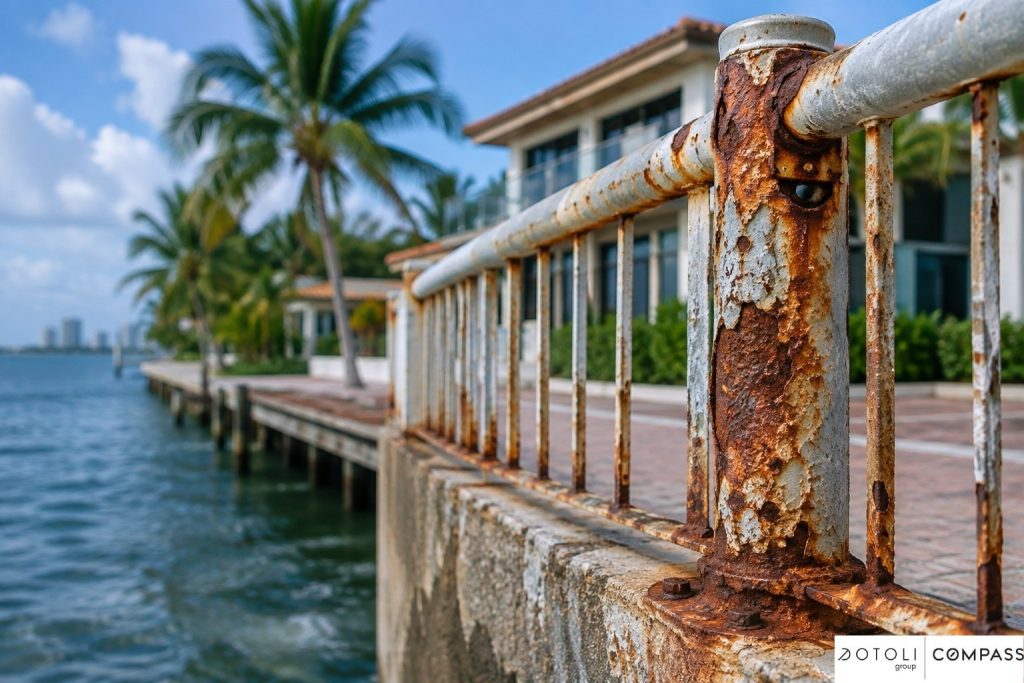
Any exposed steel on a waterfront home, including hurricane straps, anchor bolts, railings, dock cleats, and roof-to-wall connections, corrodes faster in a saltwater environment. Stainless steel and hot-dipped galvanized fasteners perform significantly better than standard steel hardware but are not immune.
A home with standard-grade steel hardware throughout is accumulating deferred maintenance that does not show on the surface until the fasteners fail.
Aluminum Window Frames and Sliding Doors
Aluminum corrodes in saltwater through a process called pitting corrosion, where small pits form in the surface and grow inward.
Window frames, sliding glass door tracks, and screen enclosure frames on canal properties develop oxidation staining and eventually structural weakness if they are not cleaned regularly and treated with protective coating.
Impact-rated windows and doors are a significant investment on a waterfront home, and protecting that investment requires consistent maintenance.
Electrical Systems
Salt air deposits on electrical components, panel breakers, and exterior outlets accelerate oxidation that causes connection failures and, in serious cases, fire risk.
Exterior electrical panels on canal properties require more frequent inspection than inland equivalents. Any panel showing corrosion on breaker connections warrants immediate evaluation by a licensed electrician before closing.
How Does Fort Lauderdale’s Canal System Change the Corrosion Equation?
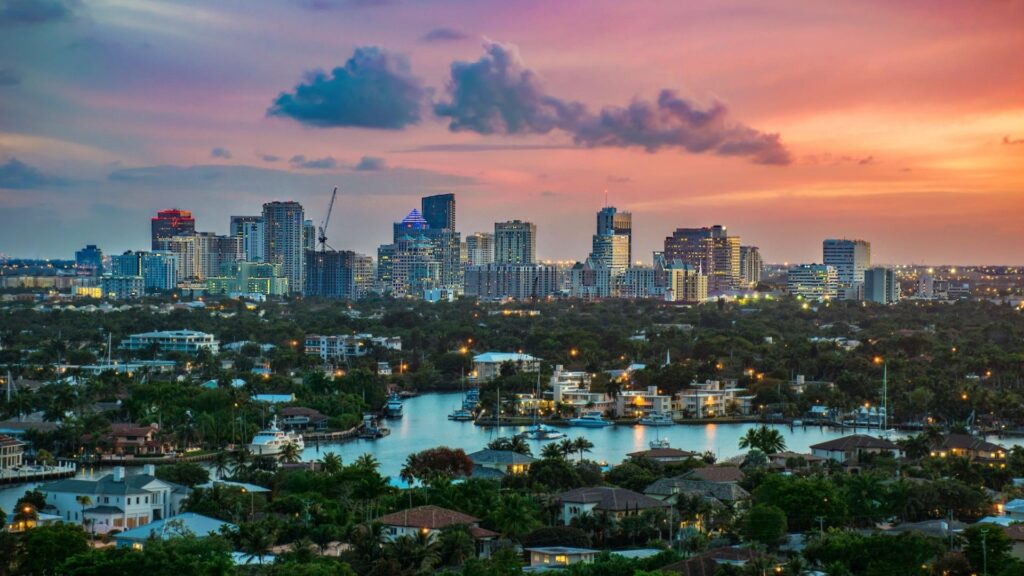
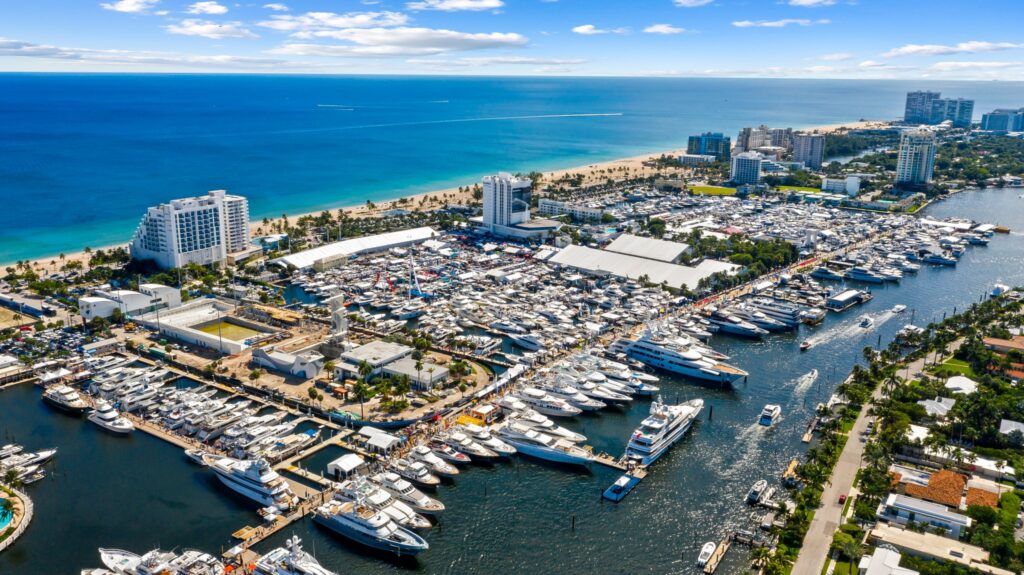
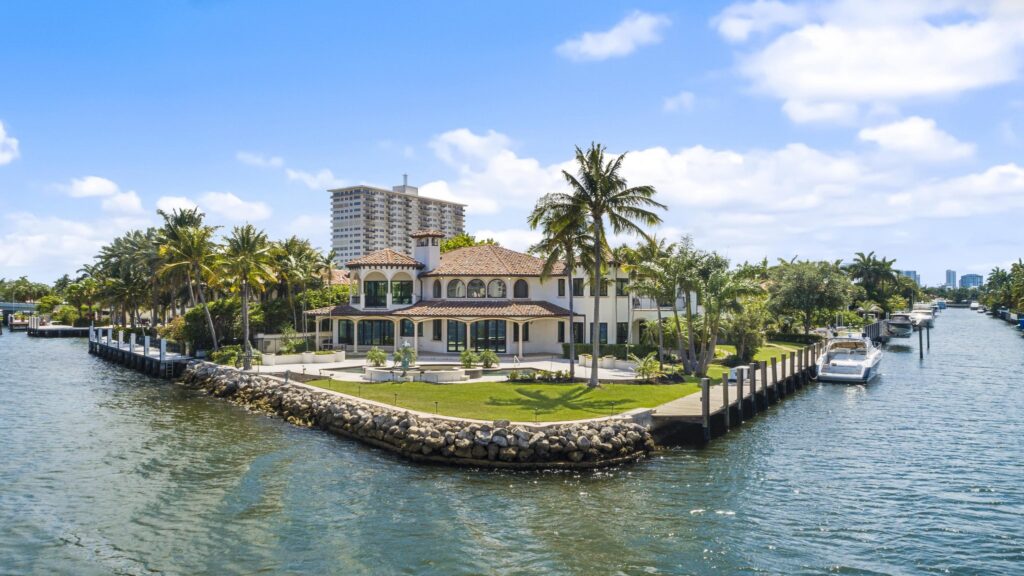
Fort Lauderdale’s Intracoastal waterway and its network of saltwater canals create a corrosion environment that is different from ocean-facing properties in one important way: enclosure.
An ocean-facing home gets saltwater exposure from one direction, with wind carrying salt aerosols inland. A canal home sits surrounded by saltwater on at least one side, and in the case of point lots or finger canal properties, potentially on two or three sides. That multi-directional exposure means salt air reaches surfaces that would be sheltered on a standard coastal property.
The canal network also means tidal movement pushes saltwater into direct contact with seawalls and dock pilings twice daily. Properties on narrower finger canals with slower water circulation may experience higher chloride concentration at the waterline than properties on wide, deepwater canals with stronger tidal flushing.
Explore our Fort Lauderdale neighborhoods guide to understand how canal type varies across neighborhoods like Coral Ridge, Rio Vista, Las Olas Isles, and Harbor Beach, and what that means for long-term maintenance exposure.
What Should You Look for During a Walkthrough to Spot Deferred Corrosion Maintenance?
A standard home inspection covers the basics, but a waterfront property walkthrough requires additional attention to corrosion-specific signals that a general inspector may not flag.
On the Seawall and Dock
Look for horizontal cracking, panel bowing, rust staining running down the concrete face, and any visible separation between the cap and the panel below it.
Rust staining on a concrete seawall face indicates the internal rebar is corroding and expanding. This is not a cosmetic issue. It is an indicator of structural deterioration.
Check dock hardware including cleats, pile guides, and electrical pedestals. Excessive corrosion on dock hardware that has not been maintained signals deferred attention to everything else on the property.
Our seawall repair vs. replacement guide explains specifically what the difference between a repairable seawall and one that needs full replacement looks like in practice.
On the HVAC Equipment
Look at the exterior condenser fins. If the aluminum is white or grey with a chalky oxidation coating rather than clean metal, the unit has sustained salt air damage.
Ask for service records. An HVAC system on a canal property with no documented annual maintenance and coil cleaning is a replacement risk within a few years of purchase.
On Windows, Doors, and Screens
Slide every door and open every window during the walkthrough. Corrosion in the tracks causes sliding doors to stick or skip. Check aluminum frames at the corners where water pools. White or grey oxidation pitting on frame corners is a signal of long-term salt air exposure without maintenance.
On Electrical Panels
If the exterior electrical panel is accessible, look for rust or green oxidation on breaker terminals. Any visible corrosion inside an electrical panel is a flag that needs evaluation, not a note to reevaluate after closing.
Our full waterfront buying guide covers the complete due diligence checklist for waterfront purchases, including what to inspect, what specialists to hire, and how to structure contingencies to protect yourself.
How Do You Slow Saltwater Corrosion on a FortLauderdale Waterfront Home?
Corrosion cannot be stopped on a saltwater canal property. It can be managed, slowed, and planned for. Here is what that looks like in practice.
Annual HVAC Coil Cleaning and Coating
Marine-grade coil coating products applied annually to the condenser fins significantly extend HVAC life on coastal properties. This is standard practice for well-maintained waterfront homes in Fort Lauderdale and should be in the maintenance records of any property you are evaluating.
Seawall Inspection on a Regular Schedule
A licensed marine contractor or coastal engineer should inspect the seawall every 3 to 5 years on a property with no known issues, and annually on a wall that has had prior repairs.
Catching early corrosion-driven panel deterioration before it crosses into structural failure is the difference between a repair cost and a replacement cost.
See our full breakdown of seawall replacement costs in Fort Lauderdale to understand what you are trying to avoid.
Protective Coatings on Metal Surfaces
Stainless steel hardware, treated aluminum, and marine-grade paints and sealants on exterior surfaces meaningfully reduce the corrosion rate.
A property where the previous owner used standard-grade hardware and standard exterior paint throughout requires more immediate attention than one where marine-grade materials were used from the start.
Freshwater Rinse After Salt Exposure
Rinsing dock hardware, outdoor furniture, railings, and screen enclosure frames with fresh water after storms or salt spray events removes chloride deposits before they concentrate.
This is the simplest and lowest-cost corrosion management step, and the absence of it over years of ownership shows.
Frequently Asked Questions
What is saltwater corrosion on a waterfront home?
Saltwater corrosion is the accelerated breakdown of metals, concrete, and building materials caused by direct saltwater contact and salt air exposure.
On Fort Lauderdale canal properties, it affects seawalls, HVAC systems, electrical components, aluminum frames, and structural fasteners simultaneously.
How far inland does salt air damage homes in Fort Lauderdale?
Salt air corrosion effects are typically significant within one to three miles of the coast or saltwater canals, with the most aggressive damage occurring within 1,000 feet of the waterline. Fort Lauderdale’s canal network extends salt air exposure well into residential neighborhoods.
Does saltwater corrosion affect concrete seawalls?
Yes. Chloride ions from saltwater penetrate concrete over time and corrode the internal steel reinforcement as the rebar rusts; it expands, cracking the concrete panel from inside. This is one of the most common causes of seawall structural failure in Fort Lauderdale.
How much does corrosion increase maintenance costs on a Fort Lauderdale waterfront home?
Waterfront homeowners in South Florida typically spend 1.5 to 2 times more annually on maintenance than comparable inland homeowners, driven by HVAC, seawall, and exterior surface upkeep. Exact costs vary significantly by property age, construction quality, and prior maintenance history.
What materials hold up best against saltwater corrosion?
Marine-grade stainless steel, hot-dipped galvanized hardware, treated aluminum, impact-rated PGT or CGI windows, and concrete with epoxy-coated rebar or fiberglass reinforcement perform significantly better than standard construction materials in Fort Lauderdale’s saltwater environment.
Should saltwater corrosion affect the price I offer on a waterfront home?
Yes, if there is evidence of deferred corrosion maintenance. A seawall showing internal rebar corrosion, an HVAC system past its coastal lifespan, or unchecked salt air damage to windows and electrical systems all represent real costs that should factor into your offer price or contingency strategy.
You Need an Agent Who Understands What Saltwater Does to a Property Before You Sign
Most real estate agents can show you a waterfront home and tell you the price per square foot. What they cannot do is walk the seawall with you, identify what the rust staining on the concrete face actually means.
Tell you whether the HVAC service records are missing because the previous owner skipped maintenance on a canal property, or help you structure a contingency that protects you from a six-figure corrosion repair that does not show up in a standard inspection.
Dotoli Group has closed waterfront transactions across Fort Lauderdale’s canal neighborhoods at every price point. Josh Dotoli and the team know the difference between a well-maintained canal home and one where deferred corrosion maintenance has been priced out of the listing.
If you are searching and want an agent who will flag the real risks before you make an offer, contact us now. Do not close on a waterfront home without someone in your corner who has done it hundreds of times in this exact market.